


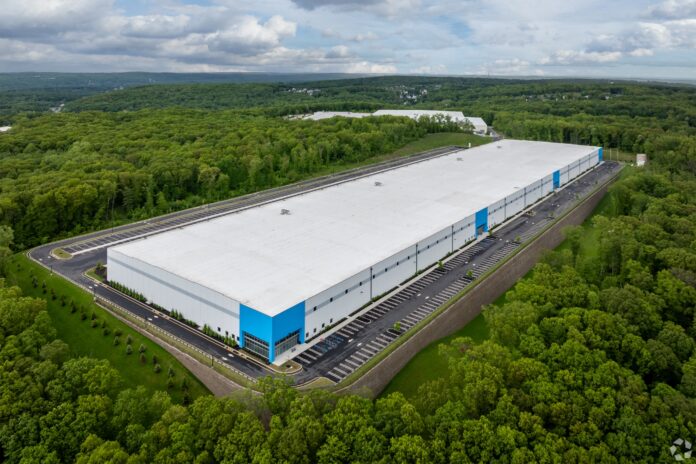

ROXBURY TOWNSHIP, NJ — A proposed U.S. Immigration and Customs Enforcement processing facility along Route 46 in Morris County has rapidly evolved into one of the most politically charged and legally complex development battles in New Jersey, placing Representative Tom Kean Jr. at the center of a growing dispute that now spans federal agencies, state leadership, and local government opposition. What began as a federal siting proposal has escalated into a defining moment for how infrastructure tied to national security and immigration enforcement intersects with community governance, fiscal stability, and electoral politics in one of the state’s most competitive congressional districts.
On April 7, Kean took his most visible step to date by formally requesting that the Department of Homeland Security take what he described as a “deeper look” at the proposed ICE facility. In a letter addressed to newly confirmed DHS leadership, Kean positioned himself as an intermediary advocating for local concerns while emphasizing the need for a measured, collaborative review process. The tone of the correspondence reflects a deliberate effort to balance federal priorities with community-level implications, underscoring the increasingly complex role elected officials must play when national policy initiatives directly impact local jurisdictions.
The proposed facility, which would be located in Roxbury Township within New Jersey’s 7th Congressional District, has triggered significant resistance at the municipal and state levels. Local officials have raised a series of concerns that extend beyond the immediate presence of a federal detention center, focusing instead on long-term structural impacts. Among the most pressing issues cited are the potential loss of municipal tax revenue resulting from federal acquisition of the property, increased strain on local emergency services, and broader questions surrounding infrastructure capacity, zoning compliance, and environmental suitability.
Kean’s letter acknowledges these concerns in detail, referencing the fiscal and operational pressures that township leaders believe could accompany the project. He highlights the importance of evaluating how such a facility would affect local police, fire, and rescue services—resources that are already calibrated to serve existing community needs rather than the demands of a large-scale federal operation. Additionally, the letter points to questions about whether the proposed site can adequately support the infrastructure requirements of a detention facility, including utilities and environmental constraints that could complicate development.
However, the timing and scope of Kean’s intervention have drawn attention for what is not included. On the same day the letter was sent, New Jersey state officials and Roxbury Township initiated legal action seeking to halt the project, filing for an injunction to pause any advancement of the facility until outstanding legal questions are resolved. This lawsuit represents a significant escalation, moving the dispute from political debate into the judicial arena, where the ultimate fate of the project may be determined. Notably, the existence of this legal challenge is not referenced in Kean’s correspondence, a detail that has added another layer of scrutiny to his position.
The absence of that context is particularly significant given the broader political dynamics at play. Roxbury Township has already taken a formal stance against the project, adopting a resolution opposing the ICE facility well before litigation commenced. In doing so, local leadership has aligned itself with a bipartisan coalition that includes high-profile federal figures such as Senators Cory Booker and Andy Kim, both of whom have been publicly supportive of the township’s position. This alignment has further intensified the spotlight on Kean, whose district is widely regarded as one of the most competitive in New Jersey and a key battleground in upcoming electoral cycles.
For Kean, the situation presents a delicate balancing act. As a Republican representative operating within a district that could be significantly impacted by the proposed facility, he must navigate competing pressures from federal policy priorities, local opposition, and the broader political implications of the project’s perception among constituents. His letter attempts to frame his role as one of active engagement and ongoing communication with federal officials, asserting that he has been involved in discussions since the proposal first emerged in December 2025. According to his account, this engagement has been aimed at ensuring that Roxbury’s concerns are clearly articulated and considered within the federal decision-making process.
Yet the local response suggests a more complicated reality. Township officials have previously expressed frustration with what they perceive as insufficient advocacy at the federal level, indicating that their expectations for representation have not been fully met. This disconnect highlights a recurring challenge in infrastructure and policy disputes of this scale: the gap between federal intent and local perception, and the difficulty of aligning those perspectives in a way that satisfies all stakeholders.
The broader context of the proposal adds another layer of uncertainty. Reports emerging in recent days suggest that the Department of Homeland Security may be reassessing its approach to large-scale detention facilities nationwide, particularly in light of leadership changes within the agency. This potential reevaluation introduces the possibility that the Roxbury project could be delayed, modified, or even withdrawn altogether, depending on how federal priorities evolve in the coming weeks and months.
At the same time, the legal proceedings initiated by the state and township will likely play a decisive role in shaping the project’s trajectory. By seeking an injunction, local and state leaders are attempting to assert control over the timeline and ensure that any development is subject to thorough legal and regulatory review. This approach reflects a broader trend within New Jersey, where municipalities and state authorities are increasingly willing to challenge federal initiatives that they believe conflict with local interests or exceed established planning frameworks.
The situation in Roxbury is emblematic of a larger conversation unfolding across the country, where infrastructure tied to immigration enforcement is becoming a focal point for debates over governance, community impact, and the limits of federal authority. In New Jersey, a state with a dense population, complex zoning landscape, and highly engaged local governments, these issues are particularly pronounced. The outcome of this dispute could set important precedents for how similar proposals are handled in the future, both within the state and beyond.
From a policy perspective, the case also underscores the importance of integrated decision-making that accounts for economic, operational, and social factors simultaneously. The concerns raised by Roxbury officials—ranging from tax revenue implications to emergency service capacity—highlight the interconnected nature of infrastructure development, where a single project can have ripple effects across multiple aspects of community life. Addressing these concerns requires more than procedural compliance; it demands a comprehensive approach that balances national objectives with local realities.
As the situation continues to evolve, all eyes remain on the interplay between federal review, legal action, and political positioning. Kean’s call for a deeper evaluation may serve as a starting point for renewed dialogue, but it is unlikely to resolve the underlying tensions on its own. The coming weeks will be critical in determining whether the project moves forward, is reshaped, or is ultimately set aside.
What is certain is that the Roxbury ICE facility proposal has already left a lasting imprint on New Jersey’s legislative and political landscape. It has exposed fault lines, tested alliances, and brought into sharp focus the challenges of governing at the intersection of local and federal priorities. As this story unfolds, it will continue to resonate not only within Morris County but across the state, shaping the broader narrative of how New Jersey navigates complex, high-impact policy decisions in an increasingly interconnected world.



