


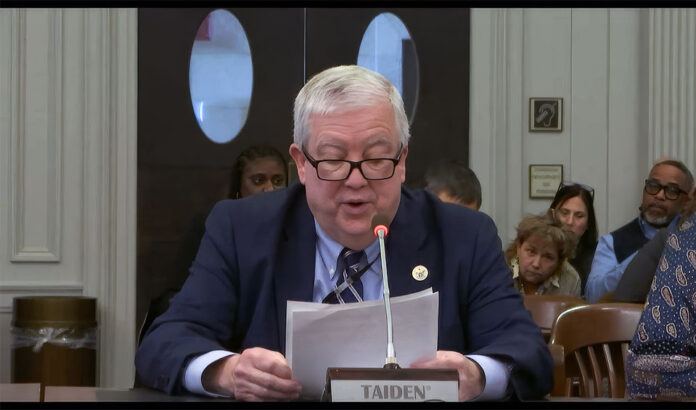

As New Jersey moves deeper into one of the most consequential budget cycles in recent years, the state’s business community is stepping forward with a measured but unmistakably strategic response. During testimony before the Assembly Budget Committee, New Jersey Chamber of Commerce representatives outlined a position that reflects both support for targeted investments and growing concern over policy decisions that could reshape the state’s economic trajectory.
At the center of the discussion is Governor Mikie Sherrill’s proposed $60.7 billion state budget—a spending plan that signals ambition in public investment while also raising critical questions about long-term competitiveness, affordability, and the business climate in one of the nation’s most economically dynamic states.
Michael Egenton, representing the New Jersey Chamber of Commerce, delivered testimony that captured the duality of the moment: acknowledgment of progress and priorities aligned with growth, paired with caution about measures that could increase operational costs for businesses already navigating a challenging economic environment.
The Chamber’s message was clear—New Jersey stands at a pivotal crossroads. The policy choices embedded in this budget will not only shape fiscal outcomes for the coming year, but also define how the state positions itself in an increasingly competitive regional and national landscape.
From a positive standpoint, the Chamber signaled strong support for components of the budget that invest in infrastructure, workforce development, and innovation. These areas have long been identified as foundational pillars for sustainable economic expansion. Strategic funding in transportation networks, education pipelines, and emerging industries is viewed as essential for maintaining New Jersey’s role as a hub for commerce, logistics, and high-value employment sectors.
Business leaders across the state have consistently emphasized that modern infrastructure and a skilled workforce are not optional—they are prerequisites for attracting and retaining companies. In that context, elements of the proposed budget that prioritize these areas align with broader economic development goals and signal a recognition of what drives long-term growth.
However, the Chamber’s testimony also underscored a more cautious perspective on provisions that could introduce additional financial strain on businesses. As operating costs continue to rise due to inflationary pressures, supply chain complexities, and labor market dynamics, even incremental increases in taxes, fees, or regulatory burdens can have outsized impacts—particularly on small and mid-sized enterprises.
The concern is not merely about immediate cost increases, but about cumulative effect. New Jersey has historically grappled with perceptions of being a high-cost state for doing business. While recent years have seen efforts to improve that narrative, stakeholders warn that policy decisions perceived as increasing financial burdens could reverse progress and influence where companies choose to invest, expand, or relocate.
Egenton’s testimony reflected this broader strategic lens, emphasizing that competitiveness is not defined by a single policy but by the overall environment in which businesses operate. Tax structures, regulatory frameworks, and the predictability of fiscal policy all contribute to how New Jersey is evaluated against neighboring states and national benchmarks.
The Chamber’s position also highlights the delicate balance policymakers must strike between funding essential public services and maintaining an environment conducive to private sector growth. A $60.7 billion budget represents both opportunity and responsibility—an opportunity to invest in the state’s future, and a responsibility to ensure that those investments do not inadvertently hinder the very economic activity they are intended to support.
Within the broader political context, the budget debate is unfolding against a backdrop of shifting economic conditions and evolving policy priorities. Lawmakers are navigating competing demands, from funding education and healthcare to addressing infrastructure needs and supporting economic development initiatives. Each allocation carries implications that extend beyond the immediate fiscal year, influencing the state’s trajectory for years to come.
For New Jersey’s business community, the stakes are particularly high. Decisions made during this budget cycle will impact hiring, expansion plans, and capital investment strategies across industries. Companies are closely watching how policymakers address cost structures, incentives, and the overall business climate.
The Chamber’s testimony serves as both feedback and foresight—an effort to engage constructively in the policymaking process while signaling areas where adjustments could strengthen the state’s economic positioning. By articulating both support and concern, the organization is advocating for a balanced approach that recognizes the interconnected nature of public investment and private sector vitality.
This moment also reflects a broader trend in state-level governance, where economic competitiveness is increasingly tied to nuanced policy decisions rather than sweeping reforms. Incremental changes in tax policy, regulatory requirements, and funding priorities can collectively shape how a state is perceived by investors, entrepreneurs, and established businesses alike.
As the Assembly Budget Committee continues its deliberations, the dialogue between policymakers and the business community is expected to intensify. Testimony like Egenton’s provides a framework for that conversation, highlighting areas of alignment while bringing attention to potential challenges.
Across New Jersey, from major urban centers to smaller communities, the outcomes of this budget process will be felt in tangible ways—through job creation, business development, infrastructure improvements, and the overall cost of living and operating within the state.
For readers tracking the evolving policy landscape, continued coverage from the politics section offers deeper insight into how legislative decisions are shaping New Jersey’s future. As negotiations progress and revisions are made, the balance between investment and competitiveness will remain at the forefront of the conversation.
The Chamber’s engagement in this process underscores the importance of collaboration between the public and private sectors. In a state as economically complex and strategically positioned as New Jersey, the path forward depends on aligning fiscal policy with the realities of business operations and the expectations of a modern workforce.
With the budget process still unfolding, the coming weeks will be critical in determining how these competing priorities are reconciled. What emerges will not only define the state’s fiscal blueprint for the year ahead, but also signal how New Jersey intends to navigate the challenges and opportunities of an increasingly competitive economic landscape.