


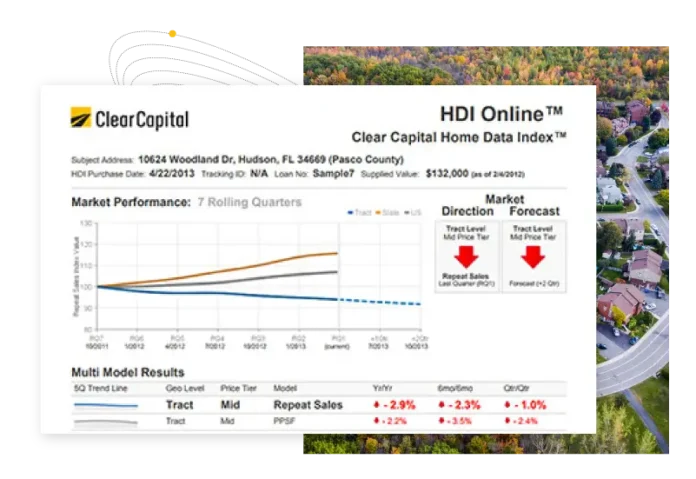

The latest national housing data is painting a picture of a real estate market entering a new phase of recalibration after several years of rapid price acceleration. According to the most recent Home Data Index report released by Clear Capital, the U.S. housing market experienced a modest cooling trend in February as home price appreciation dipped into negative territory on a quarterly basis.
The report found that national home prices declined by 0.5 percent quarter-over-quarter, though values remained up 1.7 percent year-over-year. For economists, analysts, and real estate professionals across the Northeast—including New Jersey—these figures signal a transition toward a more balanced housing environment following the extraordinary price surges that defined the pandemic housing boom.
While the national data suggests moderation, the regional picture tells a more nuanced story. Markets across the Northeast, including areas closely tied to New Jersey’s economic and housing ecosystem, continue to demonstrate strong resilience compared with other regions of the country.
The Northeast recorded some of the strongest housing performance in the nation during the latest reporting period. Home prices in the region remained essentially flat quarter-over-quarter but rose 4.9 percent annually, a figure that significantly outpaces the national average.
For housing markets connected to New Jersey—including major metropolitan areas such as New York City and Philadelphia—this strength reflects the enduring demand for housing in the region’s highly interconnected economic corridor.
Across the nation, the housing market’s cooling trend reflects a convergence of several factors that have reshaped buyer behavior over the past year. Mortgage interest rates, which climbed sharply following the historically low borrowing costs of 2020 and 2021, continue to influence purchasing decisions. At the same time, affordability challenges have placed additional pressure on buyers in many markets.
Despite these headwinds, the overall housing market has not entered a period of significant decline. Instead, analysts increasingly describe the current environment as a stabilization phase following the intense growth cycle that characterized the pandemic years.
For New Jersey, this stabilization could ultimately bring welcome relief to a housing market that has experienced some of the most intense price pressures in the country.
Throughout the pandemic and post-pandemic period, New Jersey’s real estate market experienced dramatic demand driven by several converging trends. Remote work policies encouraged many households to relocate from dense urban environments into suburban and coastal communities, fueling competition for homes throughout the state.
Areas along the Hudson River waterfront, including Jersey City, Hoboken, and Weehawken, experienced particularly strong demand as professionals sought proximity to New York City while gaining access to larger living spaces.
At the same time, suburban counties such as Bergen, Essex, Monmouth, and Morris saw rising property values as buyers pursued homes with additional space for home offices and remote work lifestyles.
The Clear Capital report suggests that while demand remains present, the pace of price acceleration is beginning to normalize. In many ways, this shift represents a return to a healthier long-term market dynamic.
Real estate economists note that the extraordinary price increases of the pandemic years were unlikely to continue indefinitely. In several regions, annual price gains exceeded sustainable levels, creating affordability challenges that eventually slowed market momentum.
The current moderation therefore reflects a balancing process rather than a dramatic correction.
Regional housing performance within the United States continues to vary widely. The Midwest recorded a modest quarterly decline of 0.8 percent while maintaining a solid annual gain of 4 percent. Meanwhile, both the South and the West experienced quarterly price declines along with weaker year-over-year growth compared with the Northeast.
For the New Jersey housing market, the strength of nearby metropolitan areas plays a crucial role in shaping local real estate trends.
Among major metropolitan statistical areas analyzed in the report, ten of the fifteen largest recorded positive quarterly growth while five experienced declines. Several cities located within the Northeast corridor delivered some of the strongest price growth figures in the country.
Providence emerged as the top-performing metropolitan area in the region, with home prices rising 1.8 percent quarter-over-quarter and 5.1 percent annually. Hartford also demonstrated strong performance, posting a 1.1 percent quarterly increase and an impressive 6.2 percent annual gain.
Two of the most influential housing markets affecting New Jersey—New York City and Philadelphia—also recorded steady growth. New York City home prices increased 0.4 percent quarter-over-quarter and 5.1 percent annually, while Philadelphia reported the same quarterly growth rate of 0.4 percent and annual gains of 4.1 percent.
Because New Jersey sits directly between these two major metropolitan centers, housing activity in both cities significantly influences the state’s real estate dynamics. Many buyers who work in New York or Philadelphia ultimately purchase homes in New Jersey, drawn by transportation access, suburban neighborhoods, and coastal communities.
The continuing strength of these regional housing markets therefore reinforces demand for New Jersey homes even as national trends begin to cool.
Across the Garden State, the real estate sector remains a major driver of economic activity. Residential construction, home renovation, property management, and real estate services collectively support thousands of jobs while generating significant tax revenue for local governments.
Real estate development has also played a major role in revitalizing urban centers across the state. Cities such as Jersey City, Newark, New Brunswick, and Asbury Park have experienced dramatic redevelopment in recent years, with new residential towers, mixed-use developments, and waterfront communities transforming formerly underutilized areas.
These projects have attracted both residents and investors seeking proximity to New York City while benefiting from New Jersey’s expanding infrastructure and transportation networks.
At the same time, suburban and shore communities have seen rising demand as buyers continue to prioritize lifestyle amenities, outdoor access, and proximity to employment centers.
The cooling trends identified in the Clear Capital report could bring a degree of stability to these markets. For prospective buyers who struggled with intense bidding wars during the peak of the housing boom, moderating prices and longer listing times may create new opportunities to enter the market.
For sellers, the environment remains favorable compared with historical averages, even as the pace of appreciation slows.
Housing inventory levels will likely play a key role in determining how the market evolves over the coming months. Throughout the pandemic period, limited housing supply intensified price growth as buyers competed for a small number of available homes.
If inventory levels increase gradually while buyer demand remains steady, the market could transition into a more balanced environment where prices grow at sustainable rates rather than surging dramatically.
Another factor influencing the future of New Jersey’s housing market is the continued expansion of transportation and infrastructure projects across the region. Major initiatives aimed at improving rail connectivity, highway access, and regional transit networks are expected to enhance the attractiveness of communities throughout the state.
As infrastructure improvements reduce commuting times and expand regional mobility, previously overlooked neighborhoods may experience increased housing demand.
New Jersey’s strong employment base, proximity to major financial and technology centers, and high quality of life continue to attract new residents. These long-term fundamentals suggest that while price growth may moderate in the short term, the underlying demand for housing across the state remains strong.
Real estate professionals throughout the region are closely monitoring how the evolving economic landscape will influence housing activity during the remainder of 2026. Mortgage rate movements, economic growth, and demographic trends will all shape the trajectory of the housing market.
The latest data from Clear Capital provides an important snapshot of a market transitioning toward greater equilibrium. Rather than signaling weakness, the modest decline in quarterly price appreciation suggests that the housing sector is adjusting to more sustainable conditions after years of unprecedented expansion.
For New Jersey homeowners, buyers, and developers, the coming months will reveal whether this stabilization evolves into a long-term period of balanced growth across one of the nation’s most dynamic housing markets.



