



Arm & Hammer Park and the New Trenton Renaissance: How Baseball, Real Estate, and Community Investment Are Repositioning New Jersey’s Capital City
In the evolving landscape of New Jersey real estate, few locations illustrate the intersection of community identity, economic revitalization, and strategic development more clearly than the neighborhoods surrounding Arm & Hammer Park. Long recognized as the home of professional baseball in the capital city, the stadium has quietly become something more powerful: a catalyst for renewed attention on Trenton itself—its housing market, its cultural infrastructure, and its long-term investment potential.
At a time when buyers, developers, and institutions are rethinking where and how growth happens across the state, Trenton is emerging as a market defined not by speculation, but by substance. The presence of Arm & Hammer Park anchors that narrative, drawing consistent foot traffic, regional attention, and a sense of continuity that extends well beyond the baseball season.
What distinguishes this area is not simply proximity to a sports venue, but the layered ecosystem that surrounds it. Within walking distance, Trenton’s historic downtown district presents a compelling mix of legacy architecture and modern reinvention. Boutique storefronts, independent restaurants, and cultural spaces coexist alongside some of the state’s most recognizable civic landmarks, including the New Jersey State House. This adjacency between government, commerce, and community life creates a density of experience that is increasingly rare—and increasingly valuable—in today’s real estate environment.
The visual identity of the city reinforces that sense of place. Public art installations and large-scale murals transform streets into open-air galleries, signaling both cultural investment and community pride. These elements are not incidental; they are part of a broader repositioning effort that aligns with trends seen across successful urban revitalization initiatives. For prospective residents and investors, they communicate momentum—an intangible but critical factor in evaluating long-term market viability.
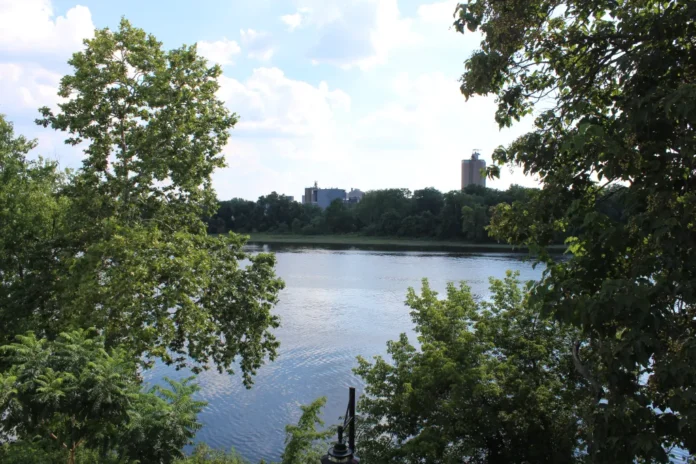
Equally important is Trenton’s relationship with its natural assets. The Delaware River waterfront provides a counterbalance to the urban core, offering accessible green space and recreational opportunities that elevate quality of life. Riverfront paths, park areas, and open-air gathering spaces create an environment that supports both daily living and destination-driven visitation. In an era where outdoor space has become a premium feature across New Jersey’s housing market, this proximity to nature significantly enhances the appeal of nearby residential development.
From a logistical standpoint, Trenton’s connectivity further strengthens its position. Located within reach of major transportation corridors and regional transit networks, the city offers efficient access to both Philadelphia and New York metropolitan areas. This accessibility has begun to reshape how buyers evaluate Trenton—not as a secondary option, but as a strategically positioned hub within a larger economic ecosystem.
The role of the Trenton Thunder in this transformation cannot be overstated. Game days at Arm & Hammer Park inject energy into the surrounding neighborhoods, driving consistent engagement with local businesses and reinforcing a shared civic identity. The stadium operates as both an entertainment venue and an economic engine, creating recurring opportunities for commerce while amplifying the city’s visibility across the region.
This dynamic aligns with broader trends observed throughout New Jersey’s real estate sector, where lifestyle integration has become a defining factor in property valuation. Buyers are no longer focused solely on square footage or interior finishes; they are evaluating the totality of the environment—walkability, cultural access, recreational opportunities, and community engagement. In this context, areas anchored by multi-use destinations like Arm & Hammer Park are positioned to outperform more isolated developments.
What is unfolding in Trenton reflects a deeper shift in how urban centers across the state are being reimagined. Rather than relying exclusively on large-scale redevelopment projects, the city’s growth is being driven by a combination of grassroots activity, institutional investment, and strategic activation of existing assets. This approach mirrors successful models seen in other revitalized markets, where incremental progress builds into sustained momentum over time.
For real estate stakeholders, the implications are significant. Properties located near established community anchors—whether cultural institutions, transportation hubs, or sports venues—are increasingly viewed as resilient investments. They benefit from consistent foot traffic, diversified economic activity, and a built-in narrative that supports long-term demand. In Trenton, Arm & Hammer Park provides exactly that kind of anchor, reinforcing the surrounding area as a viable and increasingly attractive place to live, work, and invest.
At the same time, the city’s ongoing evolution is attracting attention from developers seeking opportunities to participate in its next phase of growth. Mixed-use projects, residential conversions, and small-scale commercial expansions are beginning to reshape the urban fabric, adding density while preserving the character that defines Trenton’s identity. This balance between preservation and progress is critical, ensuring that development enhances rather than displaces the communities that have sustained the city through periods of transition.
The broader narrative emerging from Trenton is one of alignment—between culture and commerce, history and innovation, local identity and regional accessibility. Arm & Hammer Park sits at the center of that alignment, not as an isolated destination, but as an integrated component of a city that is actively redefining itself.
As New Jersey continues to navigate the pressures of affordability, density, and growth, markets like Trenton offer a compelling case study in how strategic investment and community engagement can converge to create lasting value. The energy generated within the ballpark extends far beyond its walls, shaping perceptions, influencing development patterns, and reinforcing the idea that the future of real estate in the Garden State will be driven as much by place-making as by pricing.
In Trenton, that future is already taking shape—one game, one block, and one investment at a time.



