

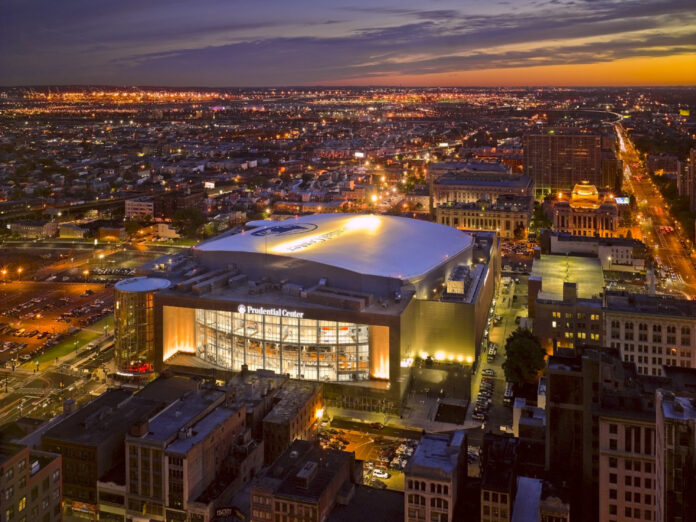

A sweeping new chapter is beginning for New Jersey Devils, downtown Newark, and one of the most important entertainment venues in the Northeast after New Jersey lawmakers approved a major $300 million tax incentive package tied to an enormous long-term redevelopment and modernization plan for Prudential Center, setting the stage for an approximately 80% overhaul of the arena that has become both the symbolic and economic anchor of modern Newark’s revival.
The legislation effectively secures the Devils’ long-term future in Newark while launching one of the most ambitious arena modernization initiatives currently underway anywhere in the United States. State officials, labor advocates, entertainment executives, and economic planners are all framing the project as far more than a sports venue renovation. Instead, the redevelopment is being positioned as a multi-dimensional investment into jobs, infrastructure, tourism, hospitality, live entertainment, transportation connectivity, and the long-term competitive positioning of New Jersey itself within the increasingly aggressive regional entertainment economy surrounding New York City.
At its core, the initiative reflects a growing reality confronting older major-market arenas throughout the country: modern sports and entertainment venues are no longer simply places where games and concerts occur. They have evolved into year-round economic ecosystems expected to function simultaneously as tourism engines, convention infrastructure, luxury hospitality destinations, media production environments, retail districts, nightlife centers, and urban redevelopment catalysts.
That shift is exactly why New Jersey leaders moved aggressively to support the Prudential Center project.
Since opening in 2007, the arena has fundamentally altered downtown Newark’s trajectory. Before the Devils relocated from the Meadowlands to Newark, skepticism surrounded whether the city could successfully support a modern professional sports and entertainment district. Nearly two decades later, the answer has become unmistakably clear. The arena now stands as one of the busiest venues in the country, hosting NHL games, major concert tours, college basketball events, family entertainment programming, UFC cards, cultural events, political gatherings, and internationally recognized touring productions.
More importantly, it helped ignite broader downtown reinvestment.
Restaurants, residential towers, hotels, nightlife businesses, pedestrian traffic, and surrounding mixed-use development expanded dramatically around the arena footprint over the past two decades, reshaping Newark’s public identity and helping reposition the city as a major destination within the regional economy.
Now state leaders are signaling they have no intention of allowing that momentum to stagnate.
The approved tax incentive package will help fund a sweeping modernization effort expected to transform large portions of the facility, replacing aging infrastructure while reimagining fan environments, premium hospitality areas, concourses, digital systems, food-service operations, entertainment technologies, accessibility features, back-of-house operations, and broader venue functionality designed to compete directly with elite regional venues including Madison Square Garden.
That competitive angle matters enormously.
The Northeast corridor represents one of the most densely competitive live entertainment markets in the world. Arenas throughout New York, New Jersey, and Pennsylvania are aggressively modernizing in order to attract major touring acts, sporting events, conventions, media productions, and premium consumers increasingly expecting luxury-level experiences integrated with high-end technology and hospitality services.
Venues that fail to evolve risk losing relevance quickly.
For New Jersey, maintaining Prudential Center’s competitiveness is viewed not merely as a sports concern but as a broader economic necessity. Arena-driven economic activity now touches hospitality employment, tourism spending, transit utilization, food service industries, security operations, production staffing, hotel occupancy, rideshare activity, retail traffic, and tax generation throughout the region.
The Devils themselves are central to that strategy.
The franchise has increasingly positioned itself not only as an NHL organization but as a foundational institution within Newark’s modern identity. Team ownership, arena management, and local officials have consistently emphasized the relationship between the arena district and Newark’s broader redevelopment efforts, arguing that maintaining the Devils’ long-term presence downtown remains critical to sustaining surrounding economic activity.
The new agreement effectively reinforces that partnership for the foreseeable future.
In addition to infrastructure improvements, the package reportedly includes significant local labor and workforce commitments designed to ensure Newark residents and New Jersey workers directly benefit from the construction and long-term operational expansion tied to the redevelopment project.
That component became politically important during legislative negotiations.
Public financing for sports and entertainment projects often triggers intense scrutiny regarding taxpayer value, labor guarantees, community investment obligations, and long-term economic return. In this case, supporters argued the Prudential Center modernization represents a fundamentally different category of investment than speculative stadium financing debates seen elsewhere around the country because the arena already functions as a proven economic engine with measurable regional impact.
Backers additionally emphasized that the project protects thousands of existing jobs while potentially generating substantial new employment opportunities tied to construction, venue operations, hospitality expansion, entertainment programming, and surrounding real estate development.
The scale of the renovation itself also signals how dramatically arena economics have evolved since Prudential Center originally opened.
When the building debuted in 2007, modern sports venues already emphasized premium suites, sponsorship integration, and upgraded fan amenities. But the post-pandemic entertainment economy accelerated demand for even more technologically integrated, hospitality-driven, flexible-use venue environments capable of generating revenue far beyond ticket sales alone.
Today’s arenas increasingly function as immersive entertainment campuses.
Fans expect luxury clubs, premium social gathering environments, expanded culinary offerings, frictionless digital purchasing systems, upgraded cellular connectivity, immersive visual presentation technology, interactive experiences, diversified seating concepts, and integrated mixed-use development surrounding venues.
The Prudential Center modernization is expected to target many of those evolving expectations directly.
While full architectural details will continue emerging over time, the broader redevelopment vision reportedly includes substantial upgrades across fan circulation systems, seating environments, concourse layouts, premium hospitality offerings, digital infrastructure, event production capabilities, sustainability systems, and operational modernization designed to position the arena competitively for decades to come.
The timing is also strategically significant.
Professional sports franchises and venue operators increasingly recognize that maintaining relevance in the live entertainment economy requires constant reinvestment. Buildings that once felt cutting-edge can become operationally outdated surprisingly quickly due to rapid technological evolution and changing consumer expectations.
Rather than waiting for decline to force reactive measures, New Jersey officials appear intent on proactively repositioning Prudential Center before competitive pressures intensify further.
That forward-looking approach aligns with broader redevelopment activity already reshaping Newark.
Over the past several years, downtown Newark has experienced accelerating residential construction, infrastructure investment, corporate relocation activity, educational expansion, and cultural development. The area surrounding the arena increasingly resembles a fully integrated urban entertainment district rather than a standalone sports facility isolated from surrounding neighborhoods.
The arena modernization therefore fits into a much larger story about Newark’s continued transformation.
For decades, Newark battled narratives centered almost exclusively on economic decline, disinvestment, crime, and population loss. While the city still faces serious structural challenges, projects like Prudential Center became critical symbols of Newark’s ability to rebuild economic momentum through large-scale institutional investment.
Now the state is effectively reaffirming that strategy.
The Devils’ continued presence downtown carries symbolic importance beyond hockey itself. Major professional sports franchises function as civic branding institutions capable of shaping national perceptions about cities and regions. Securing the long-term viability of the arena district helps reinforce Newark’s standing not only within New Jersey, but across the broader Northeast corridor.
The project may additionally trigger secondary investment waves around the arena footprint itself.
Historically, major venue modernization projects often stimulate adjacent restaurant expansion, hotel development, apartment construction, nightlife growth, transit-oriented development, and retail investment as private developers attempt to capitalize on increased economic activity and long-term stability surrounding anchor entertainment districts.
That possibility could become particularly significant as Newark continues competing for younger professional populations increasingly prioritizing walkable urban environments connected directly to transportation infrastructure and entertainment ecosystems.
Transportation access remains one of Prudential Center’s greatest strategic advantages.
Located adjacent to Newark Penn Station, the arena sits at the center of one of the region’s most important transit hubs, connecting NJ Transit, PATH trains, Amtrak service, buses, and broader regional mobility networks. That accessibility dramatically enhances the venue’s attractiveness for concerts, sporting events, and major entertainment programming drawing audiences from throughout the Northeast.
In many ways, the modernization initiative reflects New Jersey recognizing the importance of protecting one of its most strategically valuable economic and cultural assets before competitive regional dynamics begin eroding its position.
The Devils stay. The arena evolves.
And Newark’s role as one of the Northeast’s fastest-changing entertainment and redevelopment centers appears poised to expand even further as one of the largest venue transformation projects in modern New Jersey history officially moves forward.