


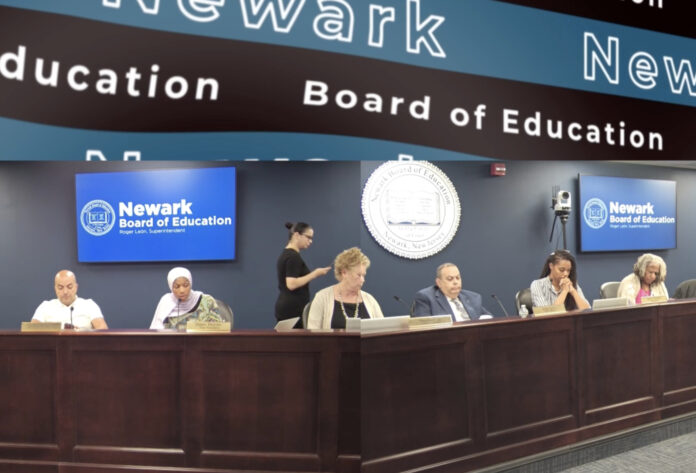

A high-stakes political and policy confrontation is unfolding in New Jersey as the legislative delegation from the state’s 24th District formally calls for a federal investigation into the financial management of Newark Public Schools, placing one of the state’s largest districts under intensified scrutiny and elevating concerns about how pandemic-era education funding was deployed. The request, directed to the U.S. Secretary of Education, signals a significant escalation in an already charged debate over transparency, governance, and the stewardship of taxpayer dollars in New Jersey’s education system.
State Senator Parker Space, Assemblywoman Dawn Fantasia, and Assemblyman Mike Inganamort jointly issued the request on March 31, 2026, urging federal authorities to examine how Newark Public Schools allocated and spent federal COVID-19 relief funds. Their action positions the issue not merely as a local or state concern, but as a matter of national oversight tied to one of the largest emergency funding initiatives in modern education policy. The lawmakers are effectively arguing that the scale and intent of federal pandemic relief demand a higher level of accountability—one they believe has not been met at the state or district level.
At the core of the request are allegations that funds intended to stabilize classrooms and support students during and after the pandemic were diverted away from their intended purpose. The legislators have framed the issue in stark terms, asserting that resources meant to directly benefit students may have been absorbed into administrative or discretionary spending that did not translate into measurable educational outcomes. The language surrounding the request reflects a broader frustration that has been building across segments of New Jersey’s political landscape, particularly among lawmakers who have consistently pushed for tighter fiscal oversight and more localized control of education systems.
Assemblywoman Fantasia has been especially direct in her characterization of the alleged spending practices, pointing to what she describes as expenditures on travel, events, consulting arrangements, and entertainment that, in her view, stand in contrast to ongoing needs within classrooms. Her critique centers on the idea that essential services—ranging from instructional support to transportation and program development—should have been prioritized above all else during a period when schools were navigating unprecedented disruption. By highlighting specific categories of spending, the lawmakers are attempting to frame the issue in a way that resonates with taxpayers and parents who expect clear, tangible benefits from public investment in education.
The request for federal intervention also raises pointed questions about the role of the New Jersey Department of Education. The 24th District delegation has suggested that existing oversight mechanisms may not have been sufficient to ensure that funds were used effectively and in alignment with federal guidelines. This critique introduces a second layer to the controversy, shifting part of the focus from district-level decision-making to the broader regulatory framework that governs how funds are monitored and reported. In doing so, the lawmakers are challenging not only the actions of Newark Public Schools, but also the adequacy of the systems designed to hold such institutions accountable.
This development fits squarely within the broader political identity of the LD24 delegation, which represents communities across Sussex, Morris, and Warren counties. The group has consistently positioned itself as an advocate for fiscal discipline, transparency, and local autonomy, often framing its legislative efforts in opposition to what it describes as centralized decision-making in Trenton. Their latest move reinforces that positioning, presenting the call for a federal investigation as part of a larger effort to ensure that public institutions operate with clarity, efficiency, and responsiveness to the communities they serve.
The timing of the request also intersects with evolving federal priorities under the current leadership of the U.S. Department of Education. Since taking office in March 2025, Secretary Linda McMahon has been associated with a policy direction that emphasizes parental involvement, school choice, and structural reform within the education system. By directing their appeal to the federal level, the New Jersey lawmakers are aligning their concerns with a national conversation about how education funding is managed and how accountability can be strengthened across jurisdictions. The request implicitly suggests that federal oversight may provide a level of scrutiny and independence that state mechanisms have not fully achieved.
Beyond the immediate investigation request, the issue is already influencing legislative activity within New Jersey. Assemblywoman Fantasia has reintroduced a proposal aimed at placing a state-appointed monitor within Newark Public Schools to oversee financial operations and ensure that funds are directed toward student-focused outcomes. The legislation reflects a proactive approach to addressing the concerns raised in the federal inquiry request, offering a structural solution designed to prevent similar issues from arising in the future. It also signals that the debate is not limited to retrospective accountability, but extends to forward-looking reforms that could reshape how large districts are governed.
The broader context of Newark Public Schools adds further complexity to the situation. As one of the state’s largest and most historically significant districts, Newark has long been a focal point for discussions about equity, funding, and educational outcomes. The district has undergone various phases of state intervention and local control, making any new scrutiny particularly sensitive. The current controversy therefore operates at the intersection of fiscal oversight and the ongoing evolution of governance within urban school systems, where questions of autonomy and accountability are often deeply intertwined.
For New Jersey residents, the implications of this unfolding situation are far-reaching. The outcome of any federal inquiry could influence not only Newark, but also how pandemic relief funds are evaluated across other districts in the state and beyond. It may also shape public expectations regarding transparency, reinforcing the idea that large-scale funding initiatives must be accompanied by clear, verifiable outcomes. In an environment where education remains one of the most significant public expenditures, the demand for accountability is likely to remain a central theme in both policy discussions and electoral politics.
This moment represents a convergence of policy, politics, and public interest, with Newark Public Schools at the center of a debate that extends well beyond its boundaries. The actions of the 24th District delegation have effectively elevated the issue to a national stage, ensuring that the questions they have raised will be examined not only through a local lens, but within the broader framework of federal education policy and oversight. As the situation develops, it will serve as a critical test of how institutions respond to scrutiny, how accountability is enforced, and how public trust is maintained in one of the most essential sectors of government.



