



New Jersey enters the second week of April under a classic early-spring pattern defined by sharp temperature swings, dry atmospheric conditions, and a gradual transition from late-winter chill to a more seasonable, and eventually mild, setup. Today’s conditions reflect that transition point precisely, with bright sunshine across the state, a daytime high near 52°F, and a noticeably cooler feel driven by steady west winds around 13 mph. While thermometers may read near 50°F through much of the day, the wind-adjusted feel closer to the mid-40s underscores the lingering influence of colder air still anchored over the region.
The week ahead will be mostly dry and sunny, with temperatures warming up significantly toward the weekend. [, 2, 3, 4, 5]
| Day [, 2, 3, 4, 5, 6] | Sky Condition | Temperature | Chance of Rain |
|---|---|---|---|
| Tue, Apr 7 | 52°F / 30°F | 0% | |
| Wed, Apr 8 | 46°F / 30°F | 0% | |
| Thu, Apr 9 | 54°F / 32°F | 10% | |
| Fri, Apr 10 | 69°F / 38°F | 10% | |
| Sat, Apr 11 | 64°F / 42°F | 20% | |
| Sun, Apr 12 | 61°F / 43°F | 0% | |
| Mon, Apr 13 | 77°F / 52°F | 10% |
This current setup is being shaped by the backside of a departing upper-level trough, a feature that continues to funnel cooler, drier air into the Mid-Atlantic. As a result, New Jersey remains locked in a stable but chilly pattern through midweek, with high pressure dominating and precipitation largely absent. The consistency of this pattern is important—not because of any immediate storm threats, but because of the secondary impacts it introduces, including elevated wildfire risk and overnight freeze concerns across multiple counties.
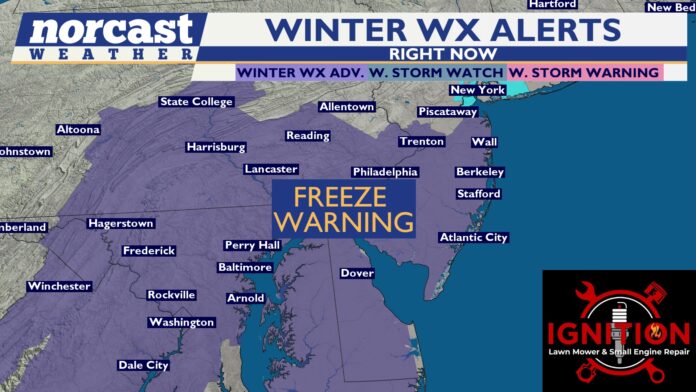
A freeze watch is in effect across portions of the state tonight, with temperatures expected to drop into the mid-20s in colder inland areas. Even regions that remain slightly warmer will still experience conditions cold enough to threaten early-season vegetation. For agricultural interests and homeowners alike, this represents one of the most critical weather considerations of the week, as the recent stretch of mild days may have already initiated early plant growth that is vulnerable to sudden cold snaps.
Compounding this is the presence of low humidity and persistent wind, which together are increasing wildfire risk statewide. Gusts reaching up to 35 mph, combined with dry surface conditions, create an environment where any ignition source can spread more rapidly than typical for this time of year. While no widespread fire events are currently reported, the atmospheric setup demands heightened awareness, particularly in wooded and brush-heavy areas where fuel remains dry following a relatively precipitation-light pattern.
Looking ahead, the broader atmospheric structure offers a clear narrative: a zonal jet stream with intermittent split flow will keep conditions stable and largely precipitation-free, while a building ridge later in the week will initiate a meaningful temperature rebound. This transition becomes evident beginning Thursday, when daytime highs begin to climb closer to 60°F across inland areas, though coastal regions will remain cooler due to onshore influences.
Tuesday continues the current trend with highs near 50°F under a mix of sun and passing cloud cover, accompanied by breezy northwest winds. Overnight lows will represent the coldest period of the week, dipping into the low 20s in northern New Jersey and the upper 20s to low 30s farther south. Wednesday follows with similar daytime temperatures but slightly calmer conditions, as winds shift more easterly and skies remain mostly clear. Overnight readings moderate slightly but still hover near or below freezing across much of the state.
By Thursday, the shift begins to take hold. With high pressure repositioning and winds turning more easterly at lighter speeds, temperatures rise into the upper 50s to near 60°F inland. Coastal areas, influenced by cooler ocean temperatures, may remain closer to the low 50s. This marks the start of a warming trend that accelerates into Friday, when highs approach 70°F across much of the interior. Sunshine remains dominant, and the overall pattern stays dry, reinforcing a week characterized more by temperature variability than precipitation events.
The weekend outlook continues this trajectory, with consistently mild conditions and highs comfortably in the 60s statewide. Overnight lows remain above freezing even in typically colder northern elevations, effectively ending the week’s freeze concerns and signaling a more stable spring pattern. By early next week, temperatures may climb even higher, with some projections suggesting highs pushing into the mid-to-upper 70s under mostly cloudy but still dry conditions.
Current atmospheric readings reinforce the broader stability of this system. Humidity levels are holding near 48%, contributing to the dry feel in the air, while the UV index sits at a moderate level of 3, indicating that despite cooler temperatures, sun exposure remains a factor during peak daylight hours. These conditions, combined with clear skies, create an environment that is visually representative of spring, even as underlying temperature dynamics continue to fluctuate.
Across the Explore New Jersey Weather Report section, this pattern aligns with a broader seasonal transition that is typical for early April but still requires careful attention to short-term variability. The interplay between cold overnight lows and warming daytime highs, combined with dry atmospheric conditions, defines a period where both winter and spring characteristics coexist, often within the same 24-hour cycle.
For residents across New Jersey, the practical takeaway is one of preparation and awareness. The early part of the week demands continued use of winter layers, particularly during morning and evening hours, while also accounting for freeze risks that could impact plants and outdoor systems. At the same time, the increasing wildfire risk highlights the importance of caution with any open flames or activities that could generate sparks in dry, windy conditions.
As the week progresses, the shift toward milder weather will become more pronounced, reducing immediate weather-related concerns and opening the door to more consistent spring conditions. This transition, while gradual, represents a turning point in the seasonal cycle, as the atmospheric pattern moves away from cold-dominated influences and toward a more stable, warm-weather regime.
The overall outlook is clear: a dry, controlled weather pattern with a cold start, a midweek stabilization, and a strong warming trend heading into the weekend. For New Jersey, it is a week that encapsulates the volatility of early spring while ultimately delivering the kind of conditions that signal the season is beginning to take hold.