


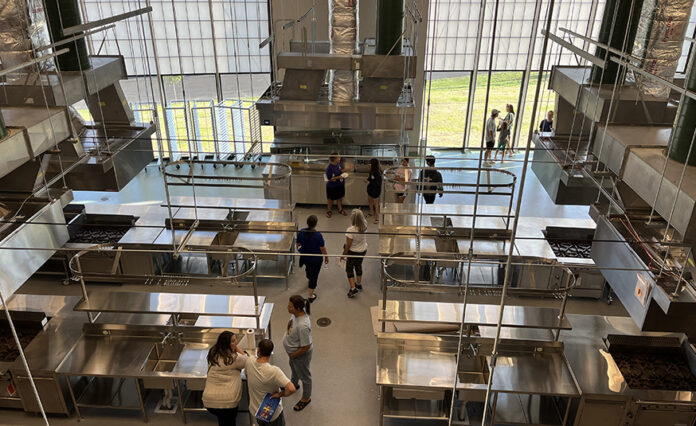

New Jersey’s education system is undergoing a critical evolution—one that is increasingly focused on aligning classroom learning with real-world workforce needs. In a timely and forward-looking conversation, Steve Adubato sits down with Soraia Mendes, Principal of The Newark School of Architecture and Interior Design, to explore how vocational education is stepping into a central role in preparing students for high-demand careers while helping to close persistent workforce gaps.
The discussion arrives at a moment when employers across New Jersey—and the broader United States—are facing a widening disconnect between available jobs and qualified talent. Industries ranging from construction and design to advanced manufacturing and infrastructure development are actively searching for skilled workers. At the same time, students and families are rethinking traditional college-first pathways, seeking alternatives that offer both economic mobility and career stability.
This is where vocational education, long undervalued in the national conversation, is rapidly gaining traction as a strategic solution.
A Shift Toward Career-Connected Learning in New Jersey
Across New Jersey, vocational and technical education programs are being reimagined as high-performance pipelines into the workforce. Schools are no longer simply offering trade-based instruction—they are building integrated ecosystems that combine academic rigor, industry certification, and hands-on experience.
At The Newark School of Architecture and Interior Design, that transformation is already well underway. Under the leadership of Soraia Mendes, the school is positioning students at the intersection of creativity, technical skill, and professional readiness. Programs are designed not only to teach design principles, but to immerse students in the practical realities of architecture, construction, and interior environments.
This model reflects a broader statewide push to elevate career and technical education (CTE) into a premier pathway—one that stands alongside traditional academic routes rather than beneath them.
Addressing Workforce Gaps with Precision
New Jersey’s economy is diverse, but it is also facing acute labor shortages in key sectors. The construction and design industries, in particular, are experiencing a generational transition, with experienced professionals retiring faster than new talent is entering the field.
Vocational education programs are uniquely positioned to respond to this challenge because they are inherently adaptable. Curriculum can be aligned directly with industry needs, ensuring that students graduate with relevant, job-ready skills.
In the case of architecture and interior design, this includes exposure to digital modeling, spatial planning, sustainable design practices, and project-based collaboration—skills that are immediately transferable to the workplace.
The result is a more efficient talent pipeline, where students move seamlessly from education into employment, reducing the lag that often exists between graduation and career entry.
Redefining the Value of Skilled Trades and Design Careers
One of the most significant shifts highlighted in the conversation is the changing perception of vocational education itself. For decades, career and technical programs were often viewed as secondary options. Today, that narrative is being rewritten.
Students are increasingly recognizing that skilled trades and design-focused careers offer not only strong earning potential, but also long-term stability and opportunities for advancement. In fields like architecture, construction management, and interior design, demand continues to outpace supply—creating a favorable environment for those entering the workforce with the right training.
New Jersey schools are responding by expanding access to these programs and investing in modern facilities, technology, and partnerships that reflect current industry standards.
Industry Partnerships Driving Real-World Impact
A defining feature of successful vocational education programs is their connection to industry. Schools like The Newark School of Architecture and Interior Design are building relationships with local businesses, design firms, and construction companies to provide students with exposure to real projects and professional environments.
These partnerships create a feedback loop that benefits everyone involved. Employers gain access to a pipeline of emerging talent, while students gain insight into industry expectations and career pathways.
This approach also ensures that education remains dynamic. As industries evolve, so too do the skills being taught—keeping students competitive in a rapidly changing job market.
The Broader Education Landscape in New Jersey
The conversation between Steve Adubato and Soraia Mendes reflects a larger movement taking shape across the state. From urban centers like Newark to suburban and regional districts, educators are rethinking how success is defined and delivered.
There is a growing recognition that a one-size-fits-all approach to education no longer serves the needs of today’s students or tomorrow’s economy. Instead, flexibility, relevance, and real-world application are becoming the guiding principles.
This shift is also being supported by policy initiatives, funding opportunities, and community engagement efforts that aim to expand access to high-quality vocational programs.
For continued coverage of how schools across the state are evolving to meet these demands, explore the latest updates in Education on Sunset Daily News.
Preparing Students for What Comes Next
At its core, vocational education is about readiness—ensuring that students are equipped not just with knowledge, but with the ability to apply that knowledge in meaningful ways.
Programs like those at The Newark School of Architecture and Interior Design are demonstrating what that looks like in practice. Students are not waiting until after graduation to engage with their chosen fields; they are building skills, portfolios, and professional networks while still in school.
This early exposure is critical. It accelerates learning, builds confidence, and creates a clearer pathway from education to employment.
A Strategic Moment for New Jersey’s Workforce Future
As New Jersey continues to navigate economic shifts and workforce challenges, the role of vocational education is becoming increasingly strategic. It is not simply an alternative pathway—it is a cornerstone of the state’s long-term competitiveness.
By aligning education with industry needs, investing in modern training programs, and elevating the perception of skilled careers, New Jersey is positioning itself to meet the demands of a changing economy head-on.
The conversation led by Steve Adubato underscores an essential truth: the future of work is being shaped in classrooms, workshops, and design studios across the state. And in places like The Newark School of Architecture and Interior Design, that future is already taking form.



