


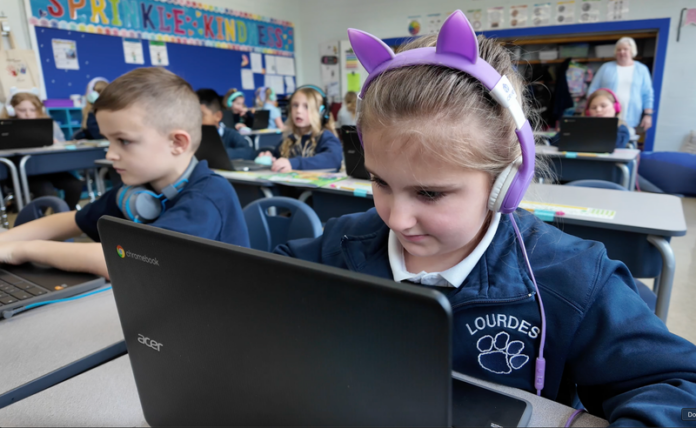

A significant development in the evolving intersection of education and technology is taking shape as ClassGaga announces the launch and expansion of its National Partner School Network, a strategic initiative designed to refine its platform through direct integration within real classroom environments. With nine partner schools now operating across six states, the company is positioning itself as a serious contender in the next generation of education technology—one that prioritizes practical application, educator collaboration, and measurable classroom outcomes over theoretical design.
At a time when digital learning platforms continue to flood the market with promises of transformation, ClassGaga is taking a more grounded approach. Rather than building in isolation, the company is embedding its technology directly into the daily rhythm of classrooms, allowing teachers, administrators, and students to actively shape the platform’s development. This model reflects a broader shift in the education sector, where credibility is increasingly tied to demonstrated impact within live learning environments rather than controlled pilot programs or limited beta testing.
The National Partner School Network serves as the backbone of this strategy. Spanning six states, the network is composed of a diverse group of institutions that collectively represent a wide range of classroom settings, student demographics, and instructional challenges. By working across this spectrum, ClassGaga is able to stress-test its platform in conditions that mirror the realities of modern education—large and small class sizes, varying levels of technological infrastructure, and differing curriculum demands. This breadth is critical in ensuring that the platform is not only functional, but adaptable and scalable.
Within these partner schools, ClassGaga’s technology is not treated as an add-on or supplementary tool. It is integrated into the core learning process, enabling educators to interact with its features in real time and provide continuous feedback. This iterative loop between classroom use and platform development allows for rapid refinement, ensuring that updates are informed by actual teaching experiences rather than abstract assumptions. For teachers, this creates a sense of ownership in the evolution of the platform; for ClassGaga, it delivers a level of insight that is difficult to replicate through conventional development cycles.
The company’s decision to publish a featured school story alongside the network announcement further underscores its commitment to transparency and real-world validation. By highlighting the experiences of one of its partner institutions, ClassGaga is offering a detailed look at how its platform performs under everyday classroom conditions. These narratives are not positioned as marketing case studies, but as working examples of how technology can align with instructional goals, support student engagement, and enhance the overall learning environment.
This approach aligns closely with emerging priorities across the education sector, many of which have been reflected in broader coverage within the education section of Sunset Daily News. Schools and districts are increasingly seeking solutions that deliver tangible results without adding complexity or administrative burden. Educators are demanding tools that integrate seamlessly into existing workflows, support differentiated instruction, and provide actionable insights without overwhelming users with unnecessary features. ClassGaga’s partner-driven development model is a direct response to these demands, emphasizing usability, flexibility, and relevance.
From a New Jersey perspective, the rise of platforms like ClassGaga highlights the state’s growing role in shaping national conversations around education innovation. While the company’s partner network extends across multiple states, its operational and strategic ties to the region reflect a broader ecosystem of educational advancement, where technology developers, educators, and institutions are increasingly collaborating to redefine how learning tools are created and deployed. This regional influence is becoming more pronounced as New Jersey continues to serve as a testing ground for forward-thinking educational models that can scale nationally.
The implications of ClassGaga’s expansion extend beyond its immediate network. By establishing a framework in which schools actively participate in product development, the company is challenging traditional vendor-client dynamics. Instead of delivering a finished product to schools, ClassGaga is inviting them into the creation process, effectively transforming educators into co-developers. This shift has the potential to reshape expectations across the edtech industry, where responsiveness and collaboration are becoming key differentiators.
At the classroom level, the benefits of this model are already becoming evident. Teachers within the partner network are able to influence feature development based on real instructional needs, whether that involves improving user interfaces, enhancing data visibility, or refining tools that support student engagement. Students, in turn, are interacting with a platform that evolves in response to their learning behaviors, creating a more dynamic and responsive educational experience. Administrators gain access to a system that reflects actual classroom usage, providing a clearer picture of performance and areas for improvement.
As ClassGaga continues to grow its Partner School Network, the company is expected to expand both its geographic reach and the depth of its collaborations. Additional schools are likely to be integrated into the network, further diversifying the range of insights that inform platform development. This expansion will be critical in ensuring that the technology remains adaptable to different educational contexts, from urban districts to suburban and rural settings.
The publication of featured school stories will also play a central role in this process, offering ongoing visibility into how the platform performs across various environments. These stories provide a level of accountability that is often missing in the edtech space, where claims of effectiveness are not always supported by detailed, real-world examples. By continuing to document and share these experiences, ClassGaga is reinforcing its commitment to evidence-based development and open dialogue with the education community.
Within the broader landscape of education innovation, ClassGaga’s approach represents a meaningful evolution. It is a model built not on assumptions about how classrooms should operate, but on direct engagement with how they actually function. By placing educators at the center of its development process and grounding its technology in real-world application, the company is creating a platform that is both practical and forward-looking.
As the National Partner School Network continues to expand and refine the ClassGaga platform, the company is positioning itself at the forefront of a new era in education technology—one defined by collaboration, adaptability, and a relentless focus on outcomes that matter inside the classroom. Emerging from a foundation of real-school engagement and extending into a growing national footprint, ClassGaga is demonstrating that the future of education technology will be built not in isolation, but in partnership with the educators and students it aims to serve.



