
Life, Larry and the Pursuit of Unhappiness: How Larry David Just Rewrote 250 Years of American History — And Got Away With It, Welcome to Wrexham Season 5 Elevates the Club, the Town
Jul 02, 2026
In the Eye of the Storm Is Back, and Season 4 Is the Most Harrowing Television on Air Right Now
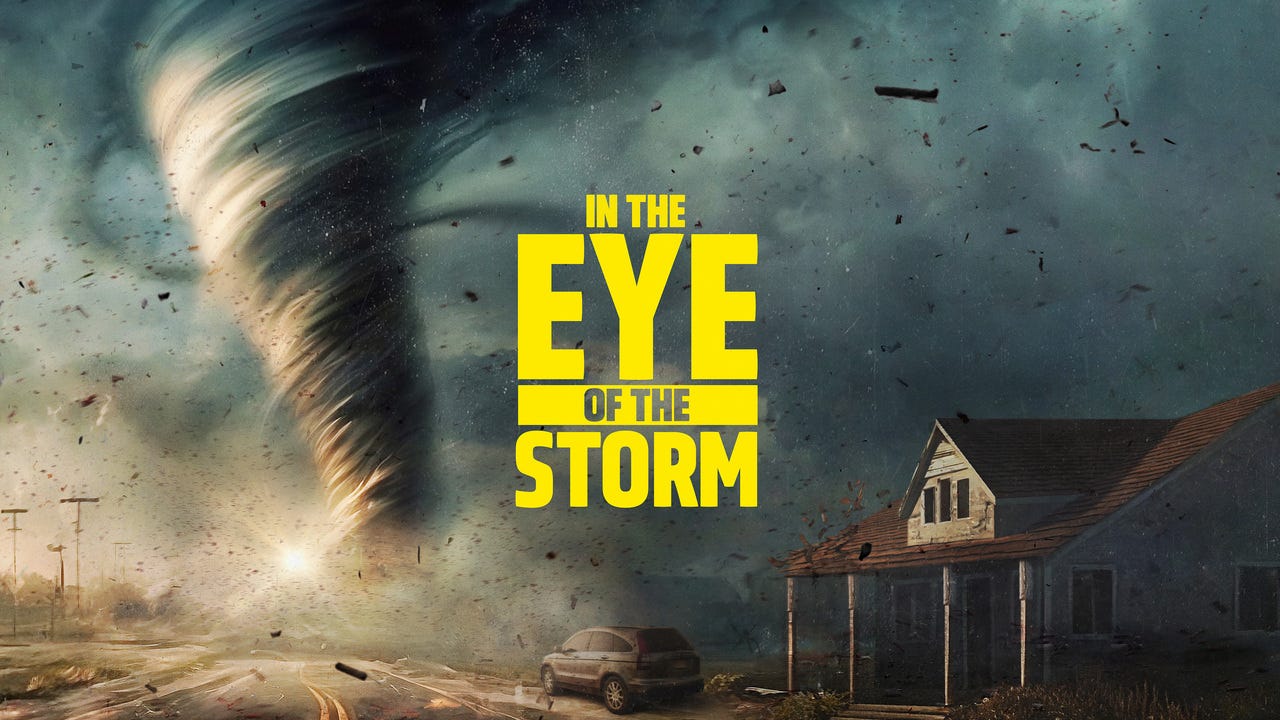
There is a moment in certain kinds of extreme weather footage where the scale of what you are watching becomes so overwhelming that the brain briefly refuses to process it as real. A funnel cloud wide enough to swallow a town. A semi-truck lifting off an interstate as casually as a leaf. A sky that has turned the color of old bruises, illuminated from inside by lightning that the thunder cannot keep pace with. The visual language of the tornado is so far outside ordinary human experience that even when you are watching it in real time, on a phone screen, captured by someone who cannot be more than a few hundred yards away from something that could kill them, part of your mind keeps insisting it must be CGI.
In the Eye of the Storm has built its identity on that specific dissonance, on footage so raw and so close that the distance between viewer and disaster collapses entirely, and Season 4, which returned to Discovery on June 28, 2026 with the premiere episode “Nightmare in May,” is the most intense iteration of the format yet. Eleven states. Hundreds of pieces of civilian and storm-chaser footage. Multiple death-rated tornadoes, including an EF3 that tore through a small Kansas town of 260 people and threw semi-trucks off an interstate like they were made of cardboard. And for the first time in the series’ short but remarkable run, the footage carries the unmistakable weight of events where people did not make it out. Read The Full Sunset Beehive on Substack!
In The City Is Summer House All Grown Up — And the Latest Episodes Prove the Franchise’s Most Interesting Chapter Is Just Beginning

There is a specific Bravo formula that has driven the Summer House universe for years: beautiful people in their late twenties and early thirties, a shared house, too much alcohol, romantic chaos, and the reliable combustion that comes from combining intimacy and cameras in a confined space. It works. It has worked for ten seasons. And it has produced some of the most genuinely compelling relationship television in the network’s history, not because the drama is sophisticated, but because these specific people, trapped in this specific environment, have a remarkable tendency toward honesty about what is falling apart in their lives.
In the City takes all of that energy and relocates it from the Hamptons beach house to the streets of Manhattan, and the results are something different in ways that matter. These are not young adults figuring out whether they want to commit. These are people who already committed, to careers, to marriages, to apartments, to the specific version of themselves they thought they were becoming, and are now living inside the complicated aftermath of those decisions. The drama is not about who is going to hook up with whom. It is about who is going to survive the version of their life they built.
The most recent episodes have delivered more genuine emotional content than most reality television produces in an entire season. Read The Full Sunset Beehive on Substack!
“Livingston”: Life, Larry and the Pursuit of Unhappiness Episode 1 Breaks Down Every Sketch — And Proves the Premise Works
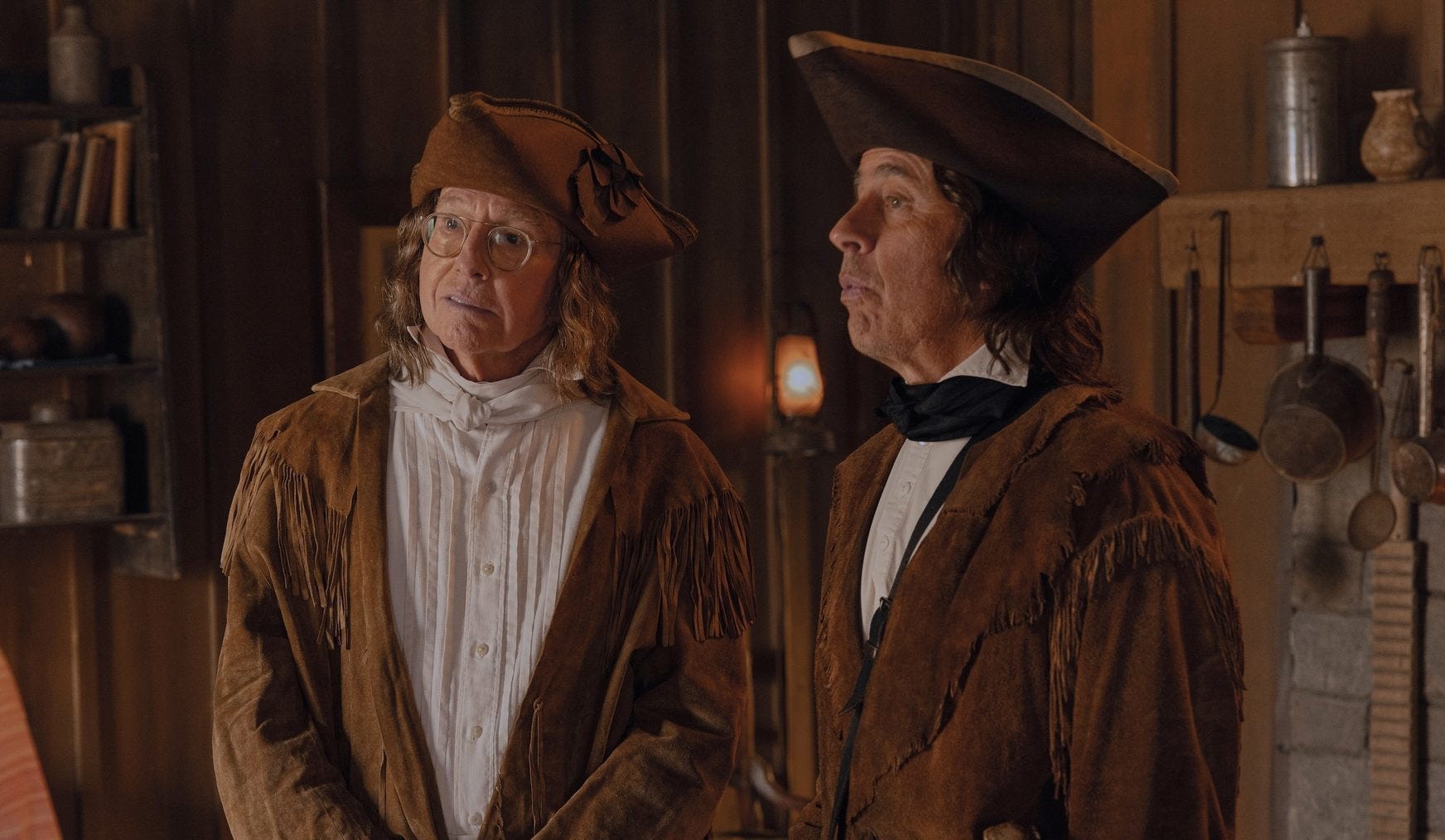
The title card for the first episode of Life, Larry and the Pursuit of Unhappiness reads “Livingston,” and if you spent a moment wondering which Livingston, that confusion is itself the first joke. The show is named for Robert R. Livingston, Founding Father, member of the Committee of Five, co-drafter of the Declaration of Independence, and a man who has been largely overlooked by history in favor of his more famous co-authors. The choice of that specific historical figure as the entry point for Larry David’s tour through American history is not accidental. Livingston is the guy who was in the room, who contributed substantially to one of the most consequential documents ever written, and who did not get enough credit for it. He is, in other words, the Founding Father most likely to be deeply, vocally aggrieved about the situation.
Larry David could not possibly be a better fit.
The premiere establishes the show’s format from the very beginning. Before watching, all I had seen were the promotional ads featuring him and Obama, which had my interest at its peak. However, the premiere immediately reveals the show’s tone, its governing logic, and its limitations, all within the first half hour. It does so with a structural clarity that makes even its weaker moments feel purposeful. Samuel L. Jackson arrives as the narrator, dry, authoritative, slightly amused, in the specific register of someone who knows he is introducing something historically significant and also knows that significance is about to be thoroughly undermined, and sets the table for each sketch with enough real history to make the subsequent chaos land. Barack Obama provides the opening framing, invoking the genuine weight of the nation’s 250th anniversary with the measured, almost ceremonial delivery that his public voice carries. And then Larry David appears in a powdered wig, and the dignity leaks out of the room like air from a punctured tire.
Four sketches. Four centuries of American history. One man and his grievances. Here is what actually happened in each. Read The Full Sunset Beehive on Substack!
Life, Larry and the Pursuit of Unhappiness: How Larry David Just Rewrote 250 Years of American History — And Got Away With It
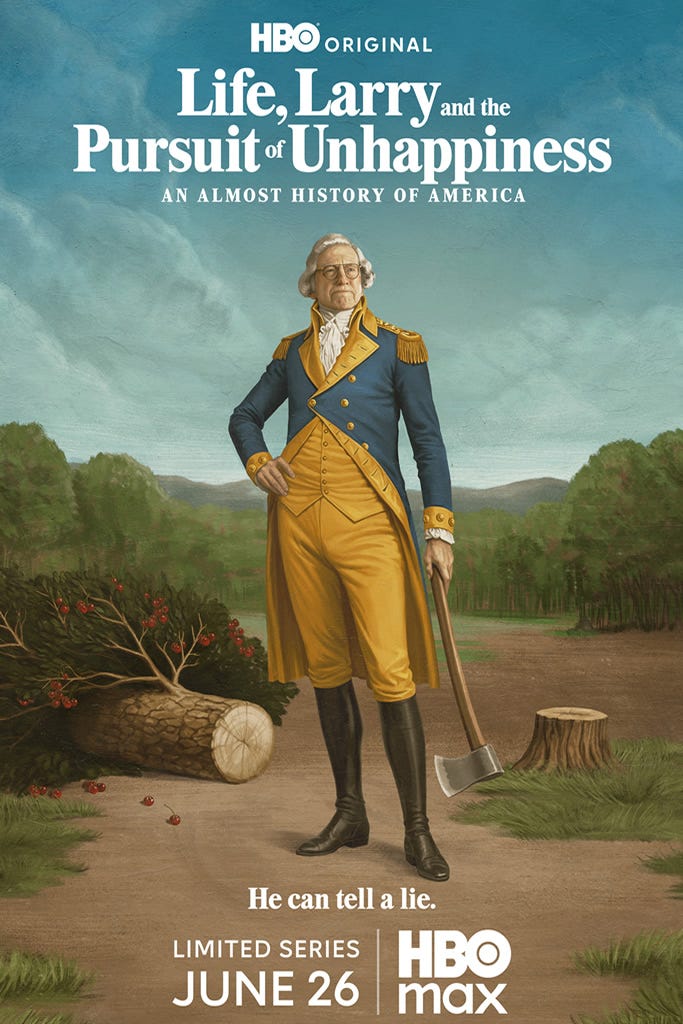
There is a version of America’s 250th birthday that involves soaring orchestral music, Ken Burns-style dissolves between sepia photographs, and a narrator who sounds like he is personally apologizing for the passage of time. And then there is the version where Larry David crashes the party, refuses to sit where he’s told, complains that nobody used a coaster on the wooden table of liberty, and accidentally derails the entire democratic experiment.
Guess which version HBO chose.
Life, Larry and the Pursuit of Unhappiness: An Almost History of America arrived on June 26, 2026 — today, on the very cusp of the nation’s Semiquincentennial — and it is exactly as audacious, as bizarre, and as only-on-HBO as that premise suggests. Seven episodes. Four historical sketches per half-hour. One relentlessly cantankerous protagonist. And an official logline that reads like a warning label: “Those who don’t know history are doomed to watch Larry David repeat it.”
Welcome to the most unexpected birthday present America has ever received.
The Origin Story: When the Obamas Called Larry David….Read More!
Below Deck Mediterranean Season 11 Is Already Delivering the Most Chaotic Charter in Franchise History — And a $50,000 Tip to Go With It
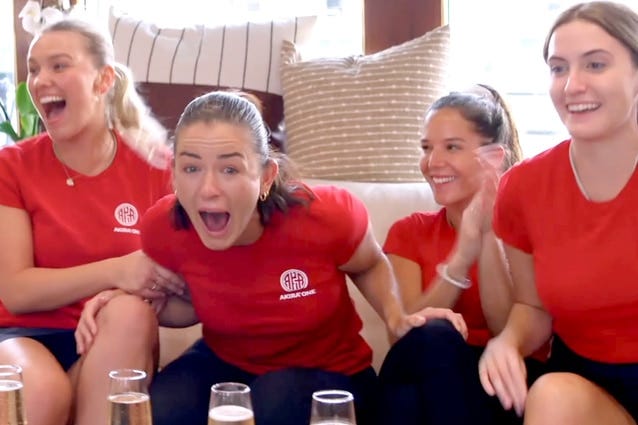
Nathan Gallagher and Joe Bradley built a real friendship across their previous season together, one of the warmer dynamics the show had produced in recent memory. But the Season 11 premiere arrives with that friendship visibly strained. The roots of the breakdown go back to last season and to Joe’s behavior toward Gael Cameron, Nathan’s girlfriend and the mother of his son Kayden. What happened between Joe and Gael has not been laid out in exhaustive on-camera detail, but the outlines are clear that Joe, operating in the behavioral mode that the show has historically documented as his default in social settings, said things about Gael to people in the group that Nathan eventually heard. Whether the specific content was malicious or simply Joe being characteristically indiscreet, the impact on the friendship was real and lasting. Nathan confronted Joe directly and personally about it, not as a professional correction from a bosun to a deckhand, but as a man telling another man that he crossed a line involving someone Nathan loves.
The professional dimension of that confrontation is what makes the situation so loaded going forward. Nathan cannot pretend the personal doesn’t exist, because it shapes how much he trusts Joe’s judgment, which is directly relevant to whether Joe can actually function as his Lead Deckhand in high-stakes situations. Joe cannot simply agree to leave the personal at the dock, because the personal is the reason Nathan doubts him in the first place. Captain Sandy, watching this from the bridge with the practiced eye of someone who has managed this specific kind of drama for eleven seasons, has already signaled concern about Nathan’s readiness to lead, she has noted openly that she is worried about whether he can separate the personal from the professional and perform as bosun without letting the Joe situation contaminate his judgment. Read The Full Sunset Beehive on Substack!
Welcome to Wrexham
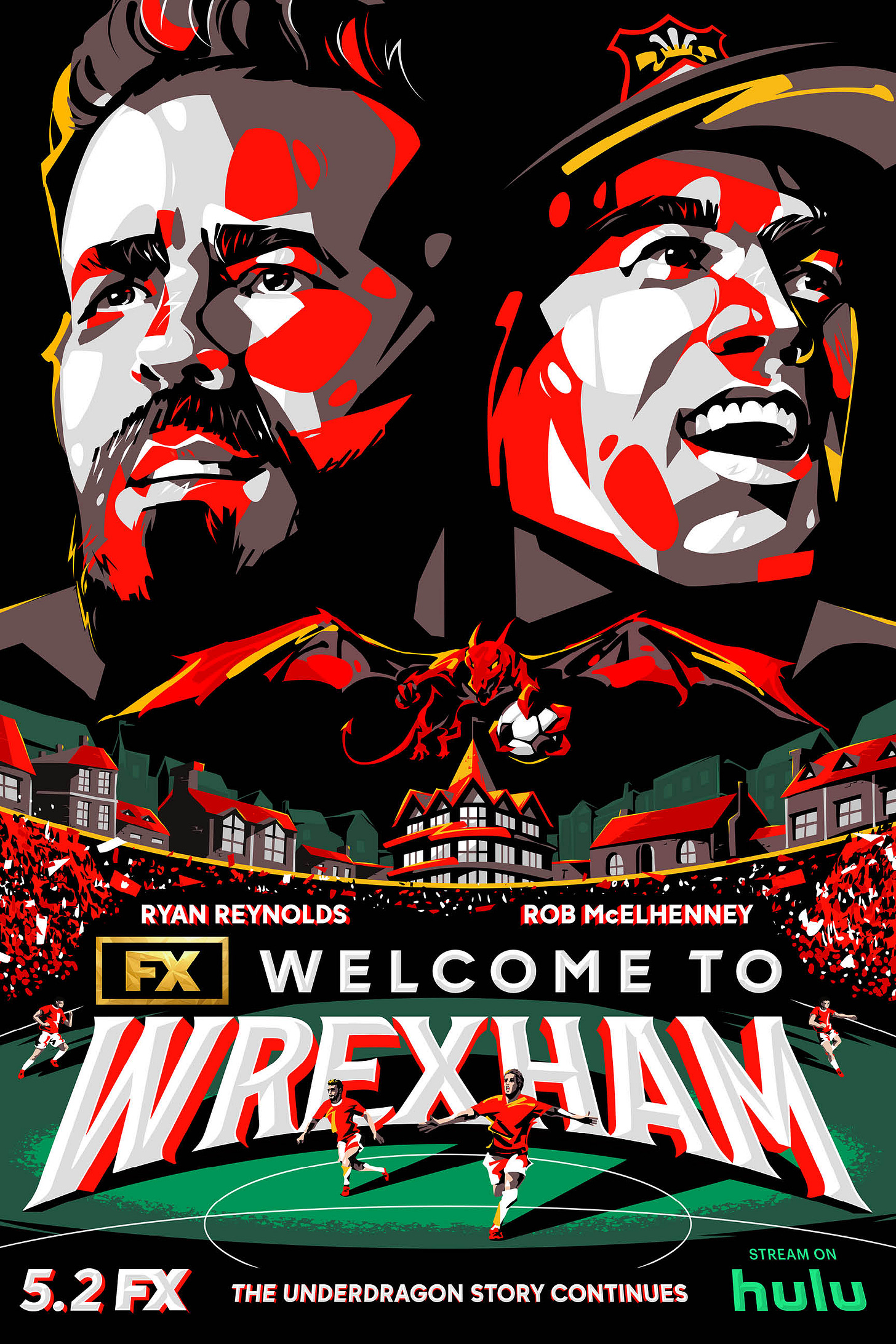
Welcome to Wrexham Season 5 Elevates the Club, the Town, and the Global Football Story Into Something Far Bigger Than a Sports Documentary
Few modern sports documentaries have managed to evolve from a curiosity-driven celebrity acquisition story into a globally respected long-form chronicle of civic identity, economic revitalization, and competitive ambition quite like Welcome to Wrexham. What began as an unlikely partnership between two Hollywood actors and one of the oldest football clubs in the world has transformed into one of the most emotionally resonant and commercially successful sports docuseries operating anywhere in streaming television today. Now, with Season 5 officially premiering on May 14, 2026, the series enters its most consequential chapter yet as Wrexham A.F.C. attempts to survive and compete in the brutally demanding environment of the EFL Championship.
Streaming now through Hulu in the United States and internationally through Disney+, the latest season arrives carrying expectations that would have sounded impossible just a few years ago. The club’s rise through the English football pyramid has not merely exceeded projections—it has fundamentally altered the perception of what lower-division football storytelling can achieve in the streaming era. At this point, Welcome to Wrexham is no longer simply documenting a football club. It is documenting the transformation of an entire ecosystem.
Executive stewards Ryan Reynolds and Rob McElhenney remain central figures in the narrative, but one of the defining strengths of the series is its refusal to make them the sole focal point. Their visibility may have ignited the international spotlight, but the series consistently redirects attention toward the people whose lives are intertwined with the club itself: supporters, local business owners, employees, families, players, and residents whose generational connection to Wrexham predates the cameras by decades. Read More!