



After years of stalled negotiations, partisan gridlock, failed reform packages, and mounting economic pressure tied to America’s worsening housing shortage, lawmakers in Washington are once again attempting to move comprehensive housing legislation forward — a rare moment of bipartisan cooperation emerging at a time when the United States remains millions of housing units short of meeting current demand.
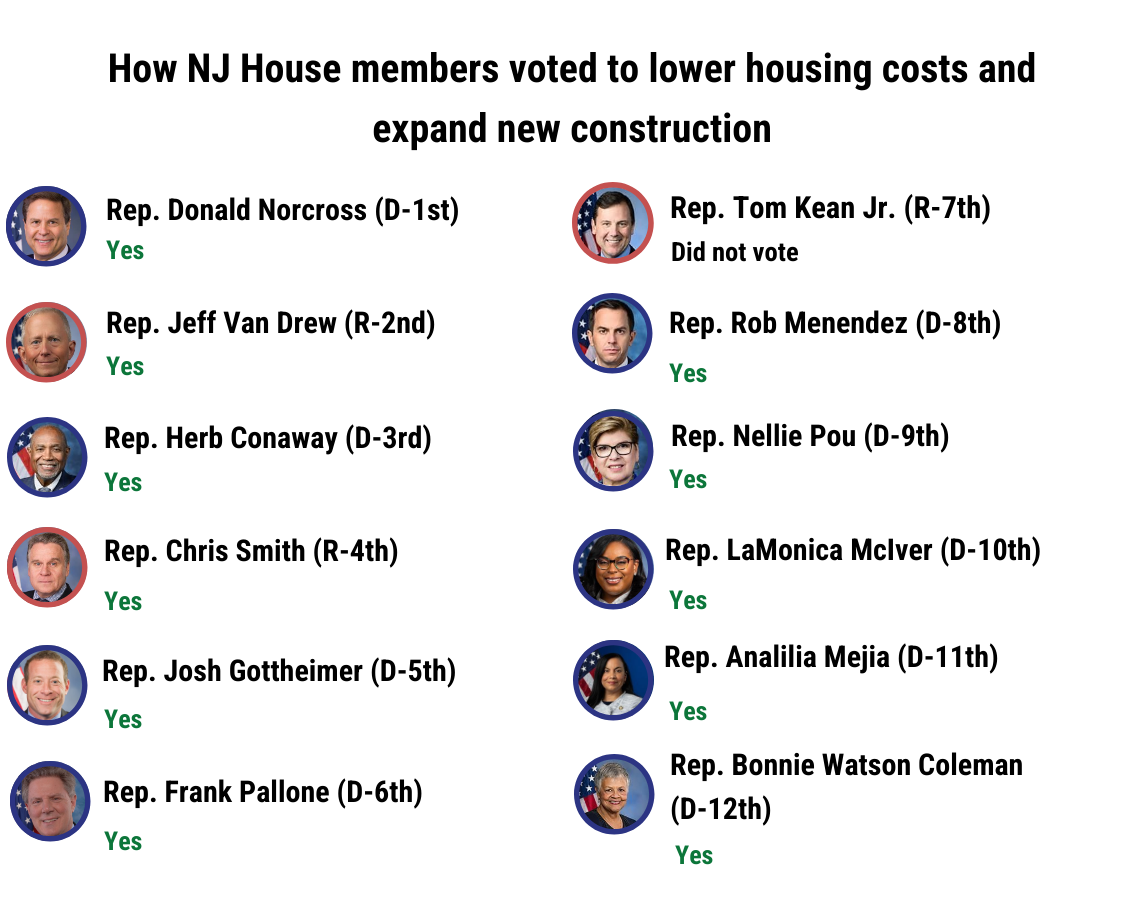
The renewed congressional push arrives as affordability pressures continue reshaping communities across the country, with states like New Jersey sitting directly at the center of the crisis.
From Jersey City luxury towers and Bergen County redevelopment projects to suburban zoning disputes, shore-region price surges, senior housing shortages, and escalating rent burdens across working-class municipalities, housing availability has become one of the defining economic and political issues confronting New Jersey residents, developers, planners, and policymakers alike.
Now, with Congress revisiting long-delayed housing legislation ahead of national midterm election battles, the conversation surrounding supply, affordability, construction incentives, and infrastructure investment is once again moving to the forefront of national politics.
The effort represents one of the few major areas where members of both parties appear increasingly willing to acknowledge the scale of the national housing emergency.
For years, economists, urban planners, developers, local governments, housing advocates, and financial analysts have warned that the United States has dramatically underbuilt housing relative to population growth, household formation, migration patterns, and changing demographic needs.
That imbalance worsened significantly following the 2008 financial crisis.
In the aftermath of the Great Recession, homebuilding activity collapsed nationally. Construction financing tightened, developers reduced production, zoning resistance intensified in many suburban regions, and large segments of the housing industry never fully recovered to pre-crisis output levels.
At the same time, population growth and demographic shifts continued.
Millennials entered prime household formation years. Remote work accelerated migration patterns. Investors increasingly entered residential markets. Institutional ownership expanded. Construction costs climbed sharply. Mortgage rates fluctuated dramatically. Labor shortages hit the construction sector. Land scarcity intensified in dense metropolitan regions.
The result has been a nationwide supply deficit now measured in millions of housing units.
New Jersey illustrates many of those pressures simultaneously.
The state’s housing market remains among the most constrained and expensive in the nation, driven by a combination of geographic limitations, intense regional demand, proximity to New York and Philadelphia employment centers, restrictive zoning battles, infrastructure pressures, rising construction costs, and limited large-scale development opportunities.
Housing inventory shortages have become particularly acute in commuter suburbs, transit-oriented corridors, and high-demand redevelopment zones.
The effects ripple throughout the economy.
Younger residents increasingly struggle to enter the housing market. Middle-income families face shrinking affordability. Rental prices continue climbing. Senior housing demand intensifies. Workforce recruitment becomes more difficult for employers. Municipal infrastructure systems face growing stress. Long-term economic mobility becomes harder to sustain.
Against that backdrop, the revival of federal housing legislation carries potentially enormous implications.
While details continue evolving through congressional negotiations, the broader effort focuses on accelerating housing production, reducing development bottlenecks, increasing affordability incentives, expanding financing mechanisms, encouraging zoning modernization, and supporting infrastructure tied to residential growth.
The political significance of the legislation is equally important.
Housing has increasingly emerged as a uniquely bipartisan crisis because its consequences now affect voters across ideological, geographic, and economic lines. Urban renters, suburban families, first-time buyers, retirees, employers, developers, and local governments all increasingly confront the effects of supply shortages directly.
That reality has begun reshaping political calculations in Washington.
For Democrats, housing affordability connects directly to economic inequality, cost-of-living concerns, labor mobility, and social stability. For Republicans, supply shortages increasingly intersect with workforce growth, economic competitiveness, inflation concerns, and local development pressures.
Even so, major disagreements remain.
The current negotiations continue facing significant hurdles surrounding federal spending levels, zoning authority, regulatory oversight, environmental review processes, tax incentives, affordable housing mandates, infrastructure funding, and the appropriate balance between federal involvement and local land-use control.
Zoning remains one of the most contentious issues.
Many housing experts argue restrictive local zoning laws — including single-family-only development patterns, height restrictions, parking mandates, and density limitations — significantly constrain housing production in high-demand regions. Reform advocates increasingly push for federal incentives encouraging municipalities to permit denser development near transit hubs and employment centers.
But resistance remains intense in many suburban communities nationwide, including throughout New Jersey.
Local officials and residents often express concerns about overdevelopment, school overcrowding, traffic congestion, infrastructure strain, environmental impacts, neighborhood character changes, and rising municipal service demands tied to higher-density housing expansion.
Those tensions have become deeply embedded in New Jersey politics.
Communities across the state continue wrestling with redevelopment battles involving warehouse construction, multifamily housing projects, affordable housing obligations, transit-oriented growth, environmental preservation, and suburban density debates.
At the same time, the economic pressure driving housing demand continues accelerating.
New Jersey’s proximity to New York City remains one of the dominant forces shaping statewide real estate dynamics. Hybrid work patterns and post-pandemic migration trends intensified demand throughout many suburban and exurban counties while simultaneously driving redevelopment activity in urban centers like Jersey City, Newark, Hoboken, New Brunswick, and parts of the Hudson waterfront.
The shortage affects nearly every segment of the market.
Luxury construction continues expanding in certain corridors, but affordable workforce housing remains critically limited. Entry-level ownership opportunities remain scarce. Senior housing demand is rising rapidly. Rental markets remain highly competitive. First-time buyers increasingly face barriers tied to down payments, mortgage rates, taxes, and inventory scarcity.
The federal legislative effort therefore arrives during a moment of unusually broad consensus regarding the scale of the problem itself — even if consensus on solutions remains elusive.
Another major issue involves infrastructure.
Housing production cannot expand meaningfully without parallel investment in transportation systems, utilities, drainage networks, schools, energy grids, broadband access, and environmental resiliency infrastructure. In dense states like New Jersey, infrastructure limitations often become one of the largest obstacles to large-scale residential expansion.
Developers frequently face enormous costs tied to sewer capacity upgrades, stormwater management systems, roadway improvements, utility modernization, environmental mitigation requirements, and transit coordination.
Federal housing legislation increasingly recognizes that housing policy and infrastructure policy are now inseparable.
The conversation is also becoming increasingly intertwined with labor economics.
Businesses across multiple sectors now report workforce recruitment challenges tied directly to regional housing affordability. Teachers, healthcare workers, first responders, municipal employees, hospitality workers, logistics personnel, and service-industry professionals increasingly struggle to live near the communities where they work.
That dynamic affects both economic growth and quality of life.
In New Jersey specifically, the shortage has become especially visible across high-demand counties including Bergen, Hudson, Middlesex, Monmouth, Essex, and Ocean counties, where rising home prices and rents continue reshaping demographic patterns and economic accessibility.
Recent housing growth studies have shown New Jersey building at its fastest pace in decades, yet demand continues outpacing supply in many critical regions.
That paradox underscores the scale of the challenge.
Even substantial new construction often fails to close the affordability gap quickly enough because underlying demand remains so strong and development constraints remain so significant.
The revived congressional legislation therefore represents more than just another federal policy debate.
It reflects a growing recognition that housing shortages are no longer isolated local problems but major national economic issues influencing inflation, labor markets, infrastructure planning, population mobility, family formation, and long-term economic stability.
For New Jersey, where development pressure, affordability concerns, and infrastructure strain continue converging simultaneously, the stakes surrounding federal housing action may be particularly high.
Whether Congress ultimately succeeds in moving comprehensive legislation forward remains uncertain.
Political divisions remain sharp. Midterm election pressures continue intensifying. Local zoning conflicts remain deeply contentious. Budget negotiations remain volatile.
But after years of paralysis, the fact that housing legislation has reemerged as a serious bipartisan conversation at all signals how dramatically the issue has moved toward the center of America’s economic future.
And in a state like New Jersey — where housing affordability increasingly shapes everything from workforce growth and transportation planning to generational mobility and regional development itself — that conversation is no longer theoretical.
It is already redefining the landscape.