


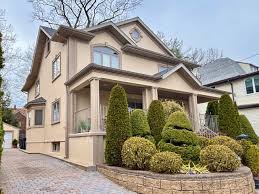

In Fort Lee, where early 20th-century homes still define entire neighborhoods with their craftsmanship and character, the preservation of historic structures is more than cosmetic—it is structural, cultural, and economic. A recently completed restoration by ZD Stucco Repair underscores that reality, as the New Jersey-based exterior specialist finalized a comprehensive stucco rehabilitation and protective coating project on a home originally constructed in 1910. The result is not simply a refreshed façade, but a fortified building envelope designed to endure the region’s increasingly volatile climate while maintaining the integrity of a century-old design.
The project reflects a growing demand across North Jersey for high-performance exterior restoration that respects original construction methods while integrating modern protective systems. In Fort Lee—where proximity to the Hudson River introduces persistent moisture exposure, seasonal freeze-thaw cycles, and urban environmental stressors—stucco failure is not uncommon in older homes. Hairline cracking, water intrusion, delamination, and substrate deterioration can quietly escalate into structural risks if not addressed with precision.
ZD Stucco Repair approached the 1910 home with a methodology that mirrors best practices in advanced façade restoration. Rather than applying superficial patchwork, the team conducted a full-scale evaluation of the exterior system, identifying compromised sections, assessing adhesion integrity, and mapping moisture infiltration points. This diagnostic-first approach is increasingly recognized as essential in older homes, where layers of prior repairs can mask deeper vulnerabilities.
Once the assessment phase was completed, the restoration process moved into careful removal of deteriorated stucco sections, followed by substrate stabilization and reinforcement. This stage is critical in homes of this era, where original materials may have shifted over decades. By rebuilding the base layers with compatible materials and modern bonding agents, ZD Stucco Repair ensured that the new system would not only adhere properly but also move with the structure over time—reducing the likelihood of future cracking.
The application of a high-performance protective coating system marked the final phase of the project, transforming the home’s exterior into a resilient barrier against environmental stress. Unlike traditional finishes, modern coatings used in advanced stucco restoration provide enhanced water resistance, vapor permeability, and UV stability. This balance is essential: while the exterior must repel water intrusion, it must also allow trapped moisture within the wall assembly to escape, preventing internal damage.
Across New Jersey, projects like this are becoming increasingly significant as property owners confront the realities of aging housing stock. Homes built in the early 1900s were not designed for the environmental conditions they now face—nor for the maintenance cycles required in today’s real estate market. Restoration, when executed at this level, becomes a strategic investment rather than a reactive repair. It preserves property value, extends structural lifespan, and reduces long-term maintenance costs.
The broader construction and renovation landscape throughout the state continues to reflect this shift toward restoration-driven investment. As highlighted in ongoing coverage within the [Explore New Jersey construction] category, there is a measurable increase in demand for specialized trades capable of delivering both aesthetic and structural upgrades. Homeowners, developers, and preservation advocates are aligning around a shared priority: maintaining the architectural identity of New Jersey communities while bringing buildings up to modern performance standards.
Fort Lee, in particular, represents a unique intersection of historic preservation and high-density development pressure. As new construction rises alongside legacy homes, the contrast between old and new places additional emphasis on maintaining the visual and structural integrity of historic properties. Restoration projects like this one demonstrate that preservation does not require compromise—it can coexist with modernization when executed with technical expertise and attention to detail.
ZD Stucco Repair’s work on the 1910 home stands as a case study in how targeted exterior restoration can deliver long-term protection without erasing historical character. The home retains its original visual identity while benefiting from a fully modernized exterior system engineered for durability. This dual outcome is increasingly the benchmark for high-quality restoration projects across the region.
For homeowners throughout New Jersey, the implications are clear. Exterior systems are not static—they are dynamic components that require periodic evaluation and, when necessary, comprehensive renewal. Waiting for visible damage often means underlying issues have already progressed. Proactive restoration, particularly with advanced materials and techniques, offers a pathway to preserving both the aesthetic and structural value of older homes.
As the state continues to balance growth with preservation, projects like this reinforce a critical message: the future of New Jersey’s built environment depends as much on how we restore the past as it does on how we build the new.