


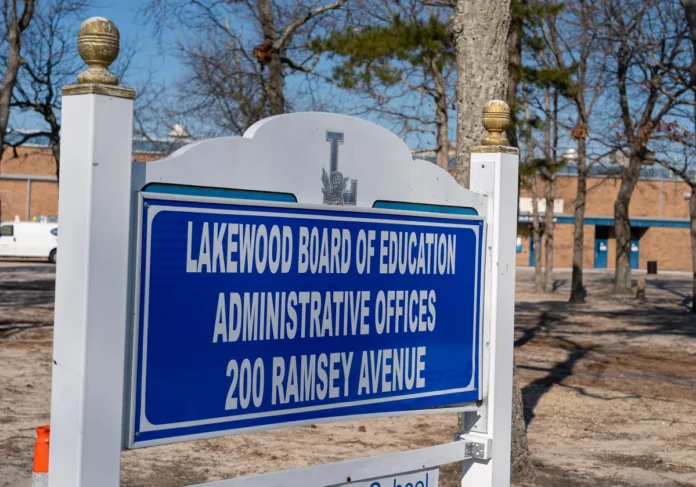

A major governance battle over one of New Jersey’s most closely watched public school districts is entering a critical phase as Lakewood officials intensify their opposition to a proposed state intervention. Leaders within the Lakewood School District argue that the evidence used to justify the move is fundamentally flawed, incomplete, and built on outdated information. As the dispute moves toward a hearing before an administrative law judge, the district is making its case that the state’s attempt to assume deeper control over local education governance is not only unwarranted but also based on what it calls a “cherry-picked” and one-sided narrative.
The stakes surrounding this debate extend far beyond a single district. Lakewood has become a focal point for broader conversations about school funding, oversight authority, demographic change, and the long-term sustainability of public education systems serving complex communities. With tensions rising between state officials and local leadership, the upcoming legal proceedings could shape how New Jersey approaches district accountability and intervention for years to come.
Lakewood officials maintain that the state’s findings rely heavily on selective examples that fail to represent the district’s current reality. In filings and public statements leading up to the administrative review, district leaders argue that the state’s documentation paints an incomplete picture by emphasizing historical challenges while overlooking recent improvements in financial management, governance practices, and operational transparency.
According to the district, the state’s analysis fails to fully consider the structural and demographic pressures unique to Lakewood. The township has experienced explosive population growth over the past several decades, creating extraordinary demands on its public school system. Enrollment dynamics, shifting community needs, and financial obligations tied to state mandates have all contributed to an environment that district officials say requires collaboration and support rather than punitive oversight.
At the center of the dispute is whether the New Jersey Department of Education has adequately demonstrated that Lakewood’s governance structure requires further state control. State officials have argued that intervention is necessary to address ongoing operational concerns and ensure that educational standards, fiscal responsibility, and administrative accountability remain aligned with statewide expectations.
District leaders reject that characterization, asserting that the state’s proposal is built on data that does not reflect the district’s present circumstances. They contend that improvements implemented over recent years—including reforms to administrative processes and financial oversight—have significantly strengthened the district’s ability to operate effectively under local leadership.
Lakewood’s response also emphasizes the importance of community representation in education governance. Local officials argue that decisions affecting students, families, and educators should remain rooted in the district itself rather than transferred to state administrators unfamiliar with the unique dynamics of the township.
The debate has drawn attention from education advocates and policymakers across New Jersey because it touches on fundamental questions about how state governments should intervene in struggling districts. The balance between local autonomy and state oversight has long been a defining issue in New Jersey education policy, with previous interventions in districts such as Newark, Jersey City, and Paterson shaping statewide conversations about accountability and reform.
In those cases, the state assumed varying degrees of operational control in response to governance challenges or academic performance concerns. Over time, several of those districts transitioned back toward local control after meeting specific benchmarks established by the Department of Education.
Lakewood’s situation, however, presents a distinct set of challenges. The district serves a rapidly evolving population and operates within a complex funding framework that includes obligations related to private school transportation and services. These responsibilities have frequently placed financial strain on the district’s budget, a factor that local officials say must be fully understood when evaluating governance decisions.
District leaders argue that the state’s proposal fails to recognize these contextual realities. In their view, the narrative surrounding Lakewood too often focuses on isolated examples rather than examining the structural issues that shape the district’s financial and administrative landscape.
The upcoming hearing before an administrative law judge represents a critical moment in the process. During this stage, both sides will have the opportunity to present evidence and arguments regarding whether the state’s proposed intervention meets the legal standards required for expanded oversight.
For the district, the hearing is an opportunity to challenge what it describes as an incomplete and outdated portrayal of its operations. Officials are expected to highlight recent reforms and improvements they believe demonstrate the district’s ability to function effectively without additional state control.
For the state, the proceedings will serve as a forum to explain why further intervention is necessary to safeguard educational quality and administrative accountability.
Beyond the legal arguments, the dispute reflects broader pressures facing public education systems throughout New Jersey. Many districts are grappling with rising operational costs, evolving enrollment patterns, and complex funding formulas that can create financial instability even in communities with strong local leadership.
Lakewood has been particularly affected by these pressures due to the township’s rapid growth and distinctive educational landscape. The district must balance the needs of its public school students while also meeting statutory obligations related to transportation and services for nonpublic school populations.
These factors have contributed to longstanding financial challenges that district officials say require systemic solutions rather than governance takeovers. They argue that deeper collaboration between state and local leaders would produce better outcomes than shifting authority away from elected representatives.
The debate also underscores how governance disputes can ripple outward into larger policy conversations. When the state intervenes in a district, it raises questions about transparency, accountability, and the long-term path back to local control.
Education advocates are watching closely because the Lakewood case may influence how the state evaluates other districts facing operational challenges. If the administrative law process ultimately supports the state’s position, it could signal a willingness to expand intervention authority under certain circumstances. Conversely, if the district’s arguments prevail, it could reinforce the importance of local governance and contextual analysis when evaluating school systems.
Within Lakewood itself, the conversation has generated intense community engagement. Residents, educators, and local leaders are closely monitoring the proceedings, recognizing that the outcome could shape the district’s governance structure and educational trajectory for years to come.
The case has also brought renewed attention to the broader mission of public education in rapidly growing communities. As population changes reshape school systems across New Jersey, policymakers must continuously adapt governance frameworks to ensure that districts can respond effectively while maintaining transparency and accountability.
For Lakewood’s leadership, the message remains clear: the district believes the state’s intervention effort is built on a flawed foundation. By describing the evidence as “woefully deficient,” officials are signaling their determination to challenge the narrative surrounding their governance and to defend local control over the district’s future.
As the administrative hearing approaches, both sides are preparing for a closely watched legal and policy confrontation that could redefine the relationship between state oversight and local education leadership in New Jersey.
Regardless of the outcome, the Lakewood case illustrates how complex and consequential education governance debates have become. In a state where education policy often serves as a barometer for broader political and community dynamics, the resolution of this dispute will likely resonate far beyond the boundaries of a single school district.
For families, educators, and policymakers across New Jersey, the coming weeks will offer important insight into how the state navigates the intersection of accountability, autonomy, and the evolving realities of public education.