


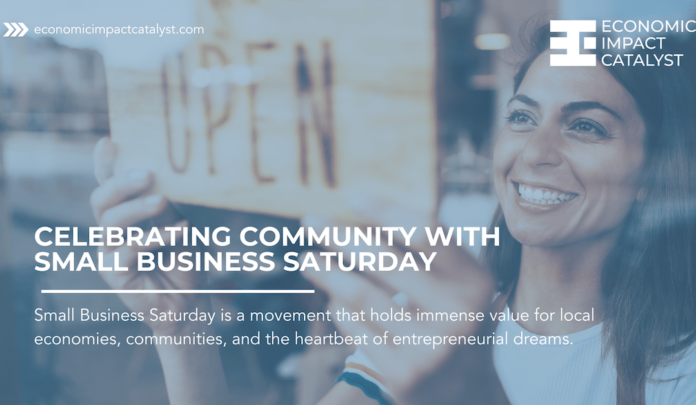

Small Business Saturday in New Jersey: The Economic Engine, Community Backbone, and Holiday Catalyst Driving Local Success
In the evolving landscape of New Jersey’s economy, few retail moments carry as much layered significance as Small Business Saturday. Positioned strategically between the high-velocity consumer surges of Black Friday and Cyber Monday, this now-ingrained holiday shopping tradition has matured far beyond its original intent. What began in 2010 as a targeted response to the lingering effects of the 2008 financial crisis has transformed into a cornerstone event that fuels local economies, reinforces community identity, and sets the tone for the most consequential retail stretch of the year.
For small business owners across the Garden State—from the independent storefronts lining downtown corridors to family-operated restaurants anchoring neighborhood culture—this single day represents more than increased foot traffic. It signals momentum. It marks the unofficial launch of the holiday revenue cycle. And, increasingly, it reflects a broader consumer shift toward intentional, community-centered spending.
At the center of this narrative is the undeniable role small businesses play in shaping New Jersey’s economic and social fabric. According to insights shared by National Federation of Independent Business state leadership, the impact of small businesses extends well beyond transactional commerce. These enterprises are not just contributors to the economy—they are foundational pillars of community development, civic engagement, and local identity.
Eileen Kean, representing the NFIB at the state level, emphasizes that the importance of small businesses cannot be reduced to revenue figures alone. Their influence permeates workforce stability, charitable ecosystems, and neighborhood vitality. Across New Jersey, small businesses are responsible for creating meaningful employment opportunities, often delivering competitive wages while maintaining a level of personal investment in their workforce that is rarely replicated at scale. This localized employment model contributes directly to stronger regional economies, keeping dollars circulating within communities rather than being extracted by distant corporate structures.
Yet the economic argument, while compelling, only tells part of the story. The deeper narrative lies in how these businesses embed themselves into the daily life of their communities. Data reveals that approximately 76 percent of small business owners actively volunteer their time across a spectrum of civic and charitable initiatives. Whether supporting youth athletics, contributing to school programs, engaging in religious or nonprofit activities, or lending expertise to community organizations, these business leaders operate as active stakeholders in the wellbeing of their neighborhoods.
Notably, this commitment to community persists regardless of scale. Even among the smallest operations—those with fewer than ten employees—participation in volunteer efforts remains remarkably high, with 73 percent reporting direct involvement. This underscores a critical distinction: small businesses are not simply economic units; they are relational entities, built on proximity, accountability, and shared experience.
This dynamic has not gone unnoticed by the public. Trust metrics further reinforce the unique position small businesses occupy in the American consciousness. A recent national survey conducted by Gallup found that more than two-thirds of Americans express strong trust in small businesses—surpassing confidence levels in large corporations and many other major institutions. In an era increasingly defined by skepticism toward centralized systems, this trust represents a powerful currency, one that translates directly into consumer behavior during critical retail periods.
Small Business Saturday capitalizes on this trust, converting sentiment into action. For New Jersey residents, the day offers an opportunity to align spending habits with values—supporting businesses that reinvest locally, employ neighbors, and contribute to the social infrastructure of their communities. For business owners, it provides a platform to amplify visibility, attract new customers, and establish relationships that extend well beyond a single transaction.
The timing is no coincidence. Falling at the outset of the holiday shopping season, Small Business Saturday serves as a launchpad for December performance. A strong showing can influence inventory turnover, cash flow stability, and staffing decisions throughout the remainder of the year. For many operators, especially those navigating tight margins and competitive pressures, the success of this period can define annual outcomes.
Across New Jersey, municipalities, business alliances, and local chambers of commerce increasingly recognize the strategic importance of this day. Coordinated campaigns, community events, and localized promotions are designed to create a unified retail experience—transforming shopping districts into destinations rather than mere points of sale. These efforts not only drive immediate economic activity but also reinforce long-term consumer habits that favor local engagement.
From a macroeconomic perspective, the implications are substantial. When consumers choose to shop small, a greater proportion of each dollar spent remains within the local economy. This multiplier effect strengthens municipal tax bases, supports public services, and fosters a more resilient economic ecosystem. In contrast to the extractive nature of large-scale retail chains, small business spending circulates, compounds, and stabilizes.
For New Jersey—a state defined by its dense network of communities, diverse cultural hubs, and entrepreneurial spirit—the stakes are particularly high. Small businesses are not peripheral players; they are central to the state’s economic identity. They define main streets, shape local culture, and provide the connective tissue that links commerce with community life.
As the holiday season approaches, the message from business leaders is clear: participation matters. Choosing to shop locally is not merely a symbolic gesture—it is a direct investment in the sustainability and growth of New Jersey’s communities. It is a recognition of the value created by independent businesses and the role they play in maintaining the character and vitality of the places people call home.
Small Business Saturday stands as both a celebration and a call to action. It highlights what makes local economies thrive while challenging consumers to think critically about where—and how—they spend. In New Jersey, where community and commerce are deeply intertwined, that decision carries weight far beyond the checkout counter.