


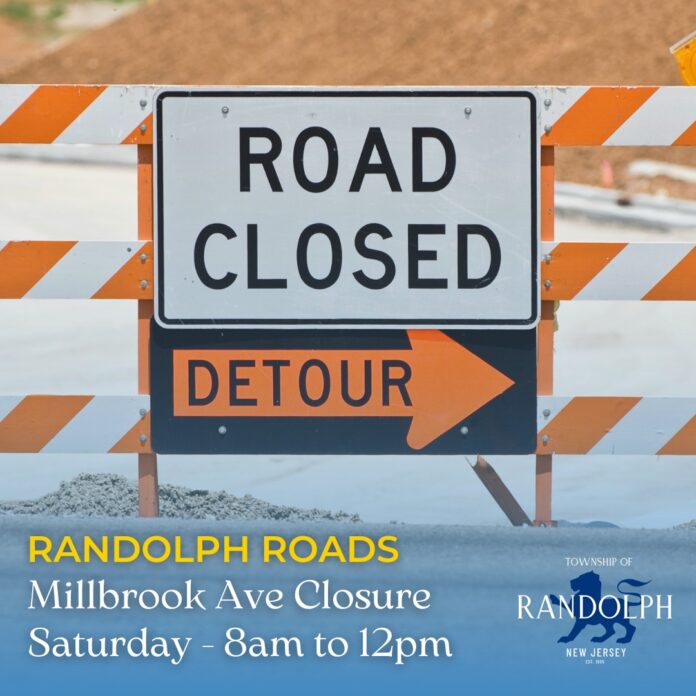

A key stretch of roadway in Morris County is entering a temporary but highly consequential period of disruption as New Jersey continues to modernize its underground energy infrastructure. Beginning Monday, April 6, Millbrook Avenue in Randolph will be closed between Quaker Church Road and South Morris Street as crews initiate a critical gas main installation project—an upgrade that reflects a broader statewide push to reinforce reliability, safety, and long-term capacity across New Jersey’s energy and transportation corridors.
The closure, scheduled to run through early July pending weather conditions, is more than a localized inconvenience. It is part of a strategic infrastructure initiative designed to strengthen the integrity of natural gas delivery systems while aligning with evolving regulatory standards and regional growth demands. The work is being carried out by Gray Supply under contract with New Jersey Natural Gas, placing experienced operators at the forefront of a project that will directly impact both daily commuters and the long-term resilience of essential services in the region.
Construction activity will take place weekdays from 8 a.m. to 4 p.m., with the roadway reopening at the end of each workday. This phased closure approach is deliberate, balancing the urgency of infrastructure upgrades with the realities of community mobility. By restoring access each evening, project planners are attempting to minimize disruption while maintaining a consistent pace of progress during active work hours.
For residents and commuters throughout Randolph and the surrounding Morris County area, the closure introduces immediate changes to traffic patterns that require both awareness and adjustment. Millbrook Avenue serves as a functional connector within the township’s local road network, and its temporary closure redirects traffic flow onto adjacent routes that may already be operating near peak capacity during certain hours. As a result, motorists should expect increased congestion, particularly during morning and afternoon travel windows, and should plan accordingly by allowing additional time or identifying alternate routes.
Local law enforcement will maintain a controlled access system through the work zone, ensuring that essential services remain uninterrupted. Residents living within the closure area, along with school transportation, sanitation operations, and emergency response vehicles, will be permitted limited entry as needed. This layered access model reflects a coordinated effort between municipal authorities, county engineering teams, and contractors to preserve critical services while maintaining a secure and efficient work environment.
The significance of this project extends beyond traffic management. Gas main installation and replacement projects are foundational to modern infrastructure strategy, particularly in states like New Jersey where aging systems must be upgraded to meet current performance and safety expectations. These upgrades reduce the risk of system failures, improve pressure consistency, and support the integration of newer technologies that enhance monitoring and operational control. In practical terms, this means safer neighborhoods, more reliable service delivery, and a system better equipped to handle both seasonal demand fluctuations and long-term population growth.
Within the broader context of New Jersey’s transportation and infrastructure landscape, projects like the Millbrook Avenue closure illustrate the intersection of utility modernization and roadway management. Every underground upgrade requires surface-level coordination, and that coordination increasingly relies on data-driven planning, interagency communication, and community engagement. The ability to execute these projects efficiently—while maintaining public trust and minimizing disruption—is a defining characteristic of effective infrastructure governance.
Coverage across the Transportation section continues to highlight how these localized projects contribute to a larger statewide narrative. From roadway improvements and transit enhancements to utility upgrades and traffic management strategies, New Jersey is actively reshaping the systems that support daily life. The Millbrook Avenue project fits squarely within that framework, representing a targeted investment with ripple effects that extend well beyond its immediate footprint.
For businesses operating in the Randolph area, the closure presents both challenges and opportunities. Reduced pass-through traffic may temporarily impact visibility and accessibility, particularly for establishments that rely on drive-by customers. At the same time, the influx of construction personnel and the heightened focus on the area can create new patterns of local engagement. Businesses that proactively communicate with customers—updating directions, promoting alternate access points, and maintaining clear messaging—are often best positioned to navigate these transitional periods successfully.
Residents, meanwhile, are encouraged to remain informed and engaged throughout the duration of the project. Clear communication between the community and project stakeholders plays a critical role in ensuring that concerns are addressed promptly and that adjustments can be made when necessary. The Morris County Division of Engineering and Transportation remains a central point of contact for inquiries, providing a direct line for updates, feedback, and issue resolution as the project progresses.
From a planning perspective, the timeline through early July reflects a realistic assessment of both the scope of work and the variables that can influence construction schedules. Weather conditions, subsurface discoveries, and logistical considerations all play a role in determining project pacing. By establishing a defined but flexible timeframe, project leaders are positioning themselves to maintain momentum while adapting to on-the-ground realities.
The Millbrook Avenue closure ultimately underscores a critical reality: infrastructure improvement is inherently disruptive, but that disruption is the cost of progress. Roads may close, traffic patterns may shift, and routines may be temporarily altered, but the outcome is a more reliable, more resilient system that benefits the entire community.
As New Jersey continues to invest in its transportation and utility networks, projects like this serve as tangible reminders of the work happening beneath the surface—work that is essential, complex, and foundational to the state’s future. For Randolph and Morris County, the months ahead will bring temporary inconvenience, but also meaningful advancement toward a stronger, more dependable infrastructure framework that will support the region for years to come.



