


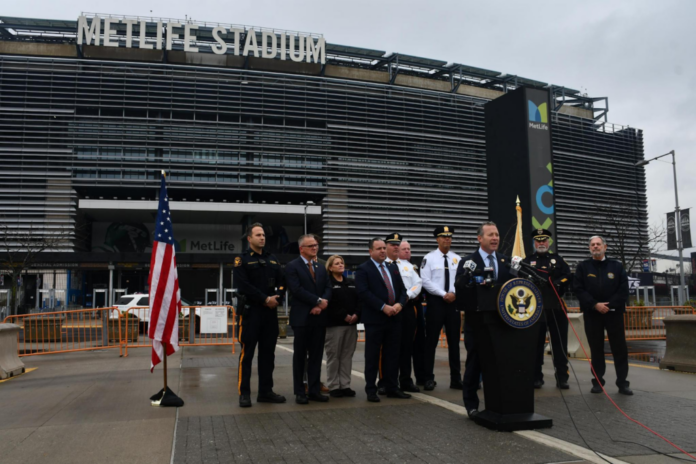

As New Jersey prepares to play a pivotal role in the global spotlight surrounding the 2026 FIFA World Cup, a growing policy debate is taking shape in Trenton—one that cuts to the core of fiscal strategy, public safety planning, and the balance between preparedness and overreach. At the center of that debate is a proposed sales tax increase tied to World Cup-related security funding, a measure now facing heightened scrutiny following a key acknowledgment from the state’s Attorney General that additional funding may not be necessary to meet current security demands.
This development has introduced a new layer of complexity into an already high-stakes conversation. With MetLife Stadium set to host matches during one of the largest international sporting events ever staged across North America, New Jersey’s role in the World Cup is both an economic opportunity and a logistical challenge. However, the question now confronting lawmakers is whether the financial mechanisms being proposed align with the actual needs on the ground—or whether they risk overextending taxpayers in pursuit of redundant preparedness.
The proposed sales tax adjustment, backed in part by gubernatorial candidate Mikie Sherrill, was initially framed as a proactive measure to ensure that New Jersey could meet the heightened security requirements associated with hosting a global event of this scale. The rationale was straightforward: large-scale international gatherings bring increased risks, and robust funding would enable law enforcement agencies to coordinate effectively, deploy advanced resources, and maintain a secure environment for visitors and residents alike.
Yet the Attorney General’s recent remarks have shifted the narrative. By indicating that existing funding levels and resource allocations are sufficient to support World Cup security operations, the state’s top law enforcement official has effectively challenged the premise underlying the proposed tax increase. This position suggests that New Jersey’s current infrastructure—both in terms of personnel and interagency coordination—may already be equipped to handle the demands of the event without additional fiscal measures.
This divergence between political strategy and operational assessment is now driving a broader examination of how New Jersey approaches large-scale event planning. It raises critical questions about the role of precautionary funding versus evidence-based budgeting, and whether the state’s existing systems have reached a level of maturity that reduces the need for reactive financial policies.
Coverage across the New Jersey Resources section of Sunset Daily has consistently highlighted the state’s evolving approach to infrastructure, public safety, and resource management. Within that context, the current debate can be seen as part of a larger trend toward more disciplined, data-driven decision-making—where funding proposals are increasingly expected to align with demonstrable needs rather than hypothetical scenarios.
From a security standpoint, New Jersey is not starting from scratch. The state has extensive experience managing high-profile events, particularly in and around major venues like MetLife Stadium. Coordination between state police, local law enforcement, federal agencies, and private security entities has been refined through years of planning and execution. These existing frameworks are likely a key factor in the Attorney General’s assessment that additional funding may not be required.
At the same time, the global scale of the World Cup introduces variables that extend beyond traditional event management. International travel, heightened media attention, and the convergence of diverse audiences create a unique operational environment. The challenge for policymakers is to determine whether these factors justify additional investment or whether they can be effectively managed within the current system.
The economic dimension of the debate is equally significant. Hosting World Cup matches is expected to generate substantial revenue through tourism, hospitality, and related industries. For many stakeholders, the focus is on maximizing that economic impact while ensuring that the costs associated with hosting do not outweigh the benefits. A sales tax increase, even if temporary, has the potential to influence consumer behavior and public perception, making it a politically sensitive tool.
Sherrill’s proposal, in this context, reflects a broader effort to position New Jersey as fully prepared and proactively engaged in the World Cup process. However, the Attorney General’s comments have introduced a counterpoint that emphasizes efficiency over expansion—arguing that the state’s existing capabilities may already meet the necessary threshold for security and operational readiness.
This tension between preparedness and prudence is likely to shape the legislative process in the months ahead. Lawmakers will need to weigh the credibility of law enforcement assessments against the perceived risks of underfunding, all while navigating the political dynamics associated with taxation and public spending.
For residents and businesses across New Jersey, the outcome of this debate carries tangible implications. Beyond the immediate question of tax policy, it speaks to how the state prioritizes resources, manages large-scale events, and communicates its strategy to the public. Transparency and clarity will be critical in maintaining confidence, particularly as the World Cup draws closer and preparations intensify.
The broader takeaway is that New Jersey’s approach to the 2026 FIFA World Cup is entering a more nuanced phase—one where the focus is shifting from broad planning to targeted execution. The state is no longer simply preparing for the event; it is refining how that preparation is funded and implemented.
As discussions continue in Trenton, the intersection of policy, economics, and public safety will remain at the forefront. The decisions made in this moment will not only shape New Jersey’s World Cup experience but also set a precedent for how the state approaches future large-scale events. In an environment where both opportunity and responsibility are amplified, the ability to align strategy with reality will define the success of the effort.
What is clear is that New Jersey is positioned to play a significant role on the global stage. The question now is how it chooses to support that role—through expanded funding mechanisms or through a more measured reliance on the systems already in place.