


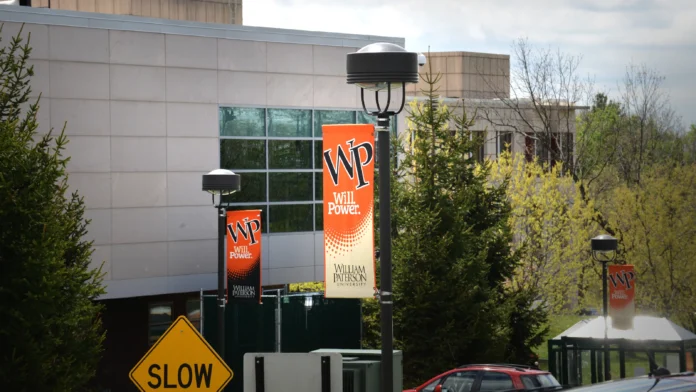

A targeted federal investment aimed at strengthening the economic backbone of rural New Jersey is now taking shape through William Paterson University, signaling a strategic shift in how small business growth is being cultivated across underserved regions of the state. With a newly awarded $128,000 Rural Business Development Grant from the U.S. Department of Agriculture, the university is poised to deliver a comprehensive, year-long program designed to equip rural entrepreneurs with the tools, infrastructure, and strategic guidance necessary to compete in an increasingly complex and technology-driven marketplace.
This initiative is not a standalone funding announcement; it represents a coordinated effort to modernize rural economic development through a hybrid model that blends traditional business support with forward-looking digital capabilities. Administered through the New Jersey Small Business Development Center at William Paterson University, the program is structured to deliver a layered approach to growth—one that integrates technical assistance, capital access pathways, workforce-aligned training, and digital transformation strategies into a single, cohesive framework.
At a time when rural economies across the country are confronting structural challenges ranging from workforce retention to limited access to capital, this program positions New Jersey as a state actively investing in long-term competitiveness rather than short-term relief. The emphasis on sustainability and scalability is deliberate. Participating businesses will not only receive immediate operational support but will also be guided through strategic planning processes that prioritize resilience, adaptability, and market expansion.
The program’s hybrid delivery model is particularly significant. By combining in-person engagement with digital learning infrastructure, it addresses one of the most persistent barriers facing rural entrepreneurs: access. Geographic distance has historically limited participation in high-level business training and advisory services. This initiative removes that constraint, allowing business owners to engage with expert resources, peer networks, and institutional support systems regardless of location. In doing so, it reflects a broader evolution in how business development services are being delivered across the state—an evolution that aligns with the innovation-driven narratives emerging throughout the Sunset Daily News business coverage.
Central to the program’s design is its focus on digital transformation. For many rural businesses, the transition from traditional operations to digitally enabled models remains one of the most critical—and challenging—steps toward growth. This initiative directly addresses that gap by providing structured guidance on e-commerce integration, digital marketing strategy, operational technology adoption, and data-driven decision-making. These are not abstract concepts; they are the foundational capabilities that determine whether a business can expand beyond its immediate geographic footprint and compete in broader regional or national markets.
Equally important is the program’s emphasis on access to capital. Small businesses in rural areas often face disproportionate challenges when seeking financing, whether due to limited lending networks, lack of familiarity with funding mechanisms, or structural barriers within traditional financial systems. Through its coordinated approach with federal partners, including USDA Rural Development and the U.S. Small Business Administration, the program aims to demystify these processes and create clear, actionable pathways for entrepreneurs to secure the funding necessary for expansion. This includes not only identifying available resources but also preparing businesses to meet the requirements and expectations of lenders and grant programs.
The anticipated economic impact is both measurable and meaningful. The program is expected to create or retain up to 46 jobs, a figure that underscores the multiplier effect of targeted small business investment in rural communities. These are not just numbers—they represent livelihoods, local economic stability, and the preservation of community identity in areas where small businesses often serve as both economic engines and social anchors. By strengthening these enterprises, the initiative contributes to a broader ecosystem of growth that extends beyond individual businesses to entire communities.
From a policy perspective, this investment reflects a larger federal and state alignment around rural development priorities. USDA Rural Development has increasingly focused on programs that go beyond infrastructure to address the full spectrum of economic needs, including entrepreneurship, workforce development, and technological access. This holistic approach is evident in the structure of the William Paterson initiative, which integrates multiple dimensions of support into a unified program. It is a model that recognizes the interconnected nature of modern economic growth, where success depends on the ability to align resources, knowledge, and opportunity.
For New Jersey, the significance of this program extends beyond its immediate geographic scope. While the state is often associated with its urban corridors and proximity to major metropolitan markets, its rural regions remain vital components of its economic landscape. Investments like this one serve to balance that narrative, ensuring that growth is not concentrated but distributed, and that rural communities are positioned to participate fully in the state’s broader economic trajectory.
There is also a strategic advantage in leveraging the academic infrastructure of William Paterson University as the program’s delivery mechanism. Universities are uniquely positioned to bridge theory and practice, combining research-driven insights with real-world application. By anchoring the initiative within an institution that already operates at the intersection of education, business development, and community engagement, the program gains both credibility and capacity. It also creates opportunities for ongoing collaboration between students, faculty, and local businesses, further embedding the university within the economic fabric of the region.
This development aligns closely with the broader themes shaping New Jersey’s business environment, where innovation, adaptability, and strategic investment are increasingly defining success. Across industries, from technology and logistics to healthcare and finance, the state is seeing a shift toward integrated, forward-looking growth models. The William Paterson initiative brings that same mindset to rural economic development, demonstrating that innovation is not confined to urban centers but can—and must—be cultivated across all regions.
As the program moves into implementation, its progress will be closely watched not only within New Jersey but also by policymakers and economic development professionals nationwide. Its success could serve as a blueprint for similar initiatives, illustrating how targeted funding, when paired with comprehensive program design, can drive meaningful and sustainable economic outcomes.
For entrepreneurs in rural New Jersey, the message is clear: the resources, support, and strategic guidance needed to grow are becoming more accessible than ever. For the state as a whole, this investment reinforces a commitment to inclusive growth—one that recognizes the value of every community and the critical role that small businesses play in shaping New Jersey’s economic future.
For continued coverage of business development, economic policy, and innovation across the state, explore more in the Sunset Daily News business section, where the stories driving New Jersey’s evolving economy are reported with depth, clarity, and authority.