




New Jersey is entering a consequential fiscal moment defined not by clarity, but by compounding uncertainty. As state revenue forecasters, legislative budget experts, and treasury officials convene to evaluate the financial framework underpinning Governor Mikie Sherrill’s latest spending proposal, a complex and unsettled picture is emerging—one shaped by economic volatility, technological disruption, and geopolitical instability that extends far beyond state borders.
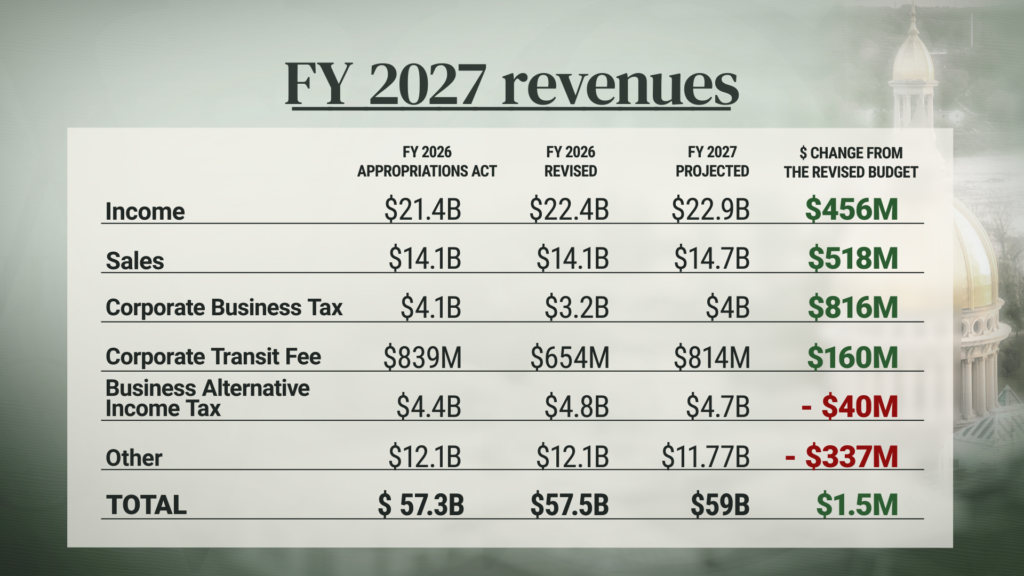
At the center of this evolving narrative is a fundamental challenge: projecting revenue in an environment where traditional indicators are no longer reliable predictors of near-term outcomes. The state’s treasury and legislative analysts are tasked with aligning fiscal expectations to realities that are shifting in real time. Job losses across key sectors, the accelerating integration of artificial intelligence into the workforce, and the ripple effects of conflict in the Middle East are converging to create a budget cycle unlike any in recent memory.
Governor Sherrill’s spending plan arrives at a moment when New Jersey’s economic resilience is being tested on multiple fronts. While the state has historically demonstrated the ability to navigate downturns with disciplined fiscal management, the current landscape introduces variables that are less predictable and more interconnected. The testimony delivered by treasury officials and legislative analysts underscores this dynamic, reflecting a cautious tone that acknowledges both the strengths of the state’s financial position and the risks that lie ahead.
Employment trends remain a central concern. While headline unemployment figures may not yet fully capture the extent of underlying shifts, there is growing recognition that structural changes are underway. Industries that once provided stable, long-term employment are undergoing transformation, influenced in part by automation and AI-driven efficiencies. These changes are not limited to a single sector; they are spreading across finance, logistics, healthcare administration, and even segments of public service. For revenue forecasters, this creates a moving target, where income tax projections and consumer spending patterns may diverge from historical norms.
Artificial intelligence, in particular, is emerging as both an economic opportunity and a source of disruption. On one hand, it promises increased productivity and the potential for new industries to take root within the state. On the other, it introduces uncertainty regarding workforce displacement, wage dynamics, and the pace at which new roles can replace those that are being redefined or eliminated. For policymakers, the challenge lies in anticipating these shifts while maintaining fiscal stability—a balance that requires both strategic investment and prudent restraint.
Compounding these domestic concerns are global developments that continue to influence economic conditions at home. Ongoing tensions in the Middle East, including recent escalations and temporary ceasefire negotiations, have introduced volatility into energy markets and broader financial systems. For a state like New Jersey, where energy costs directly impact both households and businesses, these fluctuations carry immediate consequences. Rising fuel and utility expenses can suppress consumer spending, alter business investment decisions, and ultimately affect tax revenues.
The interconnected nature of these challenges is a recurring theme in discussions surrounding the state’s fiscal outlook. Revenue forecasting is no longer a process confined to analyzing local data; it now requires a comprehensive understanding of global trends and their potential downstream effects. This expanded scope is evident in the testimony presented during budget hearings, where experts are increasingly factoring in international developments alongside traditional economic indicators.
Within this context, Governor Sherrill’s budget proposal is being evaluated not only on its immediate allocations but on its adaptability. The question facing lawmakers is whether the plan is sufficiently flexible to respond to changing conditions without compromising core priorities. Investments in infrastructure, education, and public services remain essential, yet they must be balanced against the possibility of revenue shortfalls. This tension defines the current budget cycle, where optimism about growth is tempered by the need for caution.
The role of the state treasurer in this process is particularly critical. Acting as both a steward of public funds and a navigator of economic uncertainty, the treasurer’s office is responsible for translating complex data into actionable forecasts. The testimony delivered in recent hearings reflects a measured approach, emphasizing the importance of maintaining reserves, monitoring economic indicators closely, and preparing contingency plans for a range of scenarios. This level of preparedness is essential in an environment where conditions can shift rapidly.
Legislative budget experts, meanwhile, are tasked with providing an independent assessment of the administration’s projections. Their analysis serves as a counterbalance, ensuring that assumptions are scrutinized and that potential risks are fully considered. The interplay between these perspectives contributes to a more comprehensive understanding of the state’s fiscal position, even as it highlights the inherent uncertainty of the moment.
Across the broader landscape covered in NJ Spotlight News, similar themes are emerging. New Jersey’s economic narrative is increasingly defined by its exposure to both national and global forces, reinforcing the need for policy frameworks that are both resilient and adaptable. The state’s ability to navigate this complexity will depend on its capacity to integrate forward-looking strategies with disciplined fiscal management.
For residents and businesses, the implications of this uncertainty are tangible. Decisions made in the current budget cycle will influence everything from tax policy and public services to infrastructure development and economic incentives. The stakes are high, not only because of the immediate financial impact but because of the long-term trajectory they will set for the state.
As revenue forecasters continue their work and lawmakers engage in detailed budget negotiations, one reality remains clear: New Jersey is operating in an environment where certainty is elusive. The convergence of job market shifts, technological transformation, and global instability has created a fiscal landscape that demands both vigilance and innovation. Governor Sherrill’s administration, alongside legislative leaders and financial experts, is now tasked with guiding the state through this complexity—balancing ambition with caution, and planning for a future that is still very much in flux.
In this moment of uncertainty, the decisions made will define not only the state’s financial stability but its broader capacity to adapt and thrive in a rapidly changing world.