


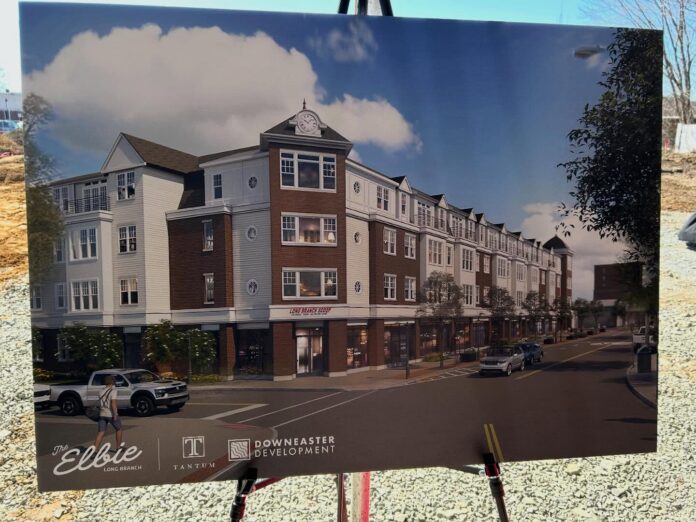

A defining stretch of Long Branch is beginning its next transformation phase, as construction officially moves forward on The Elbie, a 78-unit residential development set to reshape the Lower Broadway corridor and reinforce the city’s accelerating position as one of New Jersey’s most dynamic coastal markets. What is taking shape at 305 Broadway is not simply another multifamily project—it is a deliberate, design-forward response to the growing demand for refined, flexible living environments in a town that continues to evolve from seasonal destination into year-round community anchor.
Developed through a partnership between Downeaster Development and TANTUM Real Estate, The Elbie emerges at a pivotal moment for Long Branch. The site itself—strategically located directly across from Slochum Park and adjacent to the city’s revitalized public library—places the project at the intersection of civic life, walkability, and neighborhood reinvestment. This is not incidental positioning; it reflects a broader planning philosophy now reshaping Monmouth County’s most prominent shoreline municipalities, where residential density, public space, and local retail are increasingly integrated into a cohesive urban fabric.
From an architectural standpoint, The Elbie is calibrated to bridge two distinct identities within Long Branch. Designed by Rotwein + Blake Associates, the building rises to four stories along Broadway, reinforcing the corridor’s emerging urban density, before transitioning down to three stories along Sixth Avenue to respect the scale and rhythm of the surrounding residential streetscape. This kind of contextual massing is critical in markets like Long Branch, where development pressure must be balanced against long-standing neighborhood character. The result is a structure that feels both contemporary and embedded—forward-looking without being disruptive.
Inside, the project is engineered to meet the expectations of a post-pandemic renter profile that prioritizes flexibility, productivity, and lifestyle integration. The Elbie will introduce a mix of one- and two-bedroom residences, with select units offering private terraces that extend living space outward—an increasingly important feature in coastal environments. But it is the amenity strategy that distinguishes the development as a next-generation residential product.
Approximately 8,000 square feet of interior amenity space will anchor the resident experience, beginning with a ground-floor lobby that functions less as a pass-through and more as a social and professional hub. Lounge areas, a curated library environment, and dedicated work-from-home infrastructure—including private pods and collaborative zones—signal a shift away from traditional amenity design toward spaces that reflect how people actually live and work today. The second level expands on this concept with a full fitness center, clubroom, and game room, alongside an I-Suite recording and podcast studio—an inclusion that underscores the growing convergence of residential living and digital content creation.
Outdoors, the development continues its emphasis on usability and community. A landscaped terrace designed by Melillo Bauer Carman introduces a layered environment featuring grilling stations, a fireplace, flexible seating arrangements, and green elements such as lawn space and raised planters. This is not ornamental landscaping; it is programmed outdoor infrastructure intended to extend daily life beyond the confines of individual units.
At the street level, The Elbie integrates approximately 4,000 square feet of retail space, reinforcing the broader revitalization strategy for Lower Broadway. This inclusion aligns with ongoing efforts to activate the corridor with neighborhood-serving businesses that can support both residents and the wider community. The development also incorporates structured and surface parking solutions, along with a covered podium, addressing one of the most persistent logistical challenges in high-demand shore towns.
Infrastructure resilience has not been overlooked. The project includes an advanced stormwater management system designed to mitigate runoff and reduce strain on surrounding streets and municipal systems—an increasingly critical component of coastal development as municipalities contend with climate-related pressures and aging infrastructure.
Equally significant are the public-facing enhancements embedded within the project scope. As part of its agreement with the city, the development team will deliver streetscape improvements that extend beyond the property line, including a new crosswalk marked with the Long Branch city seal, upgraded landscaping, and the installation of a distinctive clock tower at the park corner. These elements reinforce the idea that The Elbie is not operating in isolation but as part of a broader civic and aesthetic upgrade to the neighborhood.
Local leadership has emphasized the collaborative nature of the project, pointing to the alignment between municipal priorities and private development execution. That alignment is increasingly becoming the defining characteristic of successful redevelopment efforts across New Jersey, where municipalities are no longer passive recipients of development proposals but active partners shaping outcomes that deliver both economic and community value.
The timing of The Elbie’s construction is particularly notable given the wave of investment currently reshaping Long Branch. The city has emerged as one of the most active development zones along the Jersey Shore, with multiple large-scale residential projects already underway or recently completed. Kushner Companies’ 299-unit project broke ground in recent years, while the Atlantic Club continues to add more than 130 new beachfront residences, collectively signaling sustained confidence in the market’s long-term growth trajectory.
Within that broader landscape, The Elbie occupies a distinct niche. It is neither a high-rise luxury tower nor a small infill project. Instead, it represents a “middle scale” development model—large enough to deliver meaningful amenities and operational efficiency, yet intentionally designed to maintain a sense of intimacy and neighborhood connection. That positioning may ultimately prove to be one of its most important attributes, particularly as renters increasingly seek alternatives to both oversized complexes and underserviced smaller properties.
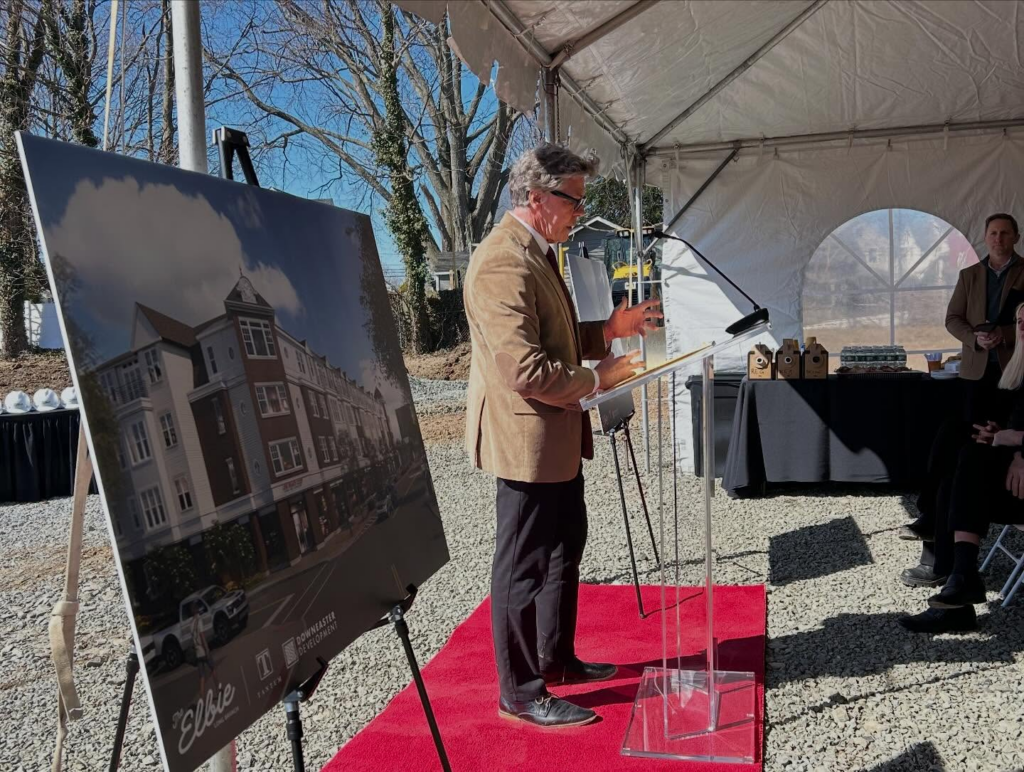
Construction is now underway, with initial occupancy projected for late spring 2027. As the structure rises along Broadway, it will serve as both a physical and symbolic marker of Long Branch’s continued evolution—an evolution driven not just by new buildings, but by a recalibration of how coastal cities in New Jersey define livability, connectivity, and long-term resilience.
For ongoing coverage of development projects shaping communities across the state, explore the latest updates in New Jersey construction and real estate through the Sunset Daily News platform, where Long Branch’s transformation is just one part of a much larger story unfolding across the region.



