


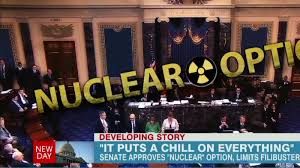

In a moment that could redefine the balance of electoral power in the United States, Senate leadership is actively weighing a procedural maneuver often referred to as the “nuclear option” to advance a controversial voter restriction bill—legislation that is rapidly becoming one of the most consequential political flashpoints of the 2026 election cycle. With mounting urgency inside Washington and growing concern across states like New Jersey, lawmakers are signaling a willingness to bypass longstanding Senate traditions in order to place the bill on President Donald Trump’s desk before voters head to the polls this fall.
At the center of the debate is a fundamental question: how far should federal lawmakers go to reshape voting laws in the name of election integrity—and at what cost to democratic norms?
Senator Andy Kim, speaking amid intensifying negotiations, did not mince words. “These are dangerous times,” Kim warned, framing the legislative push as part of a broader, high-stakes effort to influence the structure and accessibility of American elections just months before a pivotal midterm contest. His remarks underscore a growing divide between lawmakers who see the bill as a necessary safeguard and those who argue it represents a direct challenge to voting rights.
The “nuclear option,” historically reserved for the most contentious legislative battles, would allow Senate leadership to sidestep the 60-vote filibuster threshold and pass the measure with a simple majority. While not unprecedented, its use in this context would mark a dramatic escalation in procedural brinkmanship—one that could permanently alter how election-related legislation is passed in Washington.
For New Jersey, a state that has consistently prioritized expanded access to voting—including early voting, vote-by-mail infrastructure, and automatic voter registration—the implications are particularly significant. Political observers across the Garden State are closely tracking how federal action could intersect with state-level policies, potentially creating legal conflicts or forcing rapid adjustments to existing systems.
The proposed bill itself, while still evolving in committee discussions, is expected to include stricter voter identification requirements, tighter regulations on mail-in ballots, and new federal oversight mechanisms that critics argue could disproportionately impact urban and minority voters. Supporters, however, insist the legislation is designed to restore public confidence in elections, pointing to ongoing debates about voter verification and ballot security.
This legislative push comes as national political momentum builds toward the midterms, with both parties recognizing that control of Congress—and the trajectory of federal policy for years to come—may hinge on turnout, access, and the rules governing participation. The urgency to finalize and enact the bill before the election calendar intensifies has injected a sense of immediacy into Senate deliberations, turning procedural strategy into a central battleground.
Within New Jersey’s political ecosystem, reactions have been swift and deeply polarized. Advocacy groups, election officials, and party leaders are already mobilizing, anticipating that federal changes could trigger legal challenges or necessitate rapid public education campaigns to ensure voters understand any new requirements. The state’s established reputation for relatively accessible voting systems places it at the forefront of the national conversation, as policymakers weigh how to reconcile federal mandates with local practices.
At the same time, the broader political landscape reflected in ongoing coverage within the politics section continues to highlight a recurring theme: the convergence of procedural power and electoral strategy. From congressional maneuvering to executive priorities, the current moment is defined not just by policy debates, but by the methods used to enact them.
What makes this situation particularly volatile is the timing. With the midterm elections approaching, any change to voting laws carries amplified consequences. The perception—whether accurate or not—that rules are being altered in real time risks deepening public skepticism and further entrenching partisan divides. For lawmakers like Kim, the concern extends beyond the immediate bill to the long-term health of democratic institutions.
Meanwhile, Senate leadership faces its own strategic calculus. Invoking the nuclear option could deliver a legislative victory, but it also risks setting a precedent that future majorities could exploit, effectively dismantling one of the chamber’s defining features: extended debate and minority input. In an era already marked by institutional strain, that decision carries weight far beyond a single bill.
For voters in New Jersey and across the country, the outcome of this debate may shape not only how ballots are cast in the upcoming election, but also how future elections are conducted. As discussions continue behind closed doors and public rhetoric intensifies, one reality is clear: the intersection of policy, procedure, and political power has rarely been more consequential.
The coming weeks will determine whether the Senate moves forward with this extraordinary step—and in doing so, whether it ushers in a new era of election law shaped as much by urgency as by ideology.



