


Portal Bridge Chaos: Montclair Commuters Navigate “Train-ageddon” as $1.8 Billion Upgrade Nears Completion
New Jersey commuters are calling it “Train-ageddon.” Others have dubbed it the “Portal Pivot” or the “Hoboken Shuffle.” Whatever the nickname, the disruption is real—and for thousands of daily riders traveling from New Jersey into Manhattan, the past several weeks have been defined by reroutes, reduced service, and unexpected detours.
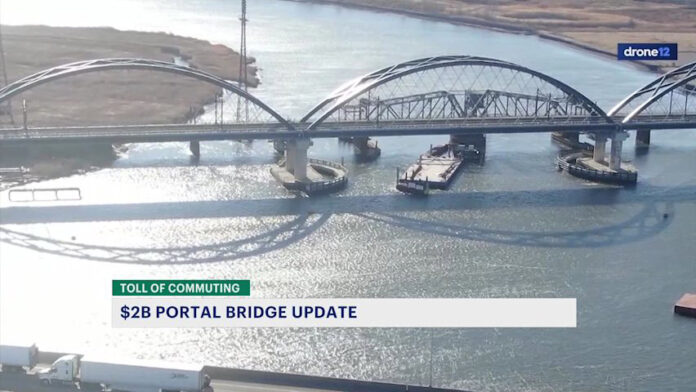
At the center of the storm is the long-anticipated Portal North Bridge project over the Hackensack River in Kearny, a $1.8 billion infrastructure overhaul entering its final construction phase. To complete the cutover to the new bridge, NJ Transit temporarily halted direct service for some trains into Penn Station and reduced the total number of trains running into New York City through March 15.
For commuters accustomed to a single-seat ride into Manhattan, the shift has meant diversions to Hoboken Terminal, mandatory transfers to PATH trains operated by the Port Authority of New York and New Jersey, and longer overall travel times—especially during the evening rush.
As if the rerouting alone were not disruptive enough, a track fire last Friday suspended all PATH service in and out of Hoboken during the evening commute, compounding delays and leaving commuters scrambling for alternatives.
A Century-Old Bottleneck Nearing Retirement
The original Portal Bridge has been one of the most notorious chokepoints on the Northeast Corridor for decades. Built 116 years ago, the swing-span bridge must open for marine traffic and close again before trains can resume service. Mechanical failures and alignment issues have repeatedly triggered cascading delays across the region’s busiest rail corridor.
The new Portal North Bridge, constructed 50 feet higher above the river, eliminates the need for movable components entirely. Once fully operational, the modern fixed-span bridge is expected to deliver significantly improved reliability for the entire Northeast Corridor.
A spokesperson for NJ Transit emphasized that replacing a century-old bridge while keeping trains running requires carefully staged infrastructure transitions—cutting over tracks, overhead wires, signal systems, and switches with precision. The agency maintains that while the four-week adjustment is inconvenient, the result will be fewer delays, greater consistency, and a stronger transportation backbone for the region.
Commuter Reality: Longer Nights, Earlier Mornings
For riders, daily logistics remain front and center.
Mike Searls, a Montclair resident commuting to Midtown Manhattan for the past two years, says his morning ride has been manageable—sometimes even preferable through Hoboken. The return trip, however, has proven far more frustrating. PATH train schedules often fail to align with NJ Transit departures back to New Jersey, stretching his commute home significantly. The temporarily free PATH rides have helped offset inconvenience, but time—not cost—remains the bigger issue.
Josh Crandall, also of Montclair, knows the grind well. A technology professional who has been commuting into New York for more than 20 years, he created Clever Commute in 2006 after one particularly brutal evening of delays. At the time, transit agencies were not issuing robust digital alerts. Crandall built a rider-driven information network, starting with an email list on the Montclair-Boonton line. It grew into a website and eventually a comprehensive mobile app covering NJ Transit, Metro-North, and the Long Island Rail Road.
Today, Clever Commute provides real-time service alerts, crowd-sourced updates, and premium features such as predictive analytics for Penn Station track assignments—designed to help commuters position themselves strategically before the platform announcement chaos begins.
Crandall’s advice during the current Portal Bridge disruption is straightforward: leave earlier than usual, even if that means boarding a 6:30 a.m. train. He also points to alternative transportation options, including NJ Transit Park & Ride facilities such as Allwood Road in Clifton. Private bus services like Boxcar offer reserved seating but at a higher price point. Ferry routes from Hoboken to Manhattan remain viable for some commuters, particularly those working downtown.
For those able to reach Secaucus Junction, the Northeast Corridor and North Jersey Coast lines continue operating direct service into Manhattan, albeit with reduced schedules. The key, Crandall notes, is flexibility. Some riders are shifting work hours. Others are incorporating hybrid schedules. Many are simply adapting day by day.
Infrastructure Investment at a Historic Scale
The Portal North Bridge is not an isolated project. New Jersey is projected to see $29.6 billion in capital investments for 2026, with major initiatives targeting the Newark Bay Bridge and substantial improvements to the Garden State Parkway. These investments reflect a statewide commitment to modernizing transportation systems that support economic growth, regional mobility, and commuter efficiency.
The Portal Bridge replacement alone carries immense strategic importance. The Northeast Corridor is the busiest passenger rail line in the United States, connecting Boston, New York, Philadelphia, and Washington, D.C. When the old bridge malfunctioned, delays rippled far beyond New Jersey’s borders.
By raising the bridge high enough to eliminate movable spans, engineers have effectively removed one of the corridor’s most chronic mechanical vulnerabilities. The question for commuters is whether the long-term payoff will outweigh the short-term pain.
Construction and Transportation Coverage at Sunset Daily
As New Jersey accelerates its infrastructure modernization, Sunset Daily News is expanding its in-depth reporting across both construction and transportation sectors. From billion-dollar bridge replacements to highway upgrades and transit modernization, these projects reshape not only commute times but economic corridors and property development patterns statewide.
Readers can explore ongoing project analysis, commuter updates, and capital investment coverage in our Sunset Daily News section, with dedicated reporting focused on construction progress and transportation system evolution across the Garden State.
The Bigger Picture for Commuters
The Portal North Bridge is expected to begin carrying commuter trains this spring. If performance matches projections, chronic delays tied to mechanical bridge failures could become a thing of the past.
Until then, New Jersey commuters are navigating one of the most disruptive transitional periods in recent memory—juggling reroutes, leveraging technology, and adjusting routines in real time.
Infrastructure transformation rarely happens without temporary friction. For now, the Hoboken Shuffle continues. But when the final switch is thrown and trains roll smoothly across the new span, the state’s transportation network may finally leave one of its most notorious bottlenecks behind.