


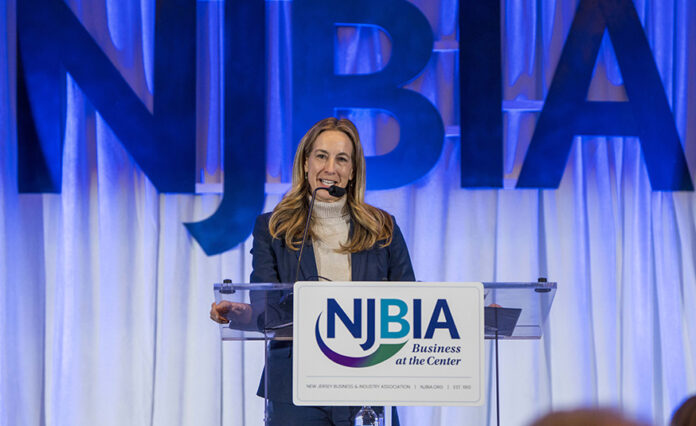

New Jersey’s political and economic landscape is entering a new chapter as Governor Mikie Sherrill moves quickly to redefine how Trenton interacts with the state’s business community. In the first weeks of her administration, the state’s 57th governor has launched a series of policy initiatives and executive actions that have drawn early praise from business leaders who see the outreach as a meaningful shift toward collaboration, regulatory clarity, and economic stability.
For companies operating across the Garden State—from small local entrepreneurs to major corporate employers—the early signals from the new administration are being closely watched. What many business organizations are emphasizing is not just the policies themselves, but the tone of engagement emerging from the governor’s office.
After years of debate surrounding regulatory burdens, permitting timelines, and economic competitiveness, leaders within New Jersey’s business community say the administration’s willingness to engage directly with employers and industry organizations represents an encouraging step forward.
Governor Sherrill has moved swiftly since taking office in January, balancing the complex task of assembling her administration with the rollout of key policy priorities. The early weeks of her tenure have included executive actions addressing energy affordability, regulatory reform, and operational efficiency within state government—areas that have long been central concerns for businesses across New Jersey.
Taken together, the moves suggest an administration attempting to recalibrate the relationship between state government and the private sector at a moment when economic competitiveness remains a top concern for policymakers.
For many business leaders, the governor’s first actions in office provided a strong signal that economic issues would play a central role in the administration’s agenda.
One of the earliest steps came during Sherrill’s inauguration, when she declared a state of emergency related to utilities and immediately signed two executive orders focused on energy policy. The decision underscored the importance of energy affordability in New Jersey, where rising utility costs have increasingly affected both residents and employers.
Energy prices play a crucial role in the state’s economic environment. For manufacturers, logistics companies, and large commercial operations, utility costs can represent a major operational expense. Even smaller businesses—from restaurants to retail stores—must carefully manage energy costs as part of maintaining profitability.
By placing energy affordability at the forefront of her administration’s agenda, the governor signaled an awareness that economic competitiveness and cost-of-living issues are deeply interconnected.
For business leaders, the move was viewed as an important acknowledgement of the pressures facing employers across the state.
However, the administration’s outreach to the business community did not stop with energy policy.
Soon after the initial executive orders, Governor Sherrill introduced a series of regulatory reform measures designed to streamline government processes and reduce bureaucratic delays. Among the most notable changes was the creation of a centralized permitting office intended to simplify how businesses navigate regulatory approvals.
Permitting timelines have long been a source of frustration for companies attempting to launch new projects or expand existing operations in New Jersey. Complex approval processes, overlapping agency jurisdictions, and extended review periods can slow down economic development and increase project costs.
The new centralized permitting structure is intended to address those challenges by coordinating approval processes across agencies and providing a more predictable pathway for businesses seeking permits.
The administration also established the Office of the Chief Operating Officer within state government, a move designed to improve operational coordination and increase efficiency across departments.
By focusing on internal government operations, the administration aims to ensure that state agencies function in a way that supports both public service and economic growth.
Another significant step involved a temporary pause on certain rules and regulations for a ninety-day review period.
This review process is intended to evaluate whether existing regulations are achieving their intended objectives while also examining opportunities to reduce unnecessary complexity.
For business organizations, the review represents a chance to revisit regulatory frameworks that have evolved over time but may no longer reflect the realities of modern industries.
Leaders within the state’s business community responded quickly to these initiatives, welcoming the administration’s willingness to engage with employers and industry groups during the early stages of policy development.
The New Jersey Business & Industry Association, one of the state’s most influential business advocacy organizations, praised the executive actions aimed at improving regulatory efficiency and reducing permitting delays.
For companies attempting to launch new projects or expand operations, faster permitting timelines can have a direct impact on job creation and economic investment.
Projects that move more quickly from planning to construction generate earlier economic activity and allow businesses to respond more effectively to market opportunities.
Business leaders say the administration’s actions suggest an understanding that regulatory efficiency plays a central role in shaping New Jersey’s economic environment.
Beyond the specific policies themselves, however, many leaders are emphasizing the broader importance of communication between government and the private sector.
Governor Sherrill has made it clear that engagement with businesses will remain a priority for her administration.
During discussions with business organizations and policymakers, she has emphasized the importance of maintaining open dialogue between state government and the companies that create jobs and drive economic growth.
The governor has also acknowledged a perception that sometimes exists within the business community—that Trenton may not always fully understand the challenges facing employers.
Her administration appears determined to address that perception by fostering stronger partnerships between policymakers and industry leaders.
By encouraging direct engagement with business stakeholders, the administration hopes to ensure that economic policies are informed by the experiences of companies operating within the state.
For small businesses in particular, this engagement can be especially important.
Entrepreneurs launching new ventures often face significant regulatory and financial hurdles during the early stages of their business development. Access to clear information, efficient permitting processes, and responsive government agencies can make a substantial difference in determining whether new businesses succeed.
The governor has highlighted the importance of helping small businesses move quickly from concept to operation.
When entrepreneurs are able to start businesses efficiently, the broader public benefits through job creation, economic activity, and the development of vibrant local communities.
Across New Jersey’s cities and towns, small businesses form the backbone of the local economy.
Restaurants, retail stores, professional services firms, and technology startups all contribute to the state’s diverse economic ecosystem. Supporting these businesses through efficient government processes can help strengthen the overall business climate.
Large employers are also paying close attention to the administration’s early actions.
Major corporations evaluating potential expansion projects often consider a range of factors when deciding where to invest. Regulatory clarity, government responsiveness, and economic stability are among the key elements that influence those decisions.
By emphasizing efficiency and engagement early in her administration, Governor Sherrill is signaling that New Jersey intends to remain competitive in attracting business investment.
The state already benefits from significant advantages, including proximity to major metropolitan markets, a highly skilled workforce, and a strong transportation infrastructure.
However, maintaining competitiveness in a global economy requires ongoing collaboration between public and private sector leaders.
The governor’s early outreach efforts suggest an administration aware of the importance of those partnerships.
At the same time, policymakers must balance economic priorities with other responsibilities such as environmental protection, consumer safety, and fiscal stability.
The regulatory review process underway within the administration aims to examine how these goals can coexist within a modernized policy framework.
For business leaders across the state, the key takeaway from the administration’s early weeks is the willingness to engage directly with the private sector.
Rather than approaching economic policy solely through legislative channels, the administration appears to be focusing on dialogue and collaboration as tools for shaping policy outcomes.
This approach reflects a broader trend in modern governance where economic development strategies increasingly rely on partnerships between government agencies, industry organizations, and community stakeholders.
As Governor Sherrill continues assembling her administration and advancing policy initiatives, the relationship between Trenton and New Jersey’s business community will remain an important area to watch.
Early signals from both sides suggest that a renewed emphasis on communication and cooperation could shape the state’s economic trajectory in the years ahead.
For companies across New Jersey—from startup founders to major employers—the administration’s message is clear: economic growth and business success remain central to the state’s future.
And if the first weeks of the Sherrill administration are any indication, the dialogue between Trenton and the business community may be entering a more collaborative and constructive phase than many have seen in years.



