



New Jersey’s construction industry has entered a defining moment in March 2026, as massive infrastructure projects, urgent housing policy deadlines, and a national surge in heavy equipment demand converge to reshape the Garden State’s economic and development landscape. From the Hudson River rail corridor to municipal planning boards across suburban communities, the coming days will influence transportation reliability, housing supply, and the pace of regional growth for years to come.
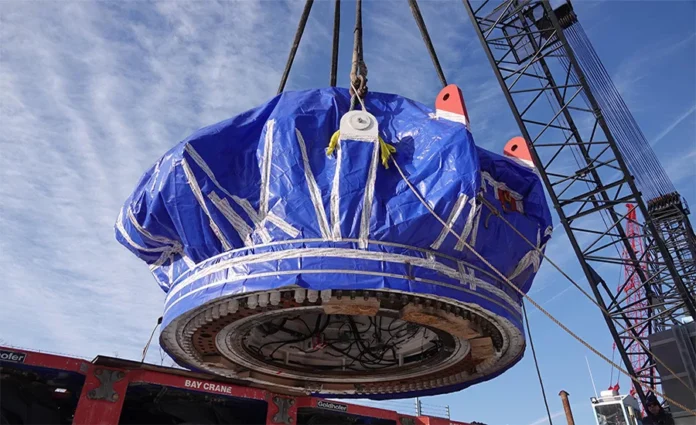
At the center of the conversation is the renewed momentum surrounding the Gateway Hudson Tunnel Project, one of the most ambitious infrastructure undertakings in the United States. After a turbulent period marked by funding uncertainty and political battles in Washington, full construction has officially resumed across all sites connected to the project. Workers have returned to tunnel construction zones, staging areas, and associated infrastructure points along the Hudson River corridor, bringing back thousands of jobs and restarting critical engineering activity that had been paused amid federal funding disputes.
Yet despite the renewed progress, the Gateway Development Commission has made it clear that the project remains vulnerable. Officials warn that construction could again slow or pause if federal funding disbursements are not maintained consistently in the months ahead. The Hudson Tunnel Project alone carries a price tag approaching $16 billion and represents the most critical component of the broader Gateway Program designed to modernize rail infrastructure between New Jersey and New York.
For commuters, business leaders, and policymakers alike, the stakes could not be higher.
Every weekday, hundreds of thousands of passengers travel through the Northeast Corridor rail system, one of the busiest rail networks in the Western Hemisphere. Much of the infrastructure supporting that travel—including tunnels beneath the Hudson River and the aging Portal Bridge—dates back more than a century. When Hurricane Sandy flooded portions of the existing rail tunnels in 2012, it exposed vulnerabilities that engineers have warned about for years. Saltwater damage continues to affect electrical systems, structural components, and long-term reliability, increasing the urgency for a modern replacement.
The Gateway Hudson Tunnel Project aims to solve that problem by building a brand-new two-track rail tunnel beneath the Hudson River while rehabilitating the original tunnel once the new infrastructure is operational. Together with new bridge projects and rail upgrades, the initiative is expected to expand capacity, improve reliability, and strengthen the economic backbone connecting New Jersey to New York City.
And the timing could not be more critical.
New Jersey’s economy depends heavily on cross-Hudson mobility. Tens of thousands of residents commute daily into Manhattan for finance, technology, healthcare, media, and corporate jobs. Any disruption in that corridor reverberates across housing markets, workforce productivity, and business investment throughout the state.
This is why construction progress along the Northeast Corridor has become one of the most closely watched infrastructure developments in the region.
Adding to the momentum is the near completion of another cornerstone project: the Portal North Bridge. The first track of the new bridge is scheduled to open this month in March 2026, marking a historic milestone in the modernization of rail infrastructure across northern New Jersey.
The existing Portal Bridge—an aging swing bridge built in 1910—has long been infamous among commuters for mechanical failures and operational delays. When the bridge fails to close properly after opening for river traffic, trains can sit idle for extended periods, triggering cascading delays throughout the Northeast Corridor.
The replacement structure, the Portal North Bridge, is designed to eliminate those problems entirely. Unlike the original swing bridge, the new fixed-span design rises high enough above the Hackensack River to allow ships to pass beneath without requiring the bridge to open.
The result is expected to dramatically improve reliability for rail service connecting Newark, Secaucus, and New York Penn Station while reducing the risk of system-wide disruptions.
Infrastructure analysts often point to the Portal Bridge replacement as the first visible sign that the Gateway Program is transitioning from planning to reality. Once both tracks are operational, the bridge will serve as a modern gateway into Manhattan, supporting faster and more dependable rail operations for decades to come.
But transportation is only one side of New Jersey’s construction story this week.
Across the state, municipalities are racing against a looming March 15 deadline tied to one of the most significant housing policy shifts in recent memory. Under updated state housing mandates, towns must adopt new plans to accommodate affordable housing obligations or risk losing local control over zoning decisions.
For many municipalities, the deadline represents a moment of reckoning.
Local planning boards, zoning officials, and municipal attorneys have been working at a breakneck pace to finalize housing compliance strategies that align with state requirements while balancing community concerns about density, infrastructure strain, and school capacity.
If towns fail to meet the deadline, courts could gain authority to override local zoning rules and approve development proposals directly—a scenario that would dramatically reshape how housing projects move forward across New Jersey.
Supporters of the mandates argue that the policies are necessary to address the state’s chronic housing shortage and skyrocketing costs. New Jersey has long struggled with limited housing supply, particularly near transit hubs and employment centers where demand continues to outpace construction.
Critics, however, warn that municipalities may be forced into development patterns that strain roads, utilities, and local budgets without sufficient planning time.
Regardless of which side communities fall on, the pressure is undeniable. Municipal leaders across the Garden State are holding emergency meetings, consulting planning experts, and negotiating development frameworks as the clock ticks toward the compliance deadline.
Taken together, the Gateway infrastructure revival, the Portal Bridge milestone, and the housing mandate deadline represent three pillars of the same story: New Jersey’s next development era.
The state is experiencing one of the most significant construction cycles in its modern history.
Transportation infrastructure is expanding. Housing policy is forcing new development conversations. Private investment is flowing into transit-oriented communities and urban redevelopment corridors.
And beyond the region itself, another trend is shaping how construction companies prepare for the months ahead.
Across the United States, paving contractors and road construction companies are gearing up for a particularly busy infrastructure season in 2026. Demand for reliable equipment—from asphalt pavers to milling machines—is climbing rapidly as municipalities and transportation agencies accelerate road repair, resurfacing, and modernization projects.
Recognizing that surge in demand, equipment marketplace Ironmart Online has expanded its inventory of asphalt paving equipment and milling machines to help contractors secure the tools needed for upcoming projects. The expansion reflects a nationwide construction push fueled by federal infrastructure investments, state transportation programs, and increased development activity.
For contractors in New Jersey, the timing aligns perfectly with the state’s infrastructure boom.
Major transportation corridors are being rebuilt. Local governments are resurfacing roads and modernizing streetscapes. Private developers are breaking ground on residential and mixed-use projects designed to meet the state’s growing housing demand.
All of it requires equipment, labor, and coordination at a scale rarely seen outside of historic building cycles.
Industry analysts say the ripple effects could extend far beyond construction sites.
Large-scale infrastructure programs typically generate significant economic impact, supporting thousands of jobs while creating billions of dollars in regional economic activity. The Gateway Program alone is projected to support tens of thousands of construction and engineering jobs while injecting long-term economic growth into the New York–New Jersey metropolitan region. (RPA)
For New Jersey, that growth arrives at a pivotal moment.
The state is balancing the need for modern transportation infrastructure, increased housing supply, and economic competitiveness within one of the most complex metropolitan regions in the world.
Each project underway—from the Hudson Tunnel excavation sites to the towering steel spans of the Portal North Bridge—represents a step toward a more resilient and connected future.
But the road ahead is not without uncertainty.
Federal funding debates remain unresolved. Housing policy battles continue to unfold in courtrooms and town halls. And the logistics of executing massive construction programs in densely populated areas require constant coordination between state agencies, contractors, engineers, and community leaders.
Still, momentum is clearly building.
As March unfolds, New Jersey’s construction landscape is entering a period defined by ambition, urgency, and transformation. Rail tunnels beneath the Hudson River are moving forward once again. A new bridge is preparing to carry its first trains. Municipalities are redefining housing policy under tight deadlines.
Together, these developments signal something larger than a single project or policy shift.
They mark the beginning of a new construction chapter for New Jersey—one that will shape transportation, housing, and economic opportunity across the state for decades to come.
A New Era for Education Infrastructure: West New York Advances $91.75 Million Middle School Project with Two-Year Construction Timeline
West New York, New Jersey is moving decisively toward one of the most transformative educational infrastructure projects in its modern history. A major new middle school is now entering its final design phase, setting the stage for a two-year construction timeline that will reshape the academic landscape for thousands of students in Hudson County. With construction preparations underway and design details being finalized, the planned West New York Middle School represents a critical investment in education, community development, and the long-term future of one of the most densely populated municipalities in the Garden State.
The project is being developed to directly address one of the most pressing challenges facing West New York’s school district: overcrowding. As population growth continues throughout Hudson County and along the New Jersey waterfront corridor, classrooms have increasingly struggled to accommodate the expanding number of students entering the public education system. Local officials, educators, and parents have spent years advocating for expanded facilities that can provide modern learning environments while relieving the strain on existing schools.
Now, after years of planning and coordination, that vision is becoming reality.
Earlier this year, the New Jersey Schools Development Authority finalized a $91.75 million design-build contract with Terminal Construction Corporation to deliver the new West New York Middle School. The project will rise at 6400–6415 Broadway, the location of the former Warminster building, which has already been demolished to make way for the new campus.
Once completed, the facility will serve students in grades six through eight and will stand as one of the most advanced public education environments in Hudson County.
The new school will span approximately 162,000 square feet, creating a large, purpose-built academic complex capable of accommodating up to 862 students. The design is structured around both traditional academic learning and modern interdisciplinary education, reflecting evolving teaching models that prioritize collaboration, innovation, and hands-on learning.
The campus will include 30 general classrooms designed to support core academic subjects such as mathematics, language arts, and social studies. In addition, the facility will feature six fully equipped science laboratories, giving students expanded opportunities to explore biology, chemistry, and environmental science through experiential learning.
One of the centerpiece features of the project is the inclusion of a dedicated STEAM laboratory—an advanced instructional environment focused on integrating science, technology, engineering, arts, and mathematics into a unified curriculum. STEAM programs have rapidly gained prominence across the country as educators increasingly emphasize problem-solving, design thinking, and technical literacy as essential skills for the modern workforce.
By incorporating a dedicated STEAM lab into the new facility, West New York is positioning its students to engage with emerging technologies and creative disciplines in ways that traditional classroom structures rarely allow.
Beyond the academic core, the building will also prioritize creative arts and physical expression as key components of the student experience. Plans for the school include a specialized dance studio, three art classrooms designed for visual and multimedia arts, and dedicated spaces for instrumental and vocal music instruction.
These additions underscore a broader philosophy guiding the design of the school: education should nurture creativity as much as it supports academic achievement.
Students will have access to spaces where they can explore visual arts, develop musical talents, and participate in performance-based programs that foster confidence, collaboration, and artistic exploration.
Architectural renderings of the planned school have already been released, offering the public an early glimpse of the structure that will soon rise along Broadway. The architectural design is being led by DMR Architects, a firm known for its work in educational and civic design projects throughout the region.
The design phase is expected to take between six and nine months, during which architects, engineers, and construction planners will finalize structural layouts, interior classroom configurations, and building systems required for the facility’s long-term operation.
Once design approvals are completed, full construction will move forward under an accelerated timeline intended to deliver the school in time for the 2028–2029 academic year.
This timeline reflects a carefully coordinated approach between the New Jersey Schools Development Authority, the West New York School District, and the project’s construction partners.
For the community, the opening of the new school cannot come soon enough.
West New York is one of the most densely populated municipalities in the United States. Located directly across the Hudson River from Manhattan and perched atop the dramatic Palisades cliffs, the township has experienced steady residential growth fueled by its proximity to New York City and the broader economic activity of the metropolitan region.
As housing demand expanded and new families moved into the community, enrollment in local schools steadily climbed.
Existing facilities have worked to accommodate that growth, but many schools have reached capacity limits that strain classroom space, scheduling flexibility, and educational resources.
The new middle school is designed specifically to relieve that pressure.
By creating a dedicated campus for grades six through eight, the project will allow the district to reorganize grade distributions across existing schools, improving classroom availability and enabling educators to deliver more specialized programming for middle school students.
Middle school represents a critical stage in academic development. Students at this age transition from foundational elementary learning into more complex subject exploration that prepares them for high school coursework.
Purpose-built middle school environments are therefore designed differently than elementary schools. They require science laboratories, collaborative learning spaces, arts studios, and technology-equipped classrooms that support project-based learning and interdisciplinary instruction.
The new West New York facility will provide precisely that environment.
But the project is not only about educational space—it is also part of a broader investment in community infrastructure.
The middle school is one component of a larger $121.8 million investment aimed at strengthening educational facilities throughout West New York. These investments are intended to ensure that the township’s public school system can keep pace with the demands of a growing population while maintaining high standards for educational access and learning quality.
Community leaders see the project as an investment in the future of the town itself.
Strong schools are widely recognized as one of the most important factors shaping community stability, property values, and long-term economic development. Families considering where to live often place school quality at the top of their list, and municipalities that invest in education infrastructure tend to attract sustained residential growth.
For West New York, the new middle school sends a powerful message: the township is committed to ensuring that its students learn in modern, well-equipped environments that prepare them for the challenges of the 21st century.
The project also highlights the growing role of large-scale construction initiatives in reshaping the built environment across Hudson County.
In recent years, the region has seen a wave of development tied to housing expansion, transportation upgrades, and public infrastructure investments. From waterfront residential towers to transit improvements along the Northeast Corridor, Hudson County is rapidly evolving as one of the most dynamic urban regions in the northeastern United States.
Education infrastructure is now becoming a key part of that transformation.
Schools are no longer simply buildings where classes take place—they are community anchors that serve as gathering places, cultural centers, and hubs for youth development.
The new West New York Middle School is being designed with that broader civic role in mind. Its classrooms, arts spaces, and learning labs will support not only academic instruction but also extracurricular programs, performances, and community engagement activities that strengthen the fabric of the township.
Construction of the project will also generate significant economic activity.
Large public infrastructure projects typically create hundreds of construction jobs while supporting local suppliers, engineers, and subcontractors involved in the building process. As work begins on the Broadway site, the project will contribute to Hudson County’s already active construction sector while delivering long-term benefits for residents.
For families in West New York, however, the project represents something far more personal.
It represents opportunity.
It means smaller class sizes, better learning environments, expanded arts programs, and access to science and technology education that can inspire the next generation of engineers, doctors, artists, and entrepreneurs.
And when the doors open for the 2028–2029 school year, the building rising today on Broadway will stand as a symbol of a community investing in its future—one classroom, one student, and one generation at a time.



