


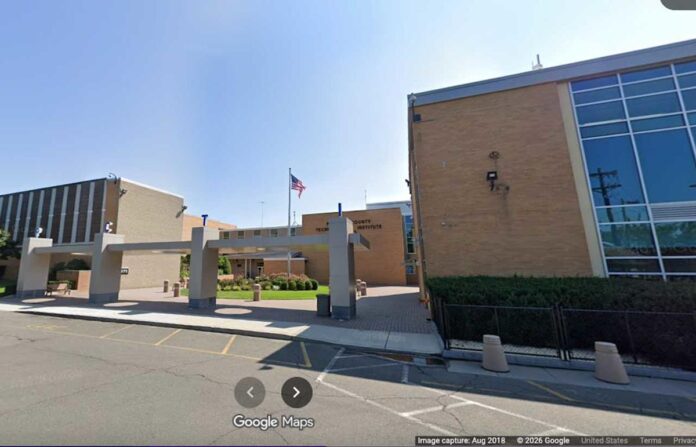

A newly filed lawsuit stemming from a shooting incident at Passaic County Technical-Vocational School is rapidly becoming a focal point in New Jersey’s evolving conversation around school safety, institutional responsibility, and the legal thresholds for preventable harm. The complaint, centered on an incident that left two students seriously injured, alleges that critical security failures allowed an expelled former student to gain access to a school event—an outcome plaintiffs argue could and should have been avoided.
The case introduces a complex intersection of liability, policy, and operational oversight, with implications that extend well beyond a single institution. As developments continue to unfold, coverage across the Law & Order section of Sunset Daily reflects a broader pattern emerging across New Jersey: increased scrutiny of how schools manage access control, enforce disciplinary boundaries, and respond to evolving threat environments.
At the center of the lawsuit is a core assertion that the incident was not an unforeseeable act of violence, but rather the result of identifiable and correctable breakdowns in security protocol. According to the complaint, the individual responsible for the shooting had previously been expelled, a status that should have triggered heightened restrictions on campus access. Instead, the lawsuit alleges that lapses in oversight and event management created an opportunity for unauthorized entry, ultimately culminating in a violent confrontation that caused catastrophic injuries.
This framing is critical. In legal terms, the distinction between an unpredictable act and a preventable one determines the scope of institutional liability. The plaintiffs’ argument positions the school not merely as the site of an incident, but as a potentially responsible party whose systems and safeguards failed at multiple levels. That claim will likely hinge on a detailed examination of security policies, enforcement practices, and whether existing protocols were sufficient—and properly executed—given the known risk factors.
The incident itself has already intensified discussions around how schools manage large-scale events, where increased foot traffic and community participation can complicate access control. Events that are designed to be inclusive and open can inadvertently introduce vulnerabilities if security measures are not scaled appropriately. The lawsuit appears to focus on this precise tension, questioning whether adequate planning and staffing were in place to monitor entry points, verify identities, and prevent unauthorized individuals from entering the premises.
Beyond the immediate circumstances, the case also highlights a broader issue facing educational institutions: the challenge of translating policy into practice. Many schools maintain formal security guidelines, including visitor screening procedures, coordination with local law enforcement, and threat assessment protocols. However, the effectiveness of these measures depends on consistent implementation, real-time decision-making, and the ability to adapt to dynamic conditions. The allegations in this lawsuit suggest that while policies may have existed, their execution fell short at a critical moment.
For the families of the injured students, the legal action represents both a pursuit of accountability and a mechanism for ensuring that similar failures do not occur in the future. Catastrophic injuries, by definition, carry long-term consequences—medical, emotional, and financial—that extend far beyond the initial incident. The lawsuit seeks to address those impacts while also establishing a precedent for how responsibility is assigned in cases involving school-based violence.
Within the broader legal landscape, cases of this nature are increasingly shaping how courts evaluate duty of care in educational settings. Schools are not expected to eliminate all risk, but they are required to take reasonable steps to protect students from foreseeable harm. Determining what constitutes “reasonable” in an era of heightened security concerns is an evolving standard, influenced by prior incidents, available technology, and the expectations of parents and communities.
This case may also influence how school districts approach risk management moving forward. Enhanced security infrastructure, including controlled access points, surveillance systems, and real-time communication tools, is becoming more common. However, infrastructure alone is not sufficient. Training, coordination, and accountability mechanisms are equally critical, ensuring that personnel are equipped to identify and respond to potential threats before they escalate.
The involvement of an expelled former student introduces an additional layer of complexity. Disciplinary actions such as expulsion are intended to mitigate risk, but their effectiveness depends on follow-through. Ensuring that individuals who have been removed from the school environment do not regain access requires coordination between administrative staff, security personnel, and, in some cases, law enforcement. The lawsuit’s emphasis on this point suggests that gaps in that coordination may have played a role in the incident.
From a policy perspective, the case arrives at a time when New Jersey schools are under increasing pressure to balance openness with security. Educational institutions serve as community hubs, hosting events that bring together students, families, and local residents. Preserving that sense of openness while implementing robust safety measures is a delicate balance, one that requires continuous evaluation and adjustment.
The legal proceedings will likely examine not only what happened on the day of the incident, but also the broader context in which it occurred. This includes prior incidents, if any, the school’s history of security enforcement, and whether warning signs were identified and addressed. These factors will shape the narrative of foreseeability, a central element in determining liability.
As the case progresses, it is expected to draw significant attention from legal professionals, educators, and policymakers alike. Its outcome could influence how similar cases are litigated and how institutions structure their security frameworks to withstand both real-world threats and legal scrutiny.
What is clear at this stage is that the lawsuit has already elevated the conversation around school safety in New Jersey. It underscores the reality that security is not a static checklist but an ongoing process that requires vigilance, investment, and a willingness to adapt. In an environment where the stakes are measured in human lives, the margin for error is effectively nonexistent.
The Passaic County Technical-Vocational School incident, and the legal action that has followed, represents more than a single case—it is a reflection of the challenges facing modern educational institutions and the expectations placed upon them. As New Jersey continues to navigate these complexities, the resolution of this case will likely serve as a benchmark for how accountability, prevention, and protection are defined in the years ahead.