


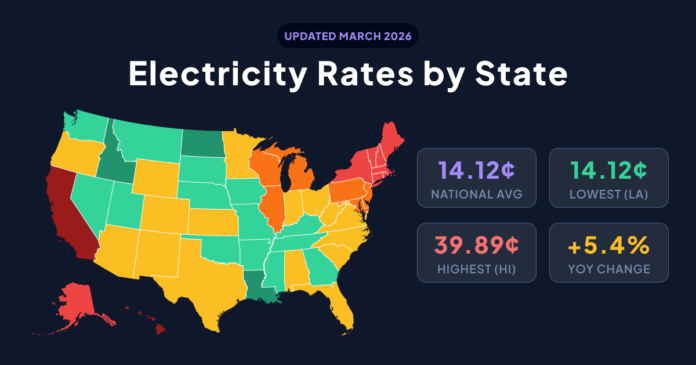

A sharp and sustained rise in electricity costs is reverberating across New Jersey with a dual impact that is becoming increasingly difficult for both residents and local governments to absorb. What was once viewed as a routine fluctuation in utility pricing has evolved into a structural economic pressure point, influencing everything from household affordability to municipal budget stability. As energy rates climb, the consequences are being felt not only in monthly utility bills but also in the broader fiscal strategies that determine property taxes, public services, and long-term community investment.
At the household level, the impact is immediate and unmistakable. Electricity is a non-discretionary expense—one that cannot be deferred or scaled back without affecting quality of life. As rates increase, families across New Jersey are finding that a larger share of their income is being diverted toward basic utilities, leaving less flexibility for other essential costs. This shift is particularly pronounced in a state where the overall cost of living is already among the highest in the nation, compounding financial pressure for middle-income and working-class households alike.
However, the story does not end at the front door. The same forces driving up residential electricity costs are simultaneously affecting municipal operations, creating a second layer of financial strain that ultimately circles back to taxpayers. Local governments rely heavily on electricity to power public infrastructure—everything from municipal buildings and schools to street lighting, water systems, and emergency services. As energy costs rise, so too do the operational expenses required to maintain these essential services.
For municipal leaders, this creates a difficult equation. With budgets already constrained and revenue streams largely tied to property taxes, absorbing higher energy costs often leaves few options. Either services must be adjusted, deferred, or reduced, or additional revenue must be generated to offset the increased expenses. In many cases, this translates into upward pressure on property tax rates, effectively passing a portion of the energy cost burden back onto residents in a different form.
This dual impact—higher bills at home and higher costs at City Hall—is redefining how energy pricing is understood within the state’s economic framework. It is no longer a siloed issue confined to utility regulation; it is a cross-cutting concern that touches housing affordability, municipal governance, and long-term fiscal planning. The ripple effects extend into nearly every corner of the state’s economy, influencing business operations, real estate values, and public sector decision-making.
The political dimension of this issue is equally significant. Rising electricity costs are increasingly being framed within the context of federal policy decisions and national energy strategy, placing New Jersey’s challenges within a broader political narrative. Critics argue that recent federal actions have contributed to market conditions that are driving up costs, pointing to regulatory shifts, supply constraints, and broader economic policies as key factors. This perspective is gaining traction in political discourse, particularly as local officials seek to explain to constituents why costs are rising and what can be done to mitigate the impact.
At the same time, the issue highlights the complex interplay between federal authority and state-level realities. Energy markets operate within a national and even global framework, yet their consequences are felt most acutely at the local level. This disconnect creates a governance challenge, where local leaders must respond to conditions largely shaped by forces beyond their direct control. The result is a policy environment where coordination, advocacy, and strategic planning become essential tools for navigating uncertainty.
Within New Jersey, the response is beginning to take shape across multiple fronts. Municipalities are exploring energy efficiency initiatives aimed at reducing consumption and mitigating cost increases, including investments in LED street lighting, building retrofits, and renewable energy integration. These efforts, while impactful over the long term, require upfront capital and careful planning, underscoring the need for sustained investment in infrastructure modernization.
At the state level, discussions are intensifying حول how to balance regulatory oversight with market dynamics in a way that protects consumers while maintaining system reliability. This includes examining how energy is procured, how costs are distributed, and how emerging technologies can be leveraged to create a more resilient and cost-effective grid. These conversations are closely aligned with broader themes emerging across the political landscape, where energy policy is increasingly viewed as a cornerstone issue with far-reaching implications.
For residents, the stakes are both immediate and long-term. In the short term, rising electricity costs translate directly into higher monthly expenses and reduced financial flexibility. Over time, they influence housing affordability, as increased municipal costs contribute to property tax adjustments that further elevate the cost of living. This dynamic creates a feedback loop in which energy pricing becomes a key driver of overall economic pressure within the state.
Businesses are also feeling the impact, particularly those with energy-intensive operations. Higher utility costs can affect pricing strategies, profit margins, and investment decisions, potentially influencing where companies choose to expand or locate. In a competitive regional environment, maintaining cost stability is a critical factor in attracting and retaining economic activity, making energy policy an essential component of broader economic development strategies.
The convergence of these factors is reshaping the conversation around energy in New Jersey. What was once a technical issue is now a central economic and political concern, with implications that extend far beyond the utility sector. It is influencing how budgets are constructed, how policies are debated, and how communities plan for the future.
As the situation continues to evolve, one reality is becoming increasingly clear: electricity costs are no longer just a line item—they are a defining variable in the state’s economic equation. How New Jersey navigates this challenge will play a critical role in shaping its fiscal stability, its competitiveness, and the everyday financial experience of its residents.



