


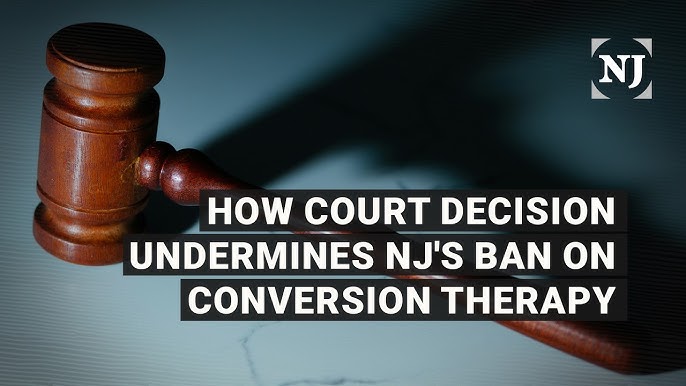

New Jersey’s long-standing prohibition on conversion therapy has entered a period of profound legal uncertainty following a decisive ruling by the United States Supreme Court that is now reverberating through state policy, healthcare regulation, and constitutional law. The decision, issued on March 31, 2026, in Chiles v. Salazar, has effectively rendered New Jersey’s ban on conversion therapy for minors unenforceable, placing one of the nation’s earliest and most expansive protections for LGBTQ+ individuals into a state of legal limbo.
The ruling centers on a constitutional question that has been debated for more than a decade: whether restrictions on conversion therapy constitute permissible regulation of medical practice or impermissible limitations on free speech. In an 8-1 decision, the Court determined that “talk therapy”—defined as conversations between a licensed counselor and a patient regarding sexual orientation or gender identity—is a form of protected expression under the First Amendment. By framing the practice as speech rather than conduct, the Court concluded that state-level bans targeting such interactions cannot withstand constitutional scrutiny.
For New Jersey, the implications are immediate and far-reaching. While the state’s law, enacted in 2013, remains on the books, legal experts widely agree that it can no longer be enforced against licensed professionals under the current constitutional standard. This distinction—between a law’s existence and its enforceability—places regulators, practitioners, and advocacy groups in an uncertain position as they assess how to proceed within the boundaries now defined by federal precedent.
New Jersey’s original ban on conversion therapy for minors was among the first in the country, reflecting a growing consensus within the medical and psychological communities that the practice is both ineffective and potentially harmful. Supported by organizations such as the American Psychological Association, the law was designed to prevent licensed professionals from engaging in efforts to change a minor’s sexual orientation or gender identity. It represented a significant policy statement, aligning the state with a broader movement to codify protections for LGBTQ+ youth.
That framework was expanded in January 2025, when Governor Phil Murphy signed legislation extending the prohibition to include adults when services were provided for compensation. The expansion positioned New Jersey at the forefront of national policy on the issue, creating one of the most comprehensive bans in the United States. However, the Supreme Court’s recent decision now casts substantial doubt over both the original statute and its expansion, raising questions about whether any component of the law can survive under the Court’s interpretation of the First Amendment.
At the center of the current debate is a fundamental tension between two competing priorities: the protection of vulnerable populations and the preservation of constitutional freedoms. Supporters of the original ban argue that conversion therapy is not merely a matter of speech but a form of treatment with documented psychological risks, particularly for minors. Advocacy organizations within New Jersey have emphasized that individuals subjected to such practices face significantly higher rates of mental health challenges, including depression and suicidal ideation. From this perspective, the inability to enforce the ban represents a rollback of protections that were carefully constructed over more than a decade.
On the other side, proponents of the Supreme Court’s decision frame the issue through the lens of individual rights and professional autonomy. They argue that the ruling safeguards the ability of counselors to engage in open dialogue with their clients and preserves the rights of parents to seek guidance aligned with their personal, cultural, or religious values. In this view, the regulation of speech—even within a therapeutic context—raises concerns about government overreach and the potential for broader restrictions on professional communication.
State officials now face the complex task of navigating this new legal terrain. The Attorney General’s office is actively evaluating how to reconcile New Jersey’s policy objectives with the constitutional framework established by the Court. This includes exploring alternative approaches that may allow the state to maintain some level of oversight without directly restricting speech, such as enhanced disclosure requirements, professional standards, or other regulatory mechanisms that fall outside the scope of the ruling.
The situation also intersects with other recent legislative actions in New Jersey related to child welfare and therapeutic practices. In January 2026, the state enacted a ban on coercive reunification therapy, a separate but related issue involving court-ordered interventions in custody disputes. That law prohibits practices that use force, isolation, or coercion to compel children to engage with a parent against their will. Unlike conversion therapy bans, which are now under constitutional scrutiny, the reunification therapy prohibition is grounded more explicitly in child protection standards, potentially offering a model for how future legislation might be structured to withstand legal challenges.
The broader implications of the Supreme Court’s decision extend beyond New Jersey. States across the country with similar bans are now reevaluating their legal frameworks, anticipating challenges that could render their own laws unenforceable. The ruling effectively establishes a national precedent, shifting the balance of power away from state-level regulation and toward a more expansive interpretation of First Amendment protections within professional settings.
Within New Jersey, the issue is likely to remain at the forefront of political and legal discourse. As policymakers consider their next steps, the conversation will increasingly focus on how to protect vulnerable populations within the constraints of constitutional law. This may involve a reexamination of how therapeutic practices are defined and regulated, as well as a broader discussion about the role of the state in shaping standards of care.
Coverage across Sunset Daily News continues to follow these developments as part of a larger examination of how legal decisions at the federal level influence state policy and community impact. The evolving situation surrounding New Jersey’s conversion therapy ban illustrates the complexity of governing in an environment where legal, medical, and social considerations intersect, often in ways that resist simple resolution.
What remains clear is that the issue is far from settled. The Supreme Court’s decision has not closed the debate but has instead reframed it, introducing new questions about the limits of regulation, the definition of professional conduct, and the mechanisms through which states can fulfill their responsibility to protect residents while respecting constitutional boundaries. For New Jersey, the path forward will require a careful balance of legal precision, policy innovation, and an ongoing commitment to addressing the needs of its diverse communities.



