
The Voice of Da Yoof Wakes Up Swinging
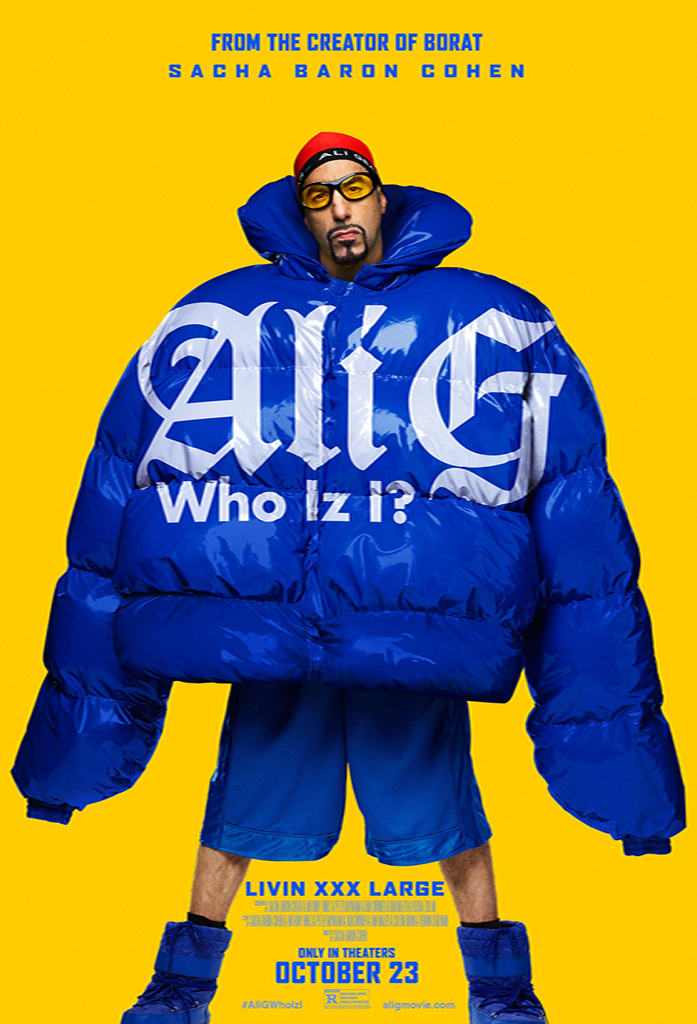
Ali G: Who Iz I?
The Voice of Da Yoof Wakes Up Swinging
Sacha Baron Cohen drags his most notorious alter ego out of a twenty year nap, points him at America and lets the cameras roll. Here is everything you need to know about the comeback everyone is arguing about.
Twenty years is a long time to stay in bed, even by the generous standards of Alistair Leslie Graham, the tracksuited, wraparound shaded, self appointed spokesman for the youth of Staines. Yet that is exactly where Sacha Baron Cohen left him, and it is exactly where Ali G: Who Iz I? finds him at the start of the most improbable comeback of the year. The film, which opened in theaters on October 23, 2026 and arrived on Prime Video worldwide just five days later, marks Baron Cohen’s debut as a feature director and gives Ali G his first starring role on the big screen since Ali G Indahouse back in 2002. It is loud, crude, frequently brilliant, occasionally exhausting and, above all, impossible to ignore, which is precisely the reaction its creator has spent a career engineering.
Running a lean 89 minutes and carrying an R rating for crude and sexual content, graphic nudity, language and drug use, Who Iz I? is not a polished studio sequel in the mold of its predecessor. Instead, Baron Cohen has reached back into the toolkit that made Borat a global phenomenon, building a mockumentary in which a handful of fictional characters move through a world populated by real people who have no idea they are part of a movie. The result is equal parts character comedy, hidden camera provocation and, in its wild final stretch, something close to an unscripted action picture. Whether that combination lands for you will depend largely on how much affection you still hold for a character who first strutted onto British television in 1998, but there is no question that Baron Cohen has once again made the kind of film people feel compelled to talk about.
The Story: From a Twenty Year Nap to an American Hustle
The setup is simple and very Ali G. After two decades of what the film cheerfully describes as nothing but chilling, smoking and romancing, Ali is jolted awake by the news that his longtime girlfriend Julie is eight months pregnant. With a baby on the way and no visible means of support, he decides the only sensible course of action is to fly to America, reclaim the fame he once enjoyed and collect as much “cashmoney” as he possibly can before the due date. As anyone familiar with the character might expect, the plan is built on equal measures of confidence and cluelessness, and the gap between the two is where nearly all of the comedy lives.
Julie is now played by Morgana Robinson, the gifted British impressionist and comic actor who takes over the role from Kellie Bright, who originated it in Indahouse. Robinson approaches the part with a fearlessness that matches her co-star, and her scenes give the film what little emotional anchor it allows itself. Early on, the film goes out of its way to tell viewers which characters are fictional, and an onscreen message makes clear that everyone else they are about to meet is genuine. That promise sets the stakes for everything that follows, because once Ali lands in the United States, the people across the table are not actors playing along with a joke. They are real citizens, activists, operatives and politicians reacting in real time to a man who seems to have stepped straight out of a 2001 music video.
What makes Who Iz I? structurally different from the classic Ali G interviews is that Baron Cohen does not carry the movie alone as a single persona. He also plays two adversaries who spend the film trying to bring Ali down. The first is Dr. Nira Cain-N’Degeocello, an exaggerated progressive academic in cozy sweaters who travels to community gatherings warning audiences that a dangerous cultural appropriator is loose in America and must be stopped. The second is Erran Morad, the hard edged Israeli security specialist fans will remember from Baron Cohen’s 2018 series Who Is America?, who sets about recruiting and training a squad of hardline anti-immigration volunteers to deal with the Ali G “threat.” In other words, Baron Cohen has written himself into a war against himself, and he uses those two characters to steer real people from opposite ends of the political spectrum toward the same ridiculous target.
That device pays off in the film’s second half, which abandons the loose episodic rhythm of the opening and builds toward an increasingly chaotic, largely unscripted climax. Without spoiling the specifics, the final act puts Ali in genuine peril engineered through the unwitting participation of people who believe every word they are being told. Even several of the film’s harshest critics have conceded that the closing sequence is jaw dropping viewing, the kind of set piece that leaves you wondering how anyone convinced the participants to go along with it, and how the lawyers ever signed off.
The Real People Caught in the Crossfire
A Sacha Baron Cohen film lives and dies by its encounters, and Who Iz I? has assembled a striking roster. According to the film’s publicly reported credits and coverage, Ali crosses paths with a series of recognizable American political figures, including former House Speaker Newt Gingrich, former congressman George Santos and Republican representatives Ralph Norman and Andy Harris, none of whom appear to have known they were being filmed for a mockumentary. Their scenes join a broader parade of everyday Americans, self styled patriots, activists and assorted officials who take Ali, Nira or Erran at face value and respond with varying degrees of patience, alarm and enthusiasm.
Baron Cohen frames the whole exercise with intent. The film opens on a line attributed to Voltaire, “Those who can make you believe absurdities can make you commit atrocities,” a quotation that signals he still sees his work as a way of exposing how easily people can be led. It closes with a montage of the real participants who were drawn into the story, a victory lap that doubles as a reminder of just how many of them there were. Whatever your verdict on the jokes, the logistical achievement is considerable, and more than one reviewer has joked that the film’s legal clearance team deserves an award of its own.
The film also leans into technology in a way Ali G never could during his first run. Several fantasy sequences reportedly rely on AI generated imagery to stage absurd visions that no camera could capture, from rapping historical and modern figures to a heavenly finale that pushes the character’s ego to its logical extreme. These moments are among the most divisive in the movie, celebrated by some viewers as gleefully deranged and dismissed by others as a distraction from the real world confrontations that give Baron Cohen’s work its power.
Behind the Camera: Old Accomplices and a Serious Music Team
Although this is Baron Cohen’s first time officially sitting in the director’s chair on a feature, he surrounded himself with the collaborators who have shaped his comedy for decades. The screenplay is credited to Baron Cohen alongside Anthony Hines, Peter Baynham, Dan Swimer, Dan Mazer and Keisha Zollar, with Colton Dunn and Vernon Chatman also sharing story credit. Hines, Baynham and Mazer in particular are names longtime fans will recognize from the original Da Ali G Show and the Borat films, and their fingerprints are visible in the film’s escalating, trap setting structure. Baron Cohen produced alongside Petr Jákl, with a deep bench of executive producers that includes Working Title’s Tim Bevan and Eric Fellner, the company that backed Indahouse nearly a quarter century ago.
The craft credits are notably heavyweight for a film built on hidden camera mayhem. The visual effects are supervised by Robert Legato, the Academy Award winning effects veteran, and a team of four editors, including Debra Neil-Fisher and Craig Alpert, was tasked with shaping countless hours of unpredictable footage into a coherent ninety minutes. Jason Alper and Lynsey Moore handled costumes, which in Ali G’s case means keeping the yellow tracksuit, the tinted shades, the chunky gold and the carefully sculpted goatee exactly as iconic as audiences remember them.
For those of us who live in the world of music and film, the soundtrack credits may be the most intriguing part of the package. The original score comes from Erran Baron Cohen, Sacha’s brother and a frequent musical partner, working with composer Nami Melumad. Music supervision is handled by the veteran supervisor Karyn Rachtman together with Ahmir “Questlove” Thompson, a pairing that brings real hip-hop credibility to a character who has always been built on a gloriously misguided love of the genre. The soundtrack album is being released through Def Jam Recordings, a fittingly legendary home for an artist who has spent his whole life insisting he is a legend. Several critics noted that the musical stings and Ali’s own tracks deliver some of the film’s most reliable laughs, which speaks to how carefully the music was placed throughout.
How the Comeback Was Built: Secrecy, Stunts and a Five Day Window
In true Baron Cohen fashion, Who Iz I? was made in near total secrecy. Reports that a new Ali G film had been quietly shot began circulating in early July 2026, but there was no confirmation until mid July, when Baron Cohen posted a short clip on social media showing Ali in conversation with a public servant. A follow up video on July 22 made it official, revealing the title and setting the stage for an autumn release. The marketing that followed was pure spectacle. In London, Baron Cohen was joined by hundreds of Ali G lookalikes for a promotional stunt, and at the film’s premiere at the Hollywood Legion Theater in Los Angeles on October 14, he walked the carpet fully in character.
Amazon MGM Studios then took an unusual approach to distribution. Rather than a conventional wide theatrical rollout, the studio staged what it openly described as a stunt release, opening the film in cinemas in markets including the United Kingdom, Ireland, Canada, Australia, New Zealand, Germany and the Netherlands for a single weekend of exclusivity before sending it to Prime Video worldwide on October 28. The film opened in Australia and the Netherlands on October 22 and in the UK the following day, where it earned roughly $1.8 million in its opening frame, contributing to an international theatrical total of about $2.2 million by the end of its first week. Amazon has said the brief run achieved what it was designed to do, building awareness and a strong sense of urgency ahead of the streaming debut, and the studio extended the film’s stay in select theaters even as it went live online. Once on Prime Video, it quickly climbed into the platform’s top titles in the United States.
Not everyone accepted that framing. Some commentators read the short theatrical window as a sign of soft ticket sales and a hostile online climate, pointing to a sustained boycott campaign that took shape in the weeks before release. The truth likely sits somewhere in between. Streaming has always been the natural home for a film like this, and the theatrical weekend served as both a marketing event and a test of whether a character born in the era of VHS still had box office pull. On the evidence so far, his real audience is at home, on the couch, ready to watch and argue.
Critics, Controversy and the Question of Whether Ali G Still Matters
Critical reaction has been sharply divided. The film has been hovering around 40 percent on Rotten Tomatoes, with an average critic score near five out of ten, and audience ratings on IMDb have settled in a similar range. Admirers point to Baron Cohen’s undiminished gift for improvisation, his willingness to put himself in real physical and social danger, and a closing act that delivers some of the most outrageous sequences of his career. Several reviews describe it as vintage Baron Cohen daredevil comedy that offends everyone in sight, which for many fans is precisely the point.
Detractors argue that the character was conceived as a parody of a moment that had already faded by the time he debuted, and that bringing him back in 2026 forces the film to work overtime to justify its own existence. Others feel the blend of scripted storytelling and real world pranks never fully gels, and that the movie leans on Baron Cohen’s other personas because Ali G himself has less to do in today’s landscape than he did in the early 2000s. A recurring observation is that the film starts slowly before finding its rhythm, which makes the payoff all the more rewarding for viewers who stay with it.
Then there is the cultural debate that has followed Ali G since the beginning. From the moment he appeared, the character was a satire of a suburban white Brit borrowing the language, style and swagger of Black and Jamaican culture, and critics have always disagreed about whether the joke lands on Ali or on the culture he is imitating. That conversation has reignited with full force around Who Iz I?, fueling online boycott calls and prompting one of the film’s writers to publicly defend the project against charges that it reinforces harmful stereotypes. Tellingly, the movie anticipates the argument. By casting Baron Cohen as both the appropriator and the zealous academic determined to cancel him, the film turns the debate itself into material, inviting viewers to laugh at extremes on every side. Whether that counts as sophisticated self awareness or a clever shield is a question audiences will answer for themselves.
Perhaps the most significant headline is one Baron Cohen delivered personally. In interviews around the release, he has indicated that this is the absolute last time he intends to make a film of this kind. Given the threats, the legal exposure and the sheer physical risk involved in his brand of guerrilla comedy, that decision is easy to understand, and it lends Who Iz I? the weight of a farewell lap from one of the most audacious comic performers of his generation.
Where Ali G Came From, and Why He Still Gets Under Our Skin
To appreciate the comeback, it helps to remember the original phenomenon. Ali G first appeared in 1998 on Channel 4’s The 11 O’Clock Show, where his bluntly ignorant interviews with genuine public figures quickly became the most talked about segments in British comedy. That success led to Da Ali G Show, which ran on Channel 4 from 2000 and crossed the Atlantic to HBO for two seasons in 2003 and 2004, introducing American viewers not only to Ali but also to two other Baron Cohen creations, the Kazakh journalist Borat and the Austrian fashion reporter Brüno. The show’s encounters with astronauts, diplomats, scientists and politicians remain some of the most quoted interviews in television history, largely because the subjects so rarely realized they were the punchline.
Borat and Brüno went on to headline their own films, with Borat becoming a worldwide sensation in 2006 and returning with an awards season sequel in 2020. Baron Cohen formally retired both Ali G and Borat in 2007, explaining that they had become too famous to fool anyone, although Ali surfaced briefly in 2012 to accept his creator’s Outstanding Achievement Award at the British Comedy Awards, causing an uproar in the process. Since then, Baron Cohen has built a celebrated career as a dramatic and comic actor, earning acclaim for films such as The Trial of the Chicago 7, while continuing to use disguise and deception to probe American politics in Who Is America?. Bringing Ali back now is therefore not simply nostalgia. It is a test of whether the oldest weapon in his arsenal can still cut in an age when everyone has a camera, a following and a fixed opinion.
The Verdict: How and Why to Watch
Ali G: Who Iz I? is not a perfect film, and it is not trying to be. It is a messy, provocative, sometimes uncomfortable return from an artist who has always measured success by the size of the reaction rather than the politeness of the reviews. Longtime fans will find plenty of the character they loved, from the malapropisms to the swagger to the unshakeable belief that he is the most important man in any room. Newcomers will get a crash course in why Sacha Baron Cohen remains one of the few comedians capable of making real people reveal themselves on camera. And anyone interested in the craft of comedy, music supervision and modern film distribution will find a fascinating case study in how a twenty five year old character can be rebuilt for the streaming era.
The film is streaming now on Prime Video around the world, and it continues to play in select theaters for those who want the communal experience of gasping alongside a crowd. If you need a preview of what you are in for, the official trailer captures the tone in a little over two minutes, and the film’s full cast and credits are worth a browse once the end montage rolls. Love him or loathe him, Ali G is back, and for one more go around, the whole world is his interview.
Booyakasha. He’s Back.
Stream Ali G: Who Iz I? tonight and decide for yourself whether the voice of da yoof still has it.
Watch on Prime Video Play the Trailer Cast & Credits