
The Hawk: Will Ferrell’s Absurd Golf Comeback Comedy Is Splitting Critics and Conquering Netflix’s Charts
Every so often a show arrives that perfectly illustrates the widening gap between what critics want from comedy and what audiences are actually showing up to enjoy, and Will Ferrell’s new Netflix series, The Hawk, has quickly become the defining example of that divide in the summer of 2026. Since premiering on July 16, the ten episode golf comedy has rocketed to the top of Netflix’s global charts, pulling in a staggering 4.8 million views in its opening days and settling comfortably into the number two spot on the platform’s United States Top 10, outpacing established catalog favorites in the process. It is, by nearly every measure of raw viewership, one of the biggest streaming success stories of the month. It is also, according to a wide swath of professional critics, one of the year’s more disappointing comedic swings. Both things appear to be true at once, and that exact tension is precisely why everyone is talking about it.
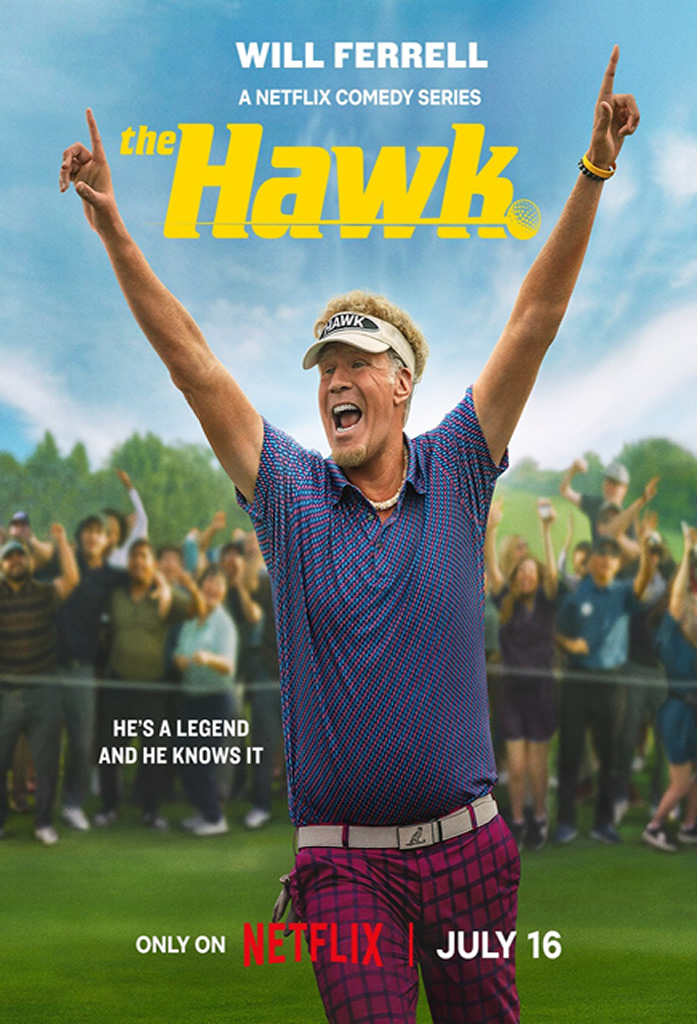
The premise sits squarely in Ferrell’s comfort zone. He stars as Lonnie Hawkins, nicknamed The Hawk, a once legendary golf champion whose career flamed out spectacularly years earlier and who now refuses to let that failure define his final chapter. Rather than accept retirement gracefully, Lonnie mounts a loud, chaotic, thoroughly undignified comeback attempt on the professional tour, determined to chase down one last career defining title even as his own son, played by Jimmy Tatro, is rising through the ranks poised to take his place. It is the kind of premise that practically writes its own trailer, echoing the rise, fall, and redemption arc that powered some of Ferrell’s most beloved sports comedies from earlier in his career, and the show leans into that lineage unapologetically, positioning itself as spiritual kin to the kind of oddball athletic underdog stories that made him a comedy institution in the first place.
Surrounding Ferrell is a genuinely stacked ensemble built to support the chaos. Molly Shannon plays Lonnie’s sharp tongued, understandably exasperated ex wife Stacy, who has moved on to selling a golf themed spiked tea while still very much orbiting her ex husband’s disaster zone of a life. Fortune Feimster plays Sam, an unlikely new caddie Lonnie recruits under distinctly unglamorous circumstances after his longtime caddie unexpectedly dies, and the rapport between the two of them has emerged as one of the show’s most consistently praised elements, built on an easy, improvisational chemistry that keeps landing even when the surrounding material grows shaky. Luke Wilson rounds out the central cast as Golden Fisk, Lonnie’s smug, needling professional rival, delivering a performance multiple critics have singled out as one of the season’s clear highlights, while Tatro brings a surprisingly grounded, tightly wound energy to Lonnie’s son, a disciplined young golfer wrestling with the pressure of stepping directly into his father’s oversized shadow.
Behind the camera, the pedigree is hard to ignore. Ferrell co created the series alongside longtime collaborator Chris Henchy and writer Harper Steele, whose work on the acclaimed documentary Will and Harper added an unexpected layer of anticipation to the project, and Knives Out filmmaker Rian Johnson signed on as an executive producer, lending the show an additional dose of prestige adjacent credibility before a single episode had aired. That level of talent, paired with a premise this tailor made for Ferrell’s specific comedic register, is part of why expectations climbed so high heading into the premiere, and part of why the eventual critical reception has felt like such a jolt by comparison.
The numbers tell one story. The Rotten Tomatoes split tells another entirely. Critics have not been kind, with the Tomatometer landing at a rough twenty nine percent, and reviewers across outlets describing the humor as tired, oddly underwritten, and overly reliant on beats the genre has already run into the ground through past Ferrell vehicles. Several critics pointed specifically to a stretched, sketch like quality to the writing, arguing that a premise built for a tight ninety minute feature struggles to justify a full ten episode season, with jokes that land occasionally rather than consistently and stretches of dead air between the show’s better sight gags. Some reviews went further, suggesting the series never fully commits to the sharper, more pointed sports satire its premise seemed to promise, settling instead for a gentler, less surprising version of the underdog formula.
Audiences, however, have responded in almost the opposite direction. The Popcornmeter score sits at a considerably warmer sixty seven percent, and social media has been full of viewers happily embracing the show’s unhinged, over the top energy exactly as intended, treating it less as a rigorous comedic achievement and more as an easy, breezy weekend binge. That reaction is helped considerably by the show’s format. Ten fast paced half hour episodes make for an incredibly low commitment watch, the kind of series that invites a full binge in a single sitting without ever asking too much of its audience. Interestingly, several reviewers who were otherwise lukewarm on the broader comedy found themselves surprised by the emotional undercurrent running beneath Lonnie’s relationship with his son, noting that the father son dynamic between Ferrell and Tatro delivers a handful of genuinely affecting moments buried underneath all the golf themed absurdity, giving the show an emotional core that critics did not necessarily expect walking in.
That gap between critical dismissal and audience enthusiasm has become something of a talking point in its own right, with entertainment outlets framing The Hawk as a textbook case study in the modern streaming disconnect, where a show can be simultaneously declared a creative letdown by professional reviewers and an outright hit by the very metric that keeps it on Netflix’s homepage. Whether that pattern says more about shifting critical expectations for broad, algorithm friendly comedy or simply confirms how durable Ferrell’s specific brand of everyman absurdity remains with casual viewers, the end result is the same. The Hawk has become appointment viewing for a huge swath of Netflix’s audience regardless of what the reviews say, driven by a cast clearly having fun, a handful of standout comedic performances from Wilson and Feimster in particular, and just enough sincerity buried inside the silliness to keep people watching past the first punchline that does not quite land.
For longtime fans of Ferrell’s specific comedic wheelhouse, The Hawk offers exactly what it promises on the label, a loud, occasionally uneven, thoroughly committed sports comedy that trades subtlety for volume and mostly gets away with it. Whether it ultimately earns a second season or ends up remembered as a strange footnote in Ferrell’s long career of oddball athletic underdogs, its opening weeks have already proven one thing conclusively. Critics and audiences are not just disagreeing about The Hawk, they are having an entirely different conversation about what the show is trying to be, and right now, the version audiences are watching is winning.