
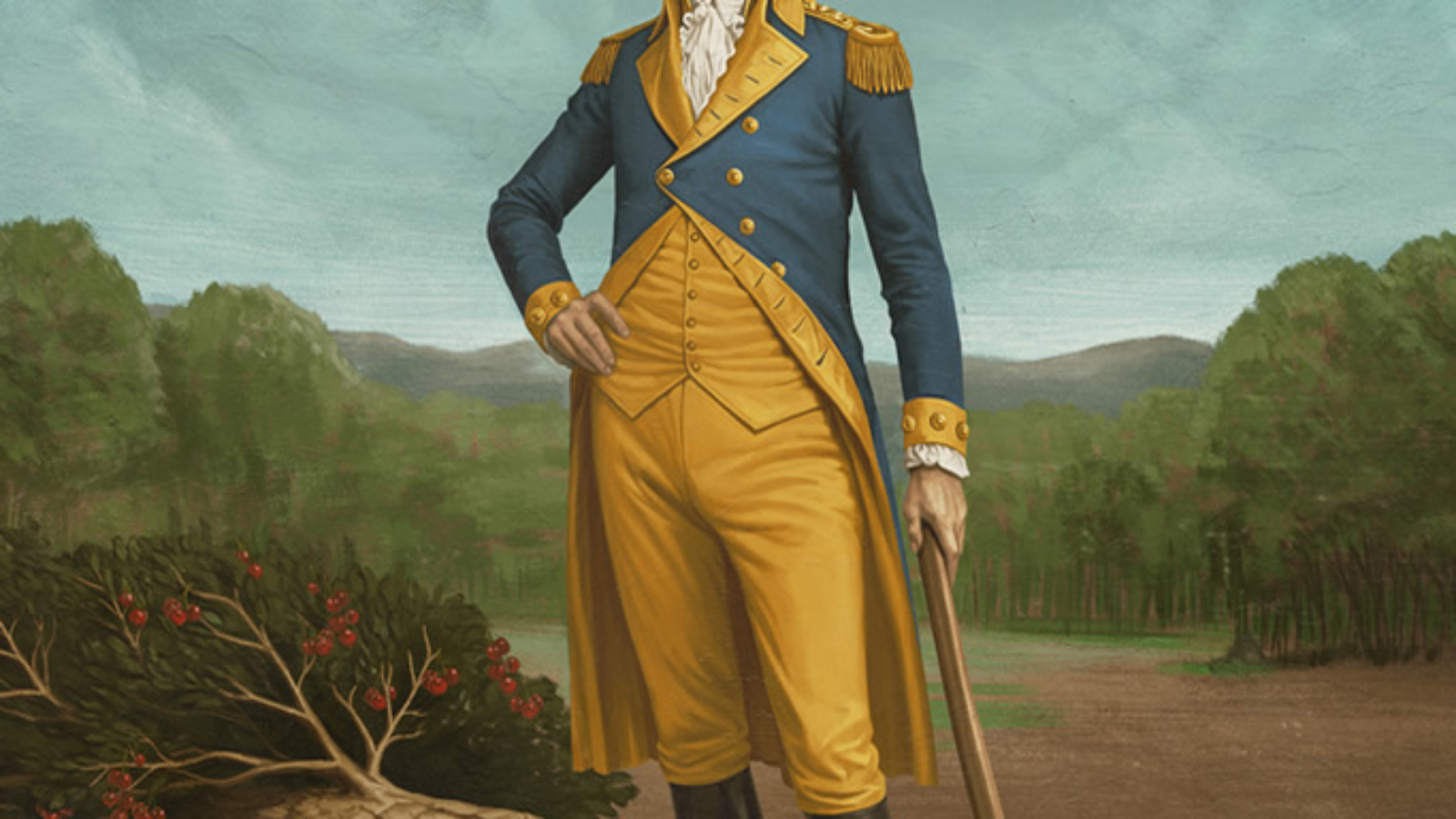
Life, Larry and the Pursuit of Unhappiness: How Larry David Just Rewrote 250 Years of American History — And Got Away With It
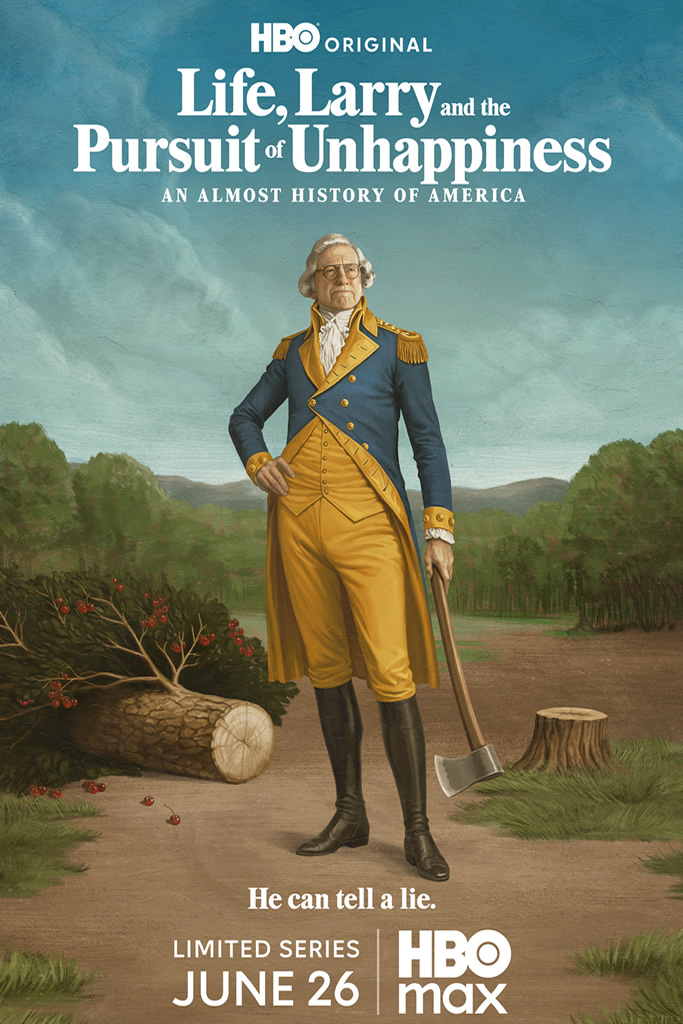
There is a version of America’s 250th birthday that involves soaring orchestral music, Ken Burns-style dissolves between sepia photographs, and a narrator who sounds like he is personally apologizing for the passage of time. And then there is the version where Larry David crashes the party, refuses to sit where he’s told, complains that nobody used a coaster on the wooden table of liberty, and accidentally derails the entire democratic experiment.
Guess which version HBO chose.
Life, Larry and the Pursuit of Unhappiness: An Almost History of America arrived on June 26, 2026 — today, on the very cusp of the nation’s Semiquincentennial — and it is exactly as audacious, as bizarre, and as only-on-HBO as that premise suggests. Seven episodes. Four historical sketches per half-hour. One relentlessly cantankerous protagonist. And an official logline that reads like a warning label: “Those who don’t know history are doomed to watch Larry David repeat it.”
Welcome to the most unexpected birthday present America has ever received.
The Origin Story: When the Obamas Called Larry David
In television, the phrase “passion project” gets thrown around so casually that it has lost almost all meaning. But the origin story of Life, Larry and the Pursuit of Unhappiness is genuinely unusual — the kind of development deal that sounds like a pitch comedian’s bit before you realize it actually happened.
It started with Barack and Michelle Obama. Their production company, Higher Ground Productions, had been quietly building a premium content portfolio since the former president left the White House, with a focus on stories that reflect America’s complexity and humanity. When the milestone of the nation’s 250th anniversary began appearing on the horizon, they wanted to mark the occasion in a way that was thoughtful, meaningful — and maybe a little fun.
Then Larry David called.
That sentence has essentially become the unofficial tagline of the entire series, and it is entirely earned. According to HBO’s own promotional materials, the show’s setup is essentially: “President and Mrs. Obama wanted to honor America’s 250th anniversary and celebrate the unique history of our nation on this special occasion… But then Larry David called.” Both Barack Obama and Michelle Obama serve as executive producers on the series alongside David, his longtime creative partner Jeff Schaffer, and producers Ethan Lewis and Vinnie Malhotra. The Obamas are not passive names on a credit roll — they were instrumental in bringing Larry David back to television, and Barack Obama appears in the series himself, both as its Rod Serling-esque host and as a full-blown comedy sketch partner.
At the premiere event on June 23 at the Hollywood Legion Theater, HBO’s Executive Vice President of Comedy Programming Amy Gravitt captured the improbability of the whole thing perfectly from the stage: no one, she said, had “historical sketch comedy” on their bingo card for what Larry David would do next. She credited the Obamas directly for making it happen.
The series was first announced in July 2025, when HBO confirmed an untitled half-hour sketch comedy had been ordered from David and Schaffer. The title was revealed alongside a teaser trailer in May 2026, with a full trailer dropping the following month. By then, the sheer scope of the guest roster had begun to leak out, and what looked like a quirky limited experiment started to feel like an event.
The Creative Architecture: Schaffer, Improvisation, and the Curb DNA
To understand Life, Larry and the Pursuit of Unhappiness, you have to understand the creative machinery that built it — and that machinery is almost identical to the one that ran Curb Your Enthusiasm for twelve seasons across twenty-four remarkable years.
Larry David co-created and executive produced the series alongside Jeff Schaffer, who also directs every episode. Schaffer is not a casual collaborator — he is one of the architects of the Curb universe, a veteran of both Seinfeld and the later seasons of Curb, and the co-creator of The League. The two men share a creative language built on years of working in the same uncomfortable comedic key. Their shorthand is instinctive and their sensibilities are almost frighteningly aligned: both are obsessed with the granular injustices of social interaction, the tyranny of unspoken rules, and the specific misery of being a person who notices everything wrong with the world and cannot stop saying so out loud.
Crucially, the dialogue in Life, Larry is largely unscripted. Like Curb Your Enthusiasm, the show operates from structural outlines rather than fully written scripts, allowing the actors to improvise within the framework of each scenario. This is a signature of David’s approach to comedy — the idea that genuine awkwardness and genuine surprise cannot be fully manufactured in advance, that the funniest moments happen in the gap between intention and reality. Placed in a historical context, this method creates something genuinely strange and consistently entertaining: you are watching actors with deep comedic instincts navigate situations they could not have fully rehearsed, wearing period costumes, attempting to serve a story that is already inherently absurd.
The format itself — four sketches per half-hour episode, seven episodes in total, airing weekly from June 26 through the August 7 finale — gives the series a structure that feels more like a variety show from another era than a prestige drama. That is intentional. Before David built his reputation on Seinfeld and then spent twenty-four years redefining American sitcom comedy with Curb, he cut his teeth in sketch television. He was a performer and writer on Fridays, ABC’s early-1980s late-night sketch show, and he served a notably turbulent stint as a writer at Saturday Night Live, a tenure more famous for the legend of him quitting and returning two days later than for any particular sketch. Life, Larry is in many ways a return to that format — the same Larry David, now operating at the peak of his powers, doing the thing he was doing before anyone quite knew what to make of him.
The Concept: America’s Most Embarrassing Moments, Finally Told Honestly
The premise is simple enough to explain in one sentence, and rich enough to sustain seven half-hours of television: what if Larry David had been present for the most pivotal, most mythologized, most sacred moments in American history?
Each episode plants that irresistible misanthrope — that fussy, well-meaning, socially catastrophic man who cannot let anything go and cannot resist saying the thing that absolutely no one wants him to say — into a new chapter of the American story. Sometimes David portrays a real historical figure. Other times he appears as a fictional presence inserted into the margins of an actual event — a third Wright brother nobody invited, say, squeezed into the middle seat between Orville and Wilbur on the first flight of 1903, complaining vocally about the situation. The sketches visit moments ranging from the writing of the Declaration of Independence to Alexander Graham Bell’s first telephone call to Rosa Parks refusing to move to the back of the bus — at least, until she meets Larry David. The series reportedly includes a sequence with Abraham Lincoln and Mary Todd on a fateful night at the Ford Theatre, with Larry David along for what should have been a pleasant evening at the theater. It visits the Boston Tea Party, which Larry was apparently not invited to attend, because he is such terrible company. It follows the Lewis and Clark expedition, with Jerry Seinfeld appearing as William Clark while David portrays Meriwether Lewis, the pair abandoning their put-upon wives to go gallivanting across the continent together. It looks at Susan B. Anthony’s dinner party, which Larry manages to ruin — made even more surreal by the fact that Anthony is played by Susie Essman, so David spends the entire sketch calling her Susie.
The series does not shy away from the darker and more uncomfortable textures of American history either. Racism, antisemitism, and misogyny are consistent presences in the sketches, not glossed over or softened for palatability. David takes pointed aim at historical figures who deserve scrutiny, with particular relish reportedly directed at the antisemitic industrialist Henry Ford and the red-baiting senator Joseph McCarthy. Samuel L. Jackson narrates the proceedings with a sharpness that sets an expectation for each sketch before David arrives to upend it entirely. And while the show is not a political screed, it does not pretend to be apolitical either — there is apparently at least one sketch that offers a very direct and very pointed commentary on contemporary American life, one that critics have been instructed not to detail but have uniformly described as genuinely bold.
Obama closes the series with a reflection on the nature of American progress — that it has never been smooth or steady, but that sustained investment in the American experiment is what keeps it alive. It is a sentiment that the show earns in its own bizarre, cantankerous way. If the United States at 250 is a work in progress, Life, Larry is its most honest mirror: chaotic, funny, occasionally infuriating, and impossible to look away from.
The Cast: A Murderers’ Row of Comedy Talent
Even setting aside the extraordinary novelty of a former president serving as both executive producer and on-screen host, the ensemble assembled for Life, Larry and the Pursuit of Unhappiness is staggering in its depth. HBO has essentially called in every favor Larry David has ever earned across five decades in television comedy, and the result reads like a dream cast assembled by someone with extremely specific and deeply personal taste.
The Curb Your Enthusiasm family is heavily represented. Susie Essman, who spent twelve seasons torturing and being tortured by Larry David on that show, appears as Susan B. Anthony. Jeff Garlin and J.B. Smoove both turn up. The reunion element of the series gives it an immediate warmth and chemistry that a group of strangers could never replicate — these are performers who have spent years learning to push each other’s buttons in precisely the right ways.
Beyond the Curb veterans, the guest roster expands into genuinely surprising territory. Bill Hader plays Abraham Lincoln, with Kathryn Hahn as Mary Todd Lincoln alongside him — a pairing that sounds extraordinary on paper and presumably delivers something even better on screen. Jon Hamm and Sean Hayes portray the Wright brothers, which is one of those casting choices so specific and so inspired that it immediately makes you wish you had thought of it yourself. Jerry Seinfeld appears as William Clark of the Lewis and Clark expedition. Greg Kinnear, Lin-Manuel Miranda, Chris Parnell, Joe Manganiello, Essence Atkins, Vince Vaughn, Rita Wilson, Isla Fisher, Jane Krakowski, Henry Winkler, Kaley Cuoco, Rob Huebel, and Fred Melamed all appear across the seven episodes. Krakowski’s casting carries a particular meta-textual richness — she recently portrayed Mary Todd Lincoln in the Broadway production Oh, Mary!, which means she has now played in two very different comedic takes on the same tragic figure.
Barack Obama’s role in the series goes considerably beyond a brief cameo or a knowing wink at the camera. He serves as the show’s host, introducing each episode in a manner consciously evoking Rod Serling’s role in The Twilight Zone — a calm, authoritative guide walking the audience into territory that is about to become very strange. Beyond that framing device, Obama also appears in a full comedic sketch alongside Larry David himself. In a now-famous story from the promotional tour, David described the creative negotiation between them: when the former president reportedly offered script notes, David told him, “When you were president, if somebody had a good idea, you would listen to it. Well, I’m the president here.” That dynamic — two extraordinarily accomplished men, each entirely confident in his own authority, navigating who actually gets to be in charge — sounds like it produces exactly the kind of comedy that could not be scripted in advance.
David himself has said that one of his favorite roles in the series is his portrayal of Jonas Salk, the scientist who developed the polio vaccine. That choice — Larry David as the man who saved millions of children from paralysis — tells you everything you need to know about the tone this show is going for.
The Critical Conversation: What the Reviewers Are Saying
Life, Larry and the Pursuit of Unhappiness arrived with enormous expectations and a genuinely unusual premise, and the critical response has been — fittingly — a little bit Larry David about the whole thing. Split, slightly aggravated, occasionally delighted, and unable to fully commit to either enthusiasm or dismissal.
The show launched with a 62% score on Rotten Tomatoes on its premiere day, with critics divided fairly cleanly between those who find Larry David’s persona so reliably funny that any vehicle for it is inherently worthwhile, and those who feel the sketch format exposes weaknesses that Curb‘s longer-form storytelling was able to conceal. The Metacritic score settled around 65, placing it in the solidly-good-but-not-transcendent territory that honest sketch comedy tends to occupy.
The most consistent praise centers on the underlying concept and on David himself. Richard Roeper, writing for RogerEbert.com, called the series “clever, insightful, and politically savvy,” describing the premise as “virtually foolproof” and the result as “pretty, pretty, pretty funny” — deliberately deploying David’s own signature verbal tic to deliver the verdict. For longtime Curb devotees who mourned the 2024 finale, Roeper essentially framed the show as the next best thing: the same Larry, the same sensibility, wearing a wig and a waistcoat and complaining about the same things two hundred years earlier.
TV Insider’s Matt Roush offered a similarly warm take, calling it a “rollicking romp through American history” that reveals the influence of Mel Brooks in its broad, irreverent tone. Roush observed that David takes particular glee in targeting figures who have historically escaped full scrutiny, and noted that even when the show’s aim is imprecise, David’s sheer comedic presence remains the most dependable thing on screen.
IndieWire landed on a more complicated position: the reviewer found the show’s lengthy sketches occasionally tiring, its recycling of familiar David grievances undeniably repetitive, and some of the treatment of nagging wives tedious even by the show’s own internal logic. But the conclusion was nevertheless an enthusiastic endorsement, grounded in a simple observation: Larry David is a timeless character. His perspective does not require the correct century. He is who he is whether he is arguing with a modern parking lot attendant or a colonial-era founding father, and that consistency — that absolute commitment to the persona across every conceivable context — is inherently funny. “Watching the Larry we know and love shuffling through time, arguing with presidents and generals, is funny,” the review concluded, “and during the roughest sketches, he’s still funny enough.”
Variety’s take was somewhat more measured, framing the show as Curb Your Enthusiasm in period drag rather than a genuinely distinct creative work. The review noted that the strongest segments are the ones that use the historical setting to make a point about human nature rather than simply transplanting familiar gags into a new backdrop — that the most effective sketches argue that history is driven not by great men and high-minded idealism, but by the same petty failings and social catastrophes that David has been cataloging his entire career. When the show commits to that thesis, it lands. When it defaults to recycling specific Curb bits — the chat-and-cut, the “Happy New Year” expiration date, the coaster on the wooden table — it starts to feel like a highlight reel rather than new territory.
The Hollywood Reporter’s Daniel Fienberg called it “formulaic and familiar, but not without high points,” identifying the extended Abraham Lincoln episode as the clearest success of the season — a sketch that is given enough room to develop genuine momentum rather than arriving at its punchline and moving on. TVLine’s review was the harshest of the major outlets, describing the writing as “uninspired” and accusing David and Schaffer of outright self-theft in their reuse of specific Curb gags. The consensus view from critics, stripped of all its qualifications, is probably something like: if you love Larry David, you will enjoy this, because Larry David is still Larry David; if you were hoping for something genuinely new, you may find the familiarity more frustrating than comforting.
One thread that runs through almost every review is the importance of weekly viewing over bingeing. Multiple critics recommended consuming the series at its intended pace — one episode per Friday — rather than consuming all seven hours at once. The repetition that some found exhausting across the full season reportedly lands very differently when each installment is given a week to breathe. That note feels worth heeding.
Larry David’s Return and What It Means
It is impossible to discuss Life, Larry and the Pursuit of Unhappiness without acknowledging the emotional weight of Larry David returning to television at all. Curb Your Enthusiasm ended in April 2024 after twelve seasons and twenty-four years, a run so long and so consistent that it had effectively become a permanent fixture of American comedy culture. The finale was watched by enormous audiences and received as a true cultural event. When it was over, many assumed — reasonably — that David was done. That he had said everything he had to say, wrung every last drop of discomfort from every conceivable social situation, and would retire to wherever grumpy comedy geniuses retire to when they have done enough.
Instead, the Obamas called. And rather than say no, David apparently decided that the one place he had not yet taken his particular misery was the past — all of it, from the founding of the republic to the twentieth century, twenty-eight historical moments spread across seven half-hours and waiting to be disrupted by the most reliably disruptive man in the history of American television comedy.
That he made this choice in collaboration with a former president who is his ideological opposite in almost every imaginable way — in terms of temperament, in terms of grace under pressure, in terms of their fundamental relationship with social interaction — is the great creative irony at the heart of the project. Obama is famously measured, famously deliberate, famously in control. David is famously none of those things. Their on-screen dynamic, from what critics have described, is exactly as good as that contrast suggests.
The series also represents something quietly significant in terms of David’s legacy as a sketch comedian. His brief, chaotic time at Saturday Night Live in the early 1980s has always been a footnote in his biography — a period he did not particularly distinguish himself in, famous more for the mythology of his resignation than for any memorable work. Life, Larry is, in a sense, his answer to that chapter: the sketch comedy show he might have made at SNL if he had been Larry David then the way he is Larry David now. The persona was always there. It just needed forty more years of refinement, an HBO budget, a former president, and the occasion of a national birthday.
Where to Watch, When It Airs, and What to Expect
Life, Larry and the Pursuit of Unhappiness is streaming now on HBO and HBO Max, with the first episode available beginning at 9 p.m. ET on June 26. New episodes drop weekly every Friday through August 7, 2026, when the seventh and final episode closes the series. The weekly release cadence is not accidental — as multiple critics have observed, the show is built to be savored one chapter at a time, its rhythms better suited to anticipation and weekly discussion than to a single weekend marathon session.
The series is a seven-episode limited run, meaning there is a defined endpoint and a complete story to experience. Whether HBO revisits the format with a second season remains to be seen — one critic memorably noted that they would probably be ready for more in about 250 years — but for now, the show exists as a standalone piece of work, a birthday card to the United States written in the only language Larry David knows: barely concealed irritation, an acute sensitivity to the absurdity of social norms, and the absolute refusal to pretend that anything is fine when it very clearly is not.
For viewers who loved Curb Your Enthusiasm and have spent two years wondering what David would do next, this is the answer. It is not a reinvention. It is not a departure. It is Larry David doing what Larry David has always done, pointed at a larger and more consequential target than usual, surrounded by some of the funniest people working in American comedy today, and produced by a man who once negotiated nuclear arms treaties and is apparently capable of surviving the experience of receiving script notes from the creator of Seinfeld.
America turns 250 this summer. It did not ask for this birthday present. But honestly — given the current state of things — it might be exactly what the country needs: a look back at two and a half centuries of history, with all the sacred mythology stripped away, filtered through the consciousness of a man constitutionally incapable of letting anything slide.
Pretty, pretty, pretty American.
Life, Larry and the Pursuit of Unhappiness: An Almost History of America airs Fridays at 9 p.m. ET on HBO, with new episodes through August 7, 2026. All episodes are also available to stream on HBO Max, Sunset and On-Demand after the Episode Airs