


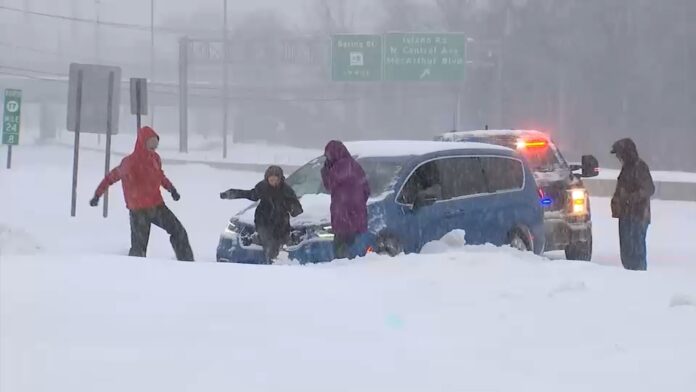

MORRISTOWN, N.J. — A powerful and complex winter storm continued to grip New Jersey on Monday, delivering a prolonged mix of snow, sleet, and freezing rain that has led to hazardous travel conditions, widespread closures, and sharply varying snowfall totals across the state.
Snow first pushed into southern coastal communities just after midnight, with Cape May among the earliest locations to see flakes begin falling. What started as fine, almost dust-like snow quickly intensified overnight, transitioning into steadier accumulation by the pre-dawn hours. By morning, several inches were already on the ground in South Jersey, with totals steadily climbing as the storm progressed.
By late morning and early afternoon, reports across the southern and central parts of the state showed widespread accumulations between six and eight inches, with localized higher totals approaching nine and ten inches in parts of Ocean County. Cape May County reported around six inches, while Little Egg Harbor saw approximately seven inches and Manahawkin reached eight inches. Northern and northwestern portions of Ocean County emerged as some of the hardest-hit areas in the region during the storm’s initial phase.
Central New Jersey experienced more variability, particularly between the Interstate 195 and Interstate 78 corridors. Some communities reported totals as low as seven inches, while others pushed past ten or eleven inches, with drifting contributing to uneven measurements. Farther north, conditions remained firmly wintry, with locations north of Interstate 80 continuing to see heavy snowfall well into the afternoon. Several of those areas were already reporting more than a foot of snow, with additional accumulation still ongoing.
As expected, the storm evolved through multiple phases. The first phase concluded as snowfall transitioned to sleet across much of South Jersey, Central Jersey, and the southern tier of North Jersey. The change was unmistakable, with ice pellets bouncing off rooftops, windows, and road surfaces — an audible signal that snowfall had effectively ended for large portions of the state.
Phase two of the system brought the most dangerous conditions. With surface temperatures remaining at or below freezing across much of inland New Jersey, sleet and freezing rain became the dominant forms of precipitation west of the Garden State Parkway, from roughly Toms River south through Cape May County. In interior South Jersey, temperatures lingered in the teens and 20s, allowing ice to accumulate rapidly on untreated surfaces. Areas closer to the coast saw plain rain, though that boundary remained largely pinned near and east of the Parkway.
Meteorologists noted that the snow-to-sleet line stalled for several hours, allowing northern New Jersey to continue accumulating snow while central and southern regions dealt with a disruptive ice storm. This pause proved critical, as it prevented warmer air from surging too far north and preserved heavy snow potential for the state’s northern tier.
As the primary low-pressure system transferred energy to a developing coastal low late in the day, colder air began filtering back into the region from the north. This marked the transition toward the storm’s final phase, during which the snow line was expected to sag back southward toward Interstate 78. Areas north of that line were forecast to pick up additional light snow through Monday morning, while locations farther south were unlikely to see a return to snow before precipitation tapered off.
In plain terms, the storm unfolded largely as forecast, despite the challenges posed by warm air aloft and shifting precipitation types. The greatest concern now centers on safety. Ice accumulation has significantly amplified the storm’s impact, turning already difficult winter driving into a far more dangerous situation. Officials urged residents to avoid unnecessary travel, noting that slick roads, reduced visibility, and icy surfaces pose heightened risks.
The combination of freezing rain and sleet has also raised concerns about power outages, though relatively modest wind speeds have helped limit widespread damage so far. Even so, isolated outages remain possible, particularly in areas experiencing prolonged icing.
In southeastern New Jersey, rainfall near the coast may wash away road salt ahead of a return to colder, Arctic air, creating additional hazards as temperatures drop. Transportation and public works departments are expected to monitor conditions closely and reapply treatments as needed.
The storm’s impact prompted multiple closures, including Morris County government offices, which announced they would be closed Monday due to hazardous conditions. Officials reported heavy snow continuing across the county, with many areas already exceeding eight inches and total accumulations projected between ten and fourteen inches before the system fully exits late Monday morning. Residents and county employees were advised to remain off the roads to allow plow crews and emergency responders to operate safely.
As conditions continue to evolve, residents are encouraged to stay informed through local emergency management updates and ongoing coverage in Sunset Daily News New Jersey’s weather report section, which will continue tracking snowfall totals, ice impacts, and travel advisories statewide.
Additional observations and updates are expected as the storm’s final phase concludes, but officials emphasized that patience and caution remain essential as New Jersey works through one of the season’s most disruptive winter events.
New Jersey Begins Long Recovery After Historic Snowstorm as Bitter Arctic Cold Moved In. New Jersey awoke Monday to the difficult task of digging out from one of the most impactful winter storms in recent years, as communities across the state faced deep snow, ongoing travel disruptions, and the looming threat of an extended stretch of dangerous cold.
As of January 26, snowfall totals ranged widely, but the hardest-hit areas were concentrated in the northern reaches of the state. Portions of Sussex County reported accumulations approaching 17 inches, with several surrounding communities not far behind. Heavy snow, followed by periods of sleet and freezing rain in central and southern regions, created a complex and hazardous storm that strained road crews and emergency responders statewide.
Governor Mikie Sherrill declared a statewide State of Emergency effective January 24, allowing New Jersey to mobilize additional resources, streamline emergency response efforts, and discourage unnecessary travel. The declaration remained in effect Monday as plow crews continued clearing secondary roads and municipalities assessed storm-related impacts, including icy surfaces and localized power issues.
Transportation systems across the state were among the most visibly affected. NJ Transit announced it had begun a gradual, phased restoration of rail service, warning riders that delays, cancellations, and equipment issues were still likely as crews inspected tracks, switches, and overhead infrastructure impacted by snow and ice. Commuters were urged to check service status frequently and allow for extra travel time as operations slowly return to normal.
PATH train service was also operating under limitations, running on a modified Saturday schedule as officials worked to stabilize conditions. While some routes resumed partial service, transportation officials cautioned that full restoration could take additional time given the severity of the storm and the cold temperatures that followed it.
Road conditions remained a concern in many parts of the state, particularly in higher elevations and less-traveled areas where snowpack and ice persisted. State and local officials continued to urge residents to stay off the roads unless absolutely necessary, emphasizing that even treated highways could refreeze overnight as temperatures plunged.
That concern is only growing as meteorologists warn of an unusually intense and prolonged cold spell settling over the region. Forecasts call for a rare, week-long deep freeze in the storm’s wake, with daytime highs struggling to rise above freezing and overnight lows dropping sharply. Wind chills are expected to fall below zero in parts of northern and central New Jersey, posing serious risks to anyone exposed for extended periods.
The Arctic air mass is expected to increase the danger of black ice, burst pipes, and additional strain on heating systems. Emergency management officials are reminding residents to check on vulnerable neighbors, bring pets indoors, and take precautions to protect plumbing and vehicles from freezing temperatures.
Schools, government offices, and businesses across New Jersey continue to assess reopening plans, with many closures and delayed openings already announced. Officials warned that even where snowfall totals were lower, lingering ice and extreme cold could prolong disruptions well into the week.
Utility providers are also monitoring the situation closely, as sustained cold increases energy demand and heightens the risk of isolated outages. Residents are encouraged to conserve energy where possible and report outages promptly.
As the state transitions from storm response to recovery, officials stress that the danger has not passed. The combination of lingering snow, icy conditions, and record-setting cold creates a challenging and potentially dangerous environment, particularly for drivers and those without reliable heat.
For continuing updates on snowfall totals, transit conditions, and temperature trends, readers are encouraged to follow ongoing coverage in Sunset Daily News New Jersey’s weather report section, which will track the evolving impacts of this winter event throughout the week.
While the snowplows may eventually clear the roads, the days ahead will test New Jersey’s resilience as residents brace for one of the coldest stretches of the season following a storm that left its mark statewide.



