


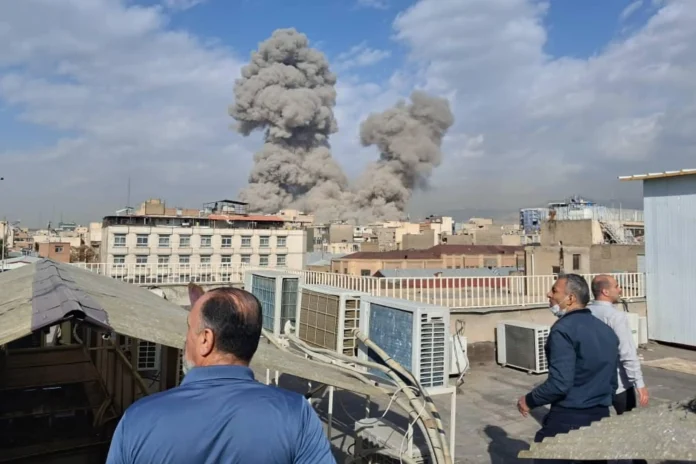

New Jersey’s political landscape shifted into high alert following the joint U.S.–Israeli military strike on Iran, with congressional leaders, state officials, and residents voicing sharply divided reactions. As Washington debates the scope and implications of the operation, the ripple effects are being felt across the Garden State — from Capitol Hill statements to demonstrations on the streets of Princeton.
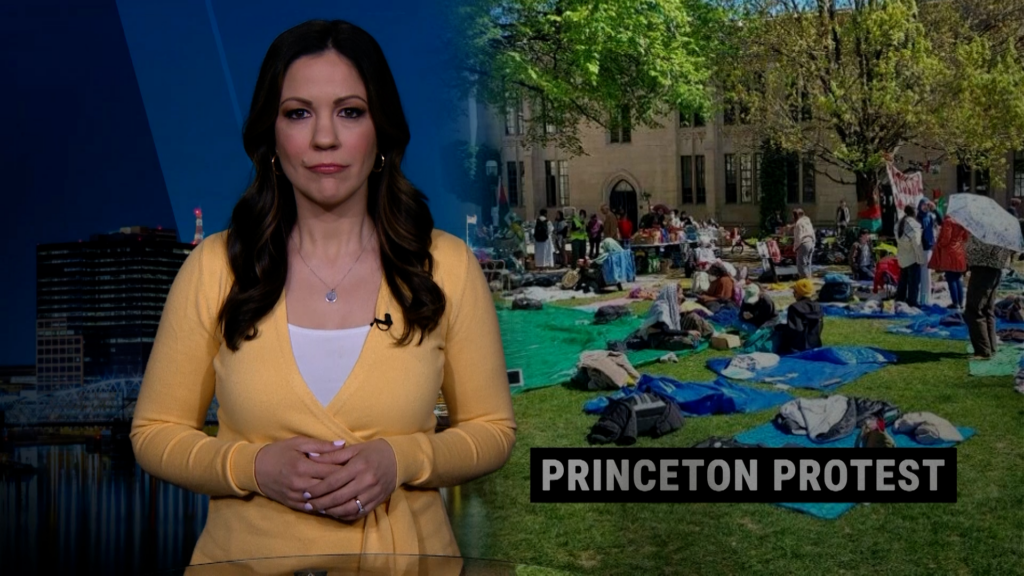
New Jersey Reacts to U.S.–Israeli Strike on Iran as Congressional Divide Deepens and Protests Erupt in Princeton. President Donald Trump Urges Iranian People to “Take Over Your Government” Following Joint U.S.–Israeli Strikes as New Jersey Leaders React
Global tensions escalated dramatically Saturday as President Donald Trump confirmed that the United States had begun what he described as “major combat operations in Iran,” carried out in coordination with Israel. In a direct message to the Iranian people posted to social media, Trump issued a striking appeal: “Take over your government. It will be yours to take.”
The statement marks a sharp rhetorical escalation alongside an already volatile military situation. Reports indicate that the first apparent strike occurred near the offices of Iran’s Supreme Leader, Ayatollah Ali Khamenei, in central Tehran. Smoke was seen rising over the capital as Iranian media reported multiple strikes nationwide.
For New Jersey residents and political leaders, the developments immediately triggered reactions across party lines, reinforcing a broader debate over military engagement, executive authority, and the long-term implications of expanded conflict in the Middle East.
What We Know So Far
According to statements released by U.S. officials and Israeli leadership, targets included military facilities, intelligence assets, and symbols of government infrastructure. Israeli Defense Minister Israel Katz described the campaign as an effort “to remove threats,” though details remain limited.
President Trump stated that Iran has continued to advance its nuclear program and was pursuing missile capabilities capable of reaching U.S. targets. He framed the strikes as a necessary step after diplomatic efforts failed to produce an agreement constraining Tehran’s nuclear ambitions.
It remains unclear whether the 86-year-old Khamenei was present at the targeted location at the time of the initial blast. Iranian state television acknowledged explosions near his compound but provided no immediate casualty figures.
Simultaneously:
• Iran shut down its airspace and cut mobile phone services.
• Iraq closed its airspace in response to regional instability.
• Israel activated nationwide sirens and emergency protocols.
• Hospitals in Israel moved patients and surgeries to underground facilities.
The Israeli military issued proactive alerts warning of potential missile retaliation toward Israel.
Iran has previously warned that U.S. military personnel and bases in the region would be considered targets in the event of direct conflict.
President Trump’s Direct Appeal
Trump’s call for the Iranian people to “take over your government” introduces a political dimension beyond the military operation itself. The message suggests an attempt to capitalize on domestic unrest inside Iran, where the government has faced nationwide protests and growing internal dissent in recent years.
The administration has long sought a revised nuclear agreement with Iran, but negotiations stalled over uranium enrichment limits, long-range missile development, and Iran’s support for armed groups in the region.
By framing the strikes as both strategic and transformative, Trump appears to be signaling a broader objective — one that goes beyond military deterrence and enters the realm of regime pressure.
New Jersey’s Political Response
The developments quickly reverberated across New Jersey’s congressional delegation.
Republican leaders in the state largely expressed support for the operation, citing national security concerns and alliance commitments. They emphasized deterrence and the necessity of preventing further nuclear escalation.
On the Democratic side, caution remains prominent.
U.S. Senator Andy Kim has previously raised concerns about entering another prolonged foreign conflict without explicit congressional authorization and clearly defined strategic endpoints. While statements continue to evolve as details emerge, many Democrats in New Jersey are urging oversight, transparency, and restraint.
The political divide mirrors national trends but carries unique resonance in the Garden State, home to a highly engaged electorate and one of the most diverse populations in the country.
Protests and Public Reaction in Princeton
Even before the latest presidential remarks, residents in Princeton gathered to protest the military strikes. Demonstrators expressed concern over escalation, civilian harm, and the risk of a drawn-out conflict.
Princeton has historically served as a hub for policy debate and civic activism, and the protest signals broader mobilization potential in New Jersey communities.
Organizers indicated that demonstrations were coordinated with similar actions planned in New York City, underscoring the regional intensity of the response.
The Geopolitical Stakes
The strike occurs against a backdrop of heightened regional military positioning. The United States had assembled fighter jets and naval assets in the region as diplomatic negotiations faltered.
Key questions now facing policymakers include:
• Will Iran retaliate directly against U.S. or Israeli targets?
• How will regional allies respond?
• Could energy markets experience immediate volatility?
• Will Congress seek formal authorization or hold emergency hearings?
For New Jersey, the stakes extend beyond politics.
The state hosts major port facilities, pharmaceutical production hubs, financial institutions, and a significant population of active-duty service members and veterans. Global instability often translates into tangible economic and security considerations locally.
Energy price fluctuations, market shifts, and national guard readiness are not abstract concepts here — they affect families and businesses directly.
Constitutional and Strategic Debate
At the heart of the unfolding situation is a longstanding constitutional debate: the balance between executive authority to conduct military operations and Congress’s power to declare war.
Supporters argue that swift executive action is sometimes necessary to respond to imminent threats. Critics warn that sustained military campaigns require legislative authorization and public debate.
New Jersey’s delegation will likely face pressure from constituents on both sides of the issue as more information becomes available.
Regional Escalation Risks
Iran’s warnings about potential retaliation against American personnel and bases add uncertainty to the next phase of this conflict.
Israel’s nationwide airspace closure and activation of missile alert systems signal preparation for possible counterstrikes. Hospitals relocating patients underground reflect a serious security posture.
The broader Middle East remains highly interconnected militarily and politically. Any escalation could involve multiple actors.
What Comes Next
As of this writing, casualty information remains unconfirmed. Airspace closures continue, and communication disruptions persist in Tehran.
Congress is expected to demand classified briefings in the coming days. Diplomatic channels may attempt emergency backdoor engagement to prevent further escalation.
President Trump’s call to the Iranian people adds an unpredictable variable. If internal unrest intensifies, geopolitical calculations could shift rapidly.
For New Jersey readers, this is not a distant headline. It is a developing global event with direct political, economic, and civic implications.
Sunset Daily News New Jersey will continue comprehensive, real-time coverage as events unfold — tracking congressional responses, regional reactions, protest activity, and the strategic trajectory of what has quickly become one of the most consequential foreign policy developments of the year.
New Jersey is once again at the center of a national foreign policy debate, as congressional leaders, advocacy groups, and residents respond to the joint U.S.–Israeli military strike on Iran. The operation has triggered immediate reactions across party lines, with Republicans in the state largely supporting the action as a measure of strength and deterrence, while many Democrats are urging caution and warning against the risks of entering another prolonged foreign conflict.
The response from New Jersey’s congressional delegation reflects a broader national divide — but here in the Garden State, where political engagement runs deep and global affairs often intersect with local communities, the debate has taken on a distinctly regional intensity.
Congressional Leaders Speak Out
Within hours of the strike being confirmed, members of New Jersey’s congressional delegation began issuing public statements. Republican lawmakers framed the operation as a strategic move to protect U.S. interests and reinforce longstanding alliances. Supporters argue that decisive action sends a message to adversaries in an increasingly unstable Middle East and underscores America’s commitment to its security partnerships.
On the Democratic side, the tone has been more cautious.
U.S. Senator Andy Kim expressed concern about the implications of entering another foreign conflict without clear congressional authorization or a defined long-term strategy. Kim, who has previously worked in national security roles and has firsthand experience in U.S. foreign policy environments, emphasized the importance of transparency, oversight, and constitutional war powers.
His remarks underscore a tension that has shaped American politics for decades: the balance between executive authority in military operations and Congress’s constitutional role in authorizing war.
For New Jersey voters, particularly in politically competitive suburban districts, that distinction matters.
Why This Debate Resonates in New Jersey
New Jersey is uniquely positioned in moments of international tension. The state is home to one of the most diverse populations in the country, with vibrant Jewish, Middle Eastern, and immigrant communities who often have personal, cultural, or familial connections to events unfolding overseas.
The state also plays a critical economic role in national infrastructure. With major port facilities, pharmaceutical research hubs, financial institutions, and logistics corridors, global instability can translate into tangible economic consequences here at home — from energy prices to market volatility.
When foreign policy shifts occur, New Jersey does not experience them as distant headlines. The impact is felt in:
• Local community discussions
• Faith-based institutions
• University campuses
• Small business networks
• National Guard and military families
The political divide in Washington is mirrored in conversations taking place across Essex County, Bergen County, Morris County, and beyond.
Protests in Princeton Signal Grassroots Mobilization
The most visible public response emerged in Princeton, where a crowd gathered to protest the military strike. Demonstrators carried signs calling for de-escalation, diplomacy, and congressional approval before any further military action.
Princeton has long served as a center for civic activism, academic debate, and international policy discussion. Protests there often serve as a barometer for broader progressive mobilization in the state.
Organizers indicated that the demonstration was part of a larger wave of coordinated activism, echoing similar protests planned in neighboring New York City.
The tone of the Princeton protest was urgent but peaceful, with participants expressing concern about escalation, regional destabilization, and the potential for unintended consequences.
Political Implications for New Jersey’s Delegation
The Iran strike arrives at a politically sensitive time. New Jersey is already navigating heated debates over economic priorities, immigration policy, infrastructure spending, and public safety. Foreign policy now enters that conversation in a meaningful way.
For members of Congress, the issue may become a defining moment — particularly for those representing swing districts where independent voters play an outsized role in determining outcomes.
Key questions shaping the debate include:
• Was Congress adequately briefed prior to the strike?
• What are the strategic objectives and exit criteria?
• How does this action affect ongoing diplomatic efforts?
• What are the risks of retaliation or regional escalation?
For Republicans who support the strike, the message is one of strength and alliance reinforcement. For Democrats expressing concern, the emphasis is on preventing a repeat of extended overseas conflicts that have historically carried high human and economic costs.
The Broader National Security Context
Supporters argue that the joint operation was necessary to counter emerging threats and reinforce deterrence in a volatile region. They contend that visible resolve is critical in maintaining strategic stability.
Critics caution that military escalation could trigger retaliatory responses, disrupt energy markets, and entangle the United States in another open-ended commitment.
For New Jersey residents, the implications extend beyond abstract policy analysis. Fuel prices, market performance, and military deployment considerations are practical concerns that affect families directly.
New Jersey’s Tradition of Foreign Policy Engagement
The Garden State has a long history of political engagement on national security issues. Lawmakers from New Jersey have served on key congressional committees overseeing intelligence, armed services, and foreign relations.
Public discourse in the state often reflects a sophisticated understanding of global affairs, shaped in part by its dense network of universities, think tanks, and policy institutions.
As this situation unfolds, town halls, community forums, and campus discussions are expected to intensify. Advocacy groups on both sides of the debate are mobilizing supporters.
What Happens Next
Congress is expected to demand additional briefings in the coming days. Questions surrounding authorization, strategic objectives, and risk assessment will dominate committee discussions.
New Jersey’s delegation will be closely watched for how they frame the issue moving forward — particularly Senator Andy Kim and other lawmakers representing politically balanced districts.
The protests in Princeton may represent the beginning of broader statewide activism if escalation continues or if further military actions are announced.
A Moment That Extends Beyond Party Lines
The joint U.S.–Israeli strike on Iran has become more than a foreign policy headline. In New Jersey, it has sparked an immediate and visible civic response.
Republican leaders emphasize strength and deterrence. Democratic leaders, including Senator Andy Kim, stress caution and oversight. Residents in Princeton and beyond are taking to the streets to voice their concerns.
In a state where political engagement is high and national issues quickly become local conversations, this debate is likely to continue evolving.
Sunset Daily News New Jersey will continue comprehensive coverage of congressional developments, community responses, and the broader implications of this unfolding situation — ensuring that New Jersey readers remain fully informed as events progress.



