


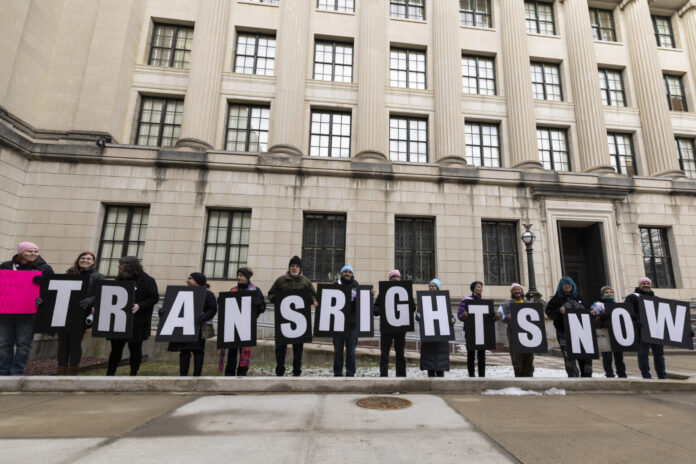

TRENTON — Advocates for the transgender community gathered at the Statehouse on January 5 to call for stronger legal protections for healthcare access, shining a spotlight on legislation aimed at safeguarding the rights of transgender New Jerseyans. The event, organized by local civil rights groups and healthcare advocates, drew a diverse crowd of supporters who emphasized the critical importance of ensuring equitable treatment in medical settings.
The legislation at the center of the rally, identified as bill A4656/S3491, is designed to prohibit discrimination in healthcare based on gender identity and expression. Supporters argue that the bill would provide clear legal protections for transgender individuals seeking routine medical care, mental health services, and gender-affirming treatment. Advocates highlighted personal stories of barriers faced in accessing healthcare, citing experiences ranging from insurance denials to outright refusal of services by providers unfamiliar with transgender health needs.
Speakers at the rally called on lawmakers to pass the bill swiftly, framing it as a matter of both public health and civil rights. Organizers noted that although New Jersey has made strides in LGBTQ+ protections in recent years, gaps in access to comprehensive healthcare persist, leaving transgender residents vulnerable to systemic inequities. The demonstration underscored the broader push for legislation that codifies protections and ensures enforcement mechanisms are in place, creating a stronger safety net for marginalized populations. Coverage of these developments is available through our Legislation section, where readers can track the progress of the bill and related policy initiatives.
At the same time, the Statehouse was witnessing a different kind of legislative reflection. Outgoing Attorney General Matt Platkin used recent public appearances to review his tenure, emphasizing accomplishments in police reform and firearm-related litigation. During his four years in office, Platkin oversaw significant policy shifts intended to improve accountability within law enforcement agencies, including updates to training protocols, revisions to disciplinary practices, and the implementation of community engagement measures. He also defended a series of legal actions aimed at addressing illegal firearm distribution and curbing gun violence statewide.
Platkin’s public statements reflect a conscious effort to frame his legacy as a combination of reform, enforcement, and responsiveness to evolving public safety challenges. As he prepares to leave office, his record will remain a point of discussion among lawmakers, advocacy groups, and the legal community, particularly as the next administration evaluates ongoing initiatives related to policing and civil liberties.
Together, the January 5 events illustrate the dynamic intersection of civil rights advocacy and government accountability in New Jersey. While transgender health legislation seeks to expand legal protections and safeguard vulnerable communities, the conversation around police reform and firearms litigation highlights the enduring scrutiny of public officials’ roles in shaping statewide policy. Both developments signal a period of active engagement in legislative and executive affairs, reflecting the state’s ongoing effort to balance civil rights, public safety, and community trust.