



New Jersey has long been celebrated as one of the top-performing education systems in the United States. For decades, the Garden State has ranked among the nation’s leaders in academic achievement, graduation rates, and college readiness. Its suburban school districts are routinely cited as national models, and the state invests more money per student than almost anywhere else in the country.
Yet a startling development in national testing data is challenging the narrative that New Jersey’s education system is universally strong.
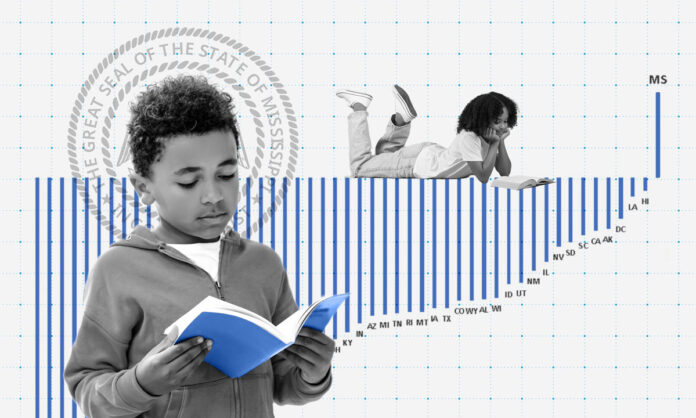
When researchers isolate test results for economically disadvantaged students—particularly in fourth-grade reading and math—Mississippi is now outperforming New Jersey despite spending less than half as much per pupil.
The contrast is dramatic.
New Jersey spends nearly $30,000 per student each year on public education, while Mississippi spends closer to $12,000. Despite that massive difference in investment, Mississippi’s low-income fourth graders have surged ahead on recent national assessments, producing results that have stunned policymakers and education experts across the country.
The trend has sparked a national conversation about educational efficiency, teaching strategies, literacy policy, and the growing gap between wealthy and low-income school districts—even inside states widely considered educational powerhouses.
For New Jersey, the implications are profound.
The question now confronting educators, policymakers, and parents is no longer simply how much money the state spends on schools.
It is whether the system is delivering results for the students who need it most.
Understanding the “Two Americas” Inside U.S. Education
At first glance, New Jersey’s education system appears extraordinarily strong.
Overall rankings consistently place the state among the top five education systems in the United States. High-performing suburban districts, strong college preparation programs, and significant funding commitments contribute to impressive statewide averages.
But those averages tell only part of the story.
When the results are broken down by income level, a more complicated picture emerges.
Students from affluent communities continue to perform exceptionally well. Their outcomes are buoyed by stable school funding, experienced teachers, strong parental support systems, and access to academic enrichment opportunities outside the classroom.
However, students from low-income communities—particularly those in urban districts—are not seeing the same gains.
Recent data from the National Assessment of Educational Progress, often referred to as the Nation’s Report Card, shows that economically disadvantaged fourth graders in Mississippi are outperforming their counterparts in New Jersey in both reading and mathematics.
The difference is not marginal.
Mississippi’s low-income students scored approximately 12 points higher in fourth-grade math assessments and rank near the top of the nation in fourth-grade reading performance for economically disadvantaged students.
Meanwhile, New Jersey’s low-income student performance has stagnated and in some cases declined since the pandemic.
For a state that prides itself on educational excellence, the findings have triggered serious reflection.
The Rise of the “Mississippi Miracle”
Education analysts increasingly refer to Mississippi’s turnaround as the “Mississippi Miracle.”
For decades, Mississippi ranked near the bottom of national education rankings. Poverty rates were high, school resources were limited, and academic outcomes lagged behind most other states.
But beginning in 2013, Mississippi launched a sweeping transformation of how reading was taught in its schools.
The state passed the Literacy-Based Promotion Act, a law that fundamentally reshaped literacy instruction across the entire public education system.
The reform introduced three key pillars that many experts now credit with Mississippi’s dramatic improvement.
First was the adoption of the “Science of Reading.”
This instructional approach emphasizes structured literacy and systematic phonics instruction—teaching students how letters and sounds combine to form words and sentences. The model focuses on decoding skills and language comprehension rather than relying on contextual guessing strategies.
For years, many school systems across the country—including numerous districts in New Jersey—relied on a different approach known as “balanced literacy.”
Balanced literacy often encouraged students to infer words based on context clues, pictures, or partial recognition of letters. Critics of the method argue that it downplayed the importance of phonics and decoding skills.
Mississippi made a decisive shift away from those methods and mandated that teachers across the state be retrained in structured literacy.
The change required extensive professional development for educators and a statewide commitment to new curriculum standards.
Second, Mississippi introduced what became known as the “Third Grade Reading Gate.”
Under this policy, students must demonstrate basic reading proficiency before being promoted from third grade to fourth grade.
Students who cannot read at grade level receive intensive intervention, tutoring, and remediation until they reach the required literacy threshold.
While critics initially feared that the policy would unfairly penalize struggling students, supporters argue that it forced schools to address literacy challenges early rather than allowing students to advance through the system without mastering fundamental reading skills.
Third, the state invested heavily in teacher retraining.
Thousands of educators underwent professional development programs designed to align classroom instruction with the Science of Reading model.
Over time, those changes produced measurable results.
Mississippi’s literacy scores began rising steadily, particularly among low-income students who often depend on schools as their primary source of structured literacy instruction.
Why New Jersey’s Low-Income Students Are Struggling
New Jersey’s education system operates within a very different environment.
The state’s overall academic success is supported by some of the nation’s most affluent communities and well-funded school districts. High-performing suburban schools significantly elevate statewide averages.
But critics argue that this demographic advantage can obscure deeper inequalities within the system.
When wealthy students are removed from the analysis and comparisons are made strictly among low-income populations, New Jersey’s performance advantage largely disappears.
In other words, the state’s impressive overall rankings may partially reflect demographic advantages rather than systemic instructional strength.
The pandemic further complicated the picture.
School closures, remote learning disruptions, and uneven access to technology disproportionately affected low-income students nationwide.
In New Jersey’s urban districts, those disruptions were especially severe.
Students who were already struggling with literacy and foundational math skills faced extended periods away from traditional classroom instruction.
The learning loss from that period continues to affect academic outcomes today.
At the same time, debates over reading instruction methods have intensified across the country.
Many educators now acknowledge that balanced literacy approaches may have left some students without the phonics-based decoding skills necessary to become fluent readers.
Several New Jersey districts have begun shifting toward structured literacy programs inspired by the Science of Reading model, though implementation varies widely due to the state’s tradition of local control over school curriculum decisions.
The Cost Question: Why New Jersey Spends So Much
New Jersey’s education system is not just high-performing—it is also among the most expensive in the United States.
Average spending per pupil now approaches $30,000 annually, more than double the level seen in states like Mississippi.
However, much of that cost difference reflects economic realities rather than inefficiency alone.
New Jersey’s cost of living is significantly higher than Mississippi’s, affecting everything from teacher salaries to facility maintenance.
Teachers in New Jersey earn an average salary of more than $82,000, compared with roughly $53,000 in Mississippi.
Higher wages help attract experienced educators, but they also contribute to the state’s elevated per-pupil spending levels.
Special education services also account for a large portion of New Jersey’s education budget.
The state has one of the highest rates of special education classification in the country. These services are federally mandated and often require specialized staff, individualized instruction, and additional support systems that increase costs significantly.
Infrastructure expenses, energy costs, transportation, and school construction are also substantially higher in New Jersey than in many southern states.
All of these factors contribute to the perception that New Jersey spends far more money per student.
But critics say spending alone does not guarantee academic success.
The key question, they argue, is whether resources are being used in ways that produce the strongest outcomes for students most at risk of falling behind.
Reforming Literacy in New Jersey
In response to growing national attention on the Science of Reading movement, many New Jersey districts are now reevaluating their literacy instruction models.
Some have begun introducing phonics-based curriculum frameworks designed to align more closely with structured literacy principles.
Teacher training programs across the state are also evolving, with universities and professional development organizations placing greater emphasis on evidence-based reading instruction.
The transition is gradual, however.
Because curriculum decisions in New Jersey are largely controlled at the district level, changes often occur unevenly across the state.
Urban districts facing the greatest literacy challenges must often navigate complex funding structures, staffing shortages, and administrative constraints as they implement new instructional strategies.
Meanwhile, education coverage featured in the broader Sunset Daily News education reporting hub continues to explore how evolving teaching methods, literacy reforms, and policy debates are shaping the future of schools across the Garden State.
What Happens Next for New Jersey Education
The comparison between New Jersey and Mississippi has become one of the most talked-about education stories in the country.
It raises difficult questions about whether the nation’s most expensive education systems are producing the strongest outcomes for all students.
For New Jersey policymakers, the issue is not about abandoning the state’s long-standing commitment to school funding.
Rather, the challenge is ensuring that resources translate into measurable gains for the students who face the greatest obstacles to academic success.
Improving literacy outcomes for low-income students will likely require a combination of curriculum reform, teacher training, early intervention programs, and expanded academic support services.
The stakes are enormous.
Fourth-grade literacy is widely considered one of the most important predictors of long-term academic success. Students who cannot read proficiently by the end of third grade are significantly more likely to struggle in later subjects, fall behind academically, and face barriers to college and career opportunities.
For New Jersey, maintaining its reputation as one of America’s top education systems may ultimately depend on whether it can close the gap between its highest-performing districts and its most vulnerable students.
The state has the resources, talent, and institutional experience to achieve that goal.
What remains to be seen is whether the lessons emerging from Mississippi’s dramatic turnaround will inspire a new era of literacy reform and educational innovation across the Garden State.



