


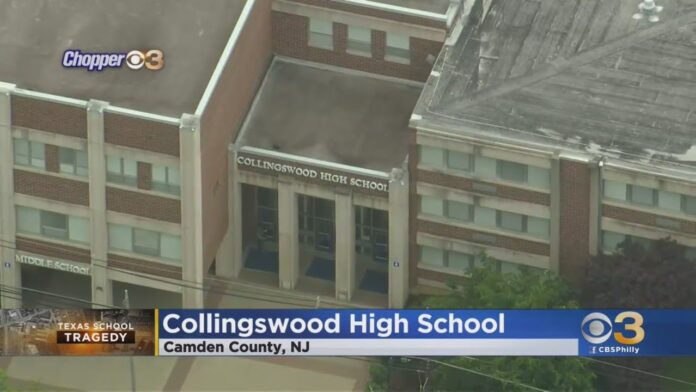

On a cold, rain-soaked Sunday morning, a single high school senior transformed a routine commute into a civic statement. In the February 22, 2026 “Walk in Our Shoes” event, Collingswood High School senior Andrea Trifundio led community members, parents, and elected officials along her daily route from Woodlynne to Collingswood High School — a journey that includes crossing Route 130, navigating high-traffic corridors, and traversing infrastructure many describe as outdated and unsafe.
The demonstration was not symbolic. It was evidentiary.
By physically retracing the route in inclement weather conditions, participants experienced firsthand the hazards that more than 100 students reportedly face each day when commuting on foot or by bicycle to CHS. The walk has now catalyzed renewed scrutiny of student transportation equity, infrastructure safety, and district-level responsibility in Camden County.
For readers tracking education policy, student advocacy, and community accountability through the Education section at Sunset Daily, this event represents more than a local story. It highlights a statewide conversation about safe access to public education.
The Route: A Risk Assessment in Real Time
Trifundio’s daily commute begins in Woodlynne and extends into Collingswood, requiring students to cross heavily trafficked arteries including Route 130 — one of South Jersey’s busiest commercial corridors.
Participants in the walk observed:
• High vehicle speeds with limited pedestrian buffer zones
• Inconsistent sidewalk continuity
• Narrow or poorly marked crossings
• Limited pedestrian signal timing
• A footbridge described as structurally intimidating during wet conditions
The rainy-day conditions of the event amplified visibility concerns and roadway hazards, providing what advocates described as an accurate representation of daily risks.
This is not an abstract safety issue. It is a lived experience repeated hundreds of times each week during the academic year.
Attendance, Tardiness, and Structural Barriers
Reports previously presented to the local Board of Education linked travel distance and commute hazards to chronic tardiness and attendance disruptions among students residing in Woodlynne. When a commute becomes unpredictable due to traffic congestion, inclement weather, or pedestrian infrastructure gaps, academic punctuality becomes directly tied to municipal design.
The implications extend beyond inconvenience:
• Chronic lateness can affect academic performance
• Attendance records influence scholarship eligibility
• Safety fears can impact mental well-being
• Weather-dependent commute risks increase injury exposure
The district has reportedly explored low-cost safety interventions, yet has not committed to full-scale busing for the affected students.
The core question emerging from the walk is whether safe access to public education should depend on zip code, municipal boundaries, or transportation funding formulas.
Student Activism as Civic Leadership
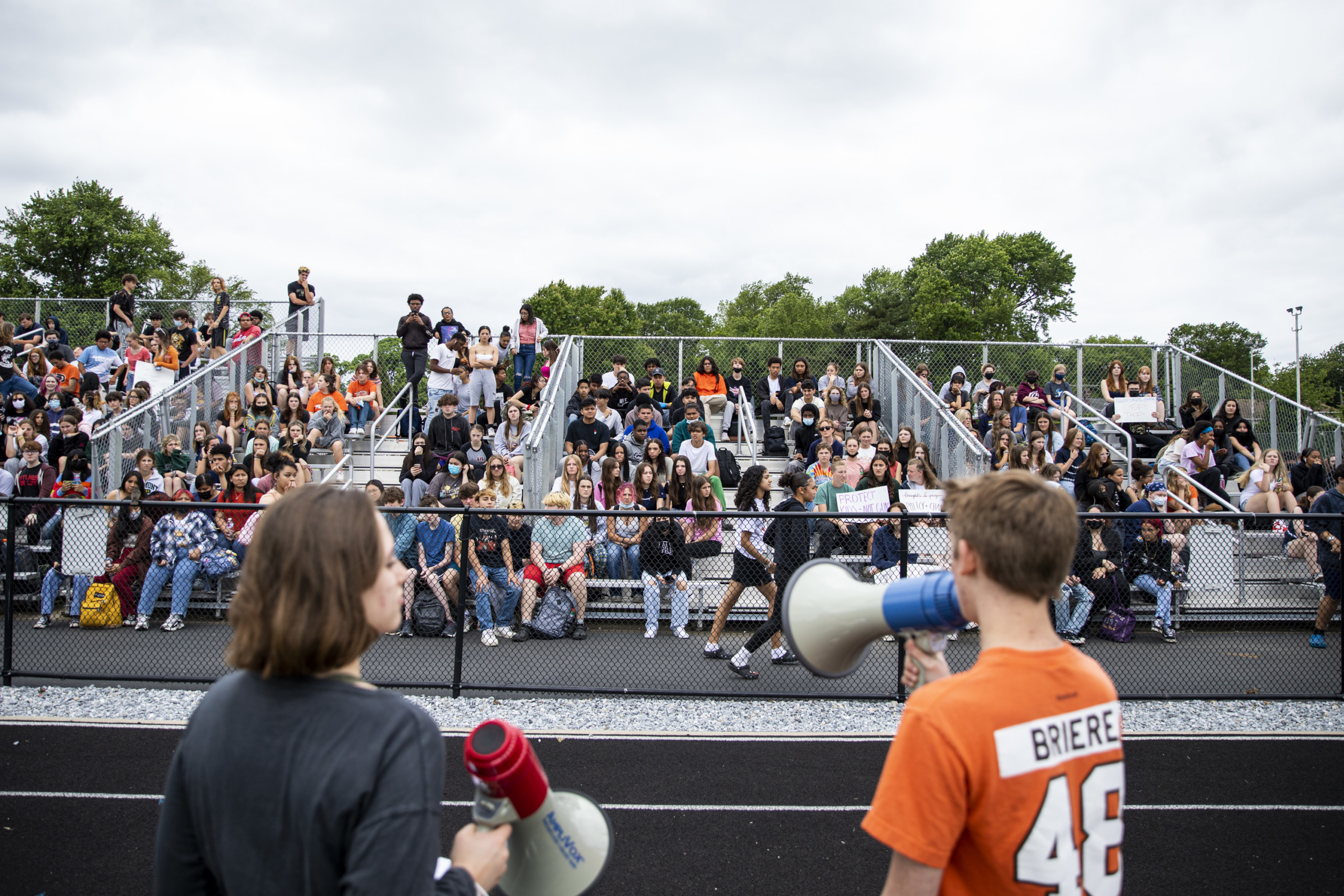
The “Walk in Our Shoes” event reflects a broader culture of student activism at Collingswood High School. In recent years, students have organized walkouts addressing racial bias in discipline, gun control legislation, and federal immigration enforcement actions.
This latest initiative continues that tradition — positioning students not merely as stakeholders, but as advocates capable of mobilizing community dialogue and elected officials.
Trifundio’s leadership underscores a growing generational expectation that public institutions respond to documented lived experience, particularly when safety is implicated.
Infrastructure Equity and Regional Planning
The commute between Woodlynne and Collingswood highlights a common South Jersey dynamic: municipal fragmentation paired with shared school districts.
Students cross town lines daily, yet infrastructure funding, sidewalk maintenance, and roadway improvements may fall under different jurisdictions. Without coordinated planning between municipalities, transportation gaps can persist.
Infrastructure equity requires:
• Inter-municipal collaboration
• County-level roadway audits
• Pedestrian-focused traffic engineering
• School district engagement in transportation policy
• State grant exploration for Safe Routes to School funding
New Jersey has long invested in highway modernization and bridge repair. Increasingly, communities are recognizing the need to apply similar capital discipline to pedestrian corridors serving students.
Safe Routes to School and Policy Opportunities
The Safe Routes to School framework — adopted in many states — promotes walking and biking safety through engineering improvements, traffic calming measures, and educational campaigns.
Potential interventions include:
• Flashing pedestrian beacons at high-risk crossings
• Extended crosswalk signal timing during school hours
• Raised crosswalks or speed tables
• Sidewalk continuity expansions
• Protective barriers separating pedestrians from traffic
If over 100 students are disproportionately affected, the scale meets thresholds often required for state and federal infrastructure grants.
The February 22 demonstration could serve as a catalyst for formal feasibility studies or transportation impact assessments.
Education Access as a Public Safety Issue
Public education policy typically centers on curriculum, funding formulas, and academic performance metrics. However, physical access to school buildings remains foundational.
Unsafe commutes create barriers before the school day even begins.
When students must navigate:
• Major state highways
• Weather-exposed crossings
• Poorly lit pedestrian routes
• Inconsistent traffic enforcement
the conversation shifts from convenience to duty of care.
New Jersey consistently ranks among top-performing states academically. Sustaining that ranking requires ensuring that infrastructure aligns with student needs.
Rain as a Revealer
Holding the walk in rainy conditions was not incidental. Wet pavement increases braking distances. Visibility drops. Crosswalk paint becomes slick. Footbridges become slippery.
Rain exposes vulnerabilities in pedestrian systems that may be less apparent during dry weather.
By replicating real-world conditions, the event functioned as a live demonstration rather than a theoretical discussion.
The Role of Elected Officials
Community members and elected officials who participated in the walk now possess firsthand observational evidence. That visibility alters the policy conversation.
Decision-makers who experience infrastructure shortcomings directly are more likely to:
• Prioritize funding allocations
• Initiate engineering reviews
• Request safety audits
• Advocate for intergovernmental coordination
Public accountability often begins with proximity.
A Statewide Reflection
While this event centers on Collingswood High School, similar commuting challenges exist across New Jersey where district boundaries intersect with high-traffic corridors.
Urban and suburban communities alike face:
• Legacy roadway design prioritizing vehicles over pedestrians
• Incomplete sidewalk networks
• Insufficient pedestrian lighting
• Transportation policy gaps
As residential development expands and enrollment patterns shift, transportation equity will remain central to educational access discussions.
Looking Ahead: What Comes Next?
The immediate outcomes could include:
• Formal safety assessments of the Route 130 crossings
• Review of district transportation eligibility thresholds
• Exploration of shared-cost busing agreements
• Engineering modifications funded through county or state programs
Long-term solutions will likely require multi-agency collaboration.
Andrea Trifundio’s “Walk in Our Shoes” event demonstrates how student-led civic engagement can elevate infrastructure safety to the forefront of educational policy discourse.
In an era when public trust in institutions depends on responsiveness and transparency, experiential advocacy carries weight. When elected officials walk the same path students travel daily, the conversation becomes grounded in observable fact.
Safe access to education is not an auxiliary concern. It is foundational.
South Jersey’s rainy Sunday walk may ultimately become a case study in how localized student leadership can prompt broader policy evaluation — reinforcing that education does not begin at the classroom door, but at the curb where students first step into their day.