


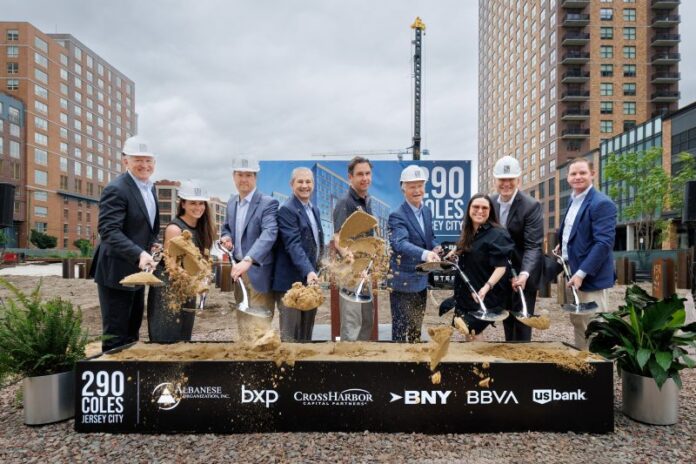

Jersey City’s Building Boom Nears a Turning Point as Steve Fulop Prepares to Leave City Hall
As Jersey City prepares for a transition in leadership, outgoing Mayor Steve Fulop is reflecting on the development strategy that reshaped the skyline, redefined neighborhoods, and firmly positioned the city as New Jersey’s most active real estate market.
When Fulop first entered public office two decades ago, he approached large-scale development with caution. Like many municipal officials of the era, he questioned whether rapid construction truly benefited longtime residents. That skepticism gradually evolved as he gained deeper insight into how investment, housing supply, and urban growth intersect. By the time he assumed the mayor’s office in 2013, Fulop had embraced a new governing philosophy centered on strategic development as the engine of a modern city.
His administration set out to elevate Jersey City’s profile well beyond its traditional waterfront core, working to expand cultural districts, nightlife corridors, and residential neighborhoods throughout the city. Development was no longer confined to downtown and the Hudson River skyline. Instead, new projects began appearing across the Heights, Journal Square, Bergen-Lafayette, and West Side, driving both population growth and economic diversification.
Over the past decade, Jersey City has added more than 45,000 new housing units, including a significant mix of market-rate and income-restricted apartments. Thousands more are currently under construction or approved for future phases, creating one of the largest residential pipelines in the Northeast. The scale of this expansion has made Jersey City the undisputed epicenter of New Jersey’s real estate activity, attracting national developers, institutional investors, and new residents seeking proximity to Manhattan with comparatively modern housing options.
Fulop also used the surge in private development to negotiate broader public benefits. His administration tied new projects to expanded affordable housing requirements, public infrastructure upgrades, park improvements, school investments, and arts and cultural programming. These policies aimed to ensure that growth translated into tangible improvements in daily life, not just taller buildings and higher property values.
The approach was not without controversy. Community meetings, online forums, and local campaigns often featured intense opposition, with critics raising concerns over displacement, rising rents, and changing neighborhood character. Fulop acknowledged those concerns but maintained that sustained growth was essential to keeping the city economically competitive and socially vibrant. Three consecutive mayoral victories reinforced his belief that a majority of residents recognized the long-term benefits of continued development.
Despite the scale of new construction, housing pressure remains a defining issue as he exits office. The broader region continues to experience a shortage of available homes, compounded by years of limited development across the Hudson River in New York City. As demand continues to outpace supply, rents have remained elevated, placing additional strain on working families, seniors, and young professionals alike.
Fulop has been candid about the challenge, noting that housing affordability is part of a larger economic imbalance affecting much of New Jersey and the greater metropolitan area. Rising costs for housing, transportation, and basic services have consistently outpaced wage growth, creating what he describes as a systemic affordability squeeze that extends far beyond city limits.
With Fulop leaving office in mid-January, incoming Mayor James Solomon will inherit both the benefits and the pressures created by more than a decade of accelerated development. His administration will face the task of sustaining Jersey City’s momentum while navigating growing calls for expanded affordability measures, infrastructure investment, and neighborhood preservation.
As one chapter closes at City Hall, Jersey City stands as a case study in how aggressive development can transform an urban landscape — and as a reminder that growth, even when broadly successful, brings complex challenges that continue long after the cranes come down.