


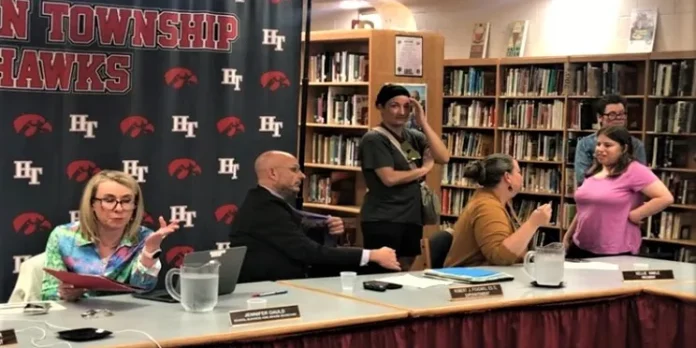

A defining financial pressure point is taking shape in Haddon Township, where rising property values and shifting state aid formulas are colliding to create a challenging new chapter for local education. For the third consecutive year, the district is confronting a reduction in state support, even as costs continue to escalate across nearly every operational category. The result is a 4.5% increase in school taxes paired with the difficult prospect of budget cuts—an equation that underscores a deeper structural issue in how New Jersey funds its public schools.
This moment is not an isolated development, but part of a broader pattern emerging across the state and reflected in ongoing coverage within the education section. Districts that are experiencing strong real estate growth and rising aggregate wealth are increasingly finding themselves penalized by the very metrics used to determine state aid. In Haddon Township, a surging housing market has elevated property values and reshaped the district’s financial profile on paper, positioning it as more capable of self-funding. In practice, however, that perception does not fully align with the fiscal realities faced by local taxpayers or school administrators.
The mechanics of New Jersey’s school funding formula are central to understanding the current strain. Designed to allocate resources based on a combination of property wealth, income levels, and student needs, the formula recalibrates annually. As Haddon Township’s real estate market has intensified, those recalibrations have consistently reduced the district’s eligibility for state aid. This dynamic has created a paradox: economic growth within the community is translating into diminished external support, shifting a greater share of the financial burden onto local residents.
At the same time, the cost side of the equation is moving in the opposite direction. District expenses continue to rise, driven by factors that extend well beyond local control. Health care costs, contractual salary obligations, transportation expenses, and specialized educational services are all increasing, often at rates that outpace inflation. These pressures are compounded by the need to maintain competitive academic programming, invest in technology, and support student services that have become essential in a post-pandemic educational environment.
Faced with this imbalance, district leadership is navigating a narrow path. The 4.5% tax increase reflects an effort to stabilize the budget without overburdening taxpayers, yet it is not sufficient to fully offset the loss of state aid and the rise in expenses. As a result, cuts are now part of the conversation—an outcome that underscores the limits of local control in a system heavily influenced by state-level policy decisions.
The nature of those cuts remains a focal point for the community. School officials are tasked with identifying reductions that minimize impact on classroom instruction while still achieving necessary savings. This often involves difficult trade-offs, including adjustments to staffing, program offerings, or operational efficiencies. Each decision carries implications not only for the current academic year but for the long-term trajectory of the district.
What makes Haddon Township’s situation particularly instructive is how clearly it illustrates the tension between localized success and statewide policy frameworks. The district’s strong real estate market is, in many respects, a sign of vitality—an indicator of demand, investment, and community appeal. Yet within the context of the funding formula, that same strength becomes a liability, reducing eligibility for aid and increasing reliance on property taxes.
Local officials have been increasingly direct in their assessment of the situation, emphasizing that meaningful solutions cannot be achieved at the municipal level alone. The call for action is directed toward Trenton, where policymakers have the authority to revisit and potentially recalibrate the funding formula. The argument is not simply for increased aid, but for a more nuanced approach that accounts for the complexities of modern school finance, including cost pressures that are not fully captured by existing metrics.
This conversation is unfolding against a broader backdrop of statewide debate over educational equity and resource allocation. New Jersey has long been recognized for its commitment to public education, yet the distribution of funding remains a point of contention, particularly in communities that fall into the middle ground—neither classified as high-need nor fully capable of absorbing reduced aid without consequence.
For residents of Haddon Township, the impact is immediate and tangible. A higher tax bill arrives at a time when broader economic pressures are already influencing household budgets, from interest rates to everyday living costs. At the same time, the prospect of cuts raises questions about the preservation of educational quality, a cornerstone of the community’s identity and a key factor in its real estate appeal.
The interplay between education and housing is especially significant. Strong schools have long been a driver of property values, creating a cycle in which educational quality and real estate demand reinforce one another. The current situation introduces a new variable into that equation, as rising property values contribute to funding reductions that, in turn, place pressure on the very system that helped generate that value.
As the district moves forward, the focus will remain on balancing fiscal responsibility with educational integrity. The decisions made in the coming months will shape not only the immediate budget but the broader perception of how effectively the system can adapt to changing conditions. For policymakers, the situation in Haddon Township serves as a case study in the unintended consequences of funding formulas that may not fully reflect the realities on the ground.
What is emerging is a clear signal that the conversation around school funding in New Jersey is far from settled. As more districts encounter similar dynamics, the pressure for reform is likely to intensify, bringing renewed attention to how resources are allocated and how success is measured. In Haddon Township, that conversation is no longer theoretical—it is playing out in real time, with direct implications for taxpayers, educators, and students alike.