


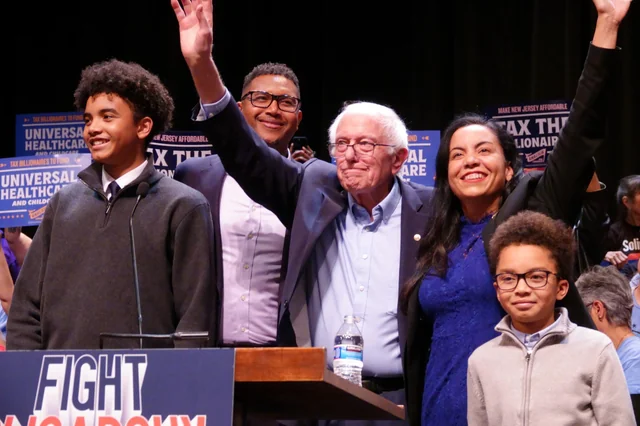

On Monday, January 19, 2026—Martin Luther King Jr. Day—a surge of energy and activism swept through William Paterson University in Wayne as Senator Bernie Sanders headlined a “Fighting Oligarchy” rally in support of Analilia Mejia’s campaign for New Jersey’s 11th Congressional District. The event brought together a diverse crowd of voters energized by progressive messaging, signaling a high-stakes moment in the crowded special primary.
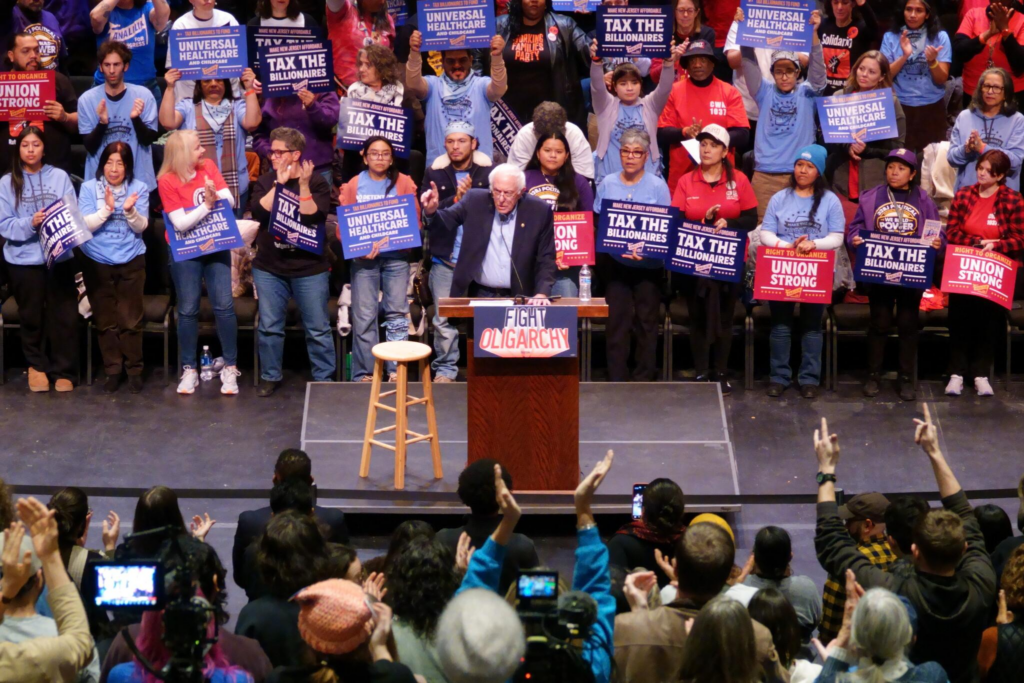
Over 1,200 supporters filled the Shea Center for Performing Arts, with another 500 overflow attendees watching in adjacent rooms, creating one of the largest gatherings in recent New Jersey political events. The enthusiasm in the room underscored the growing momentum behind Mejia, who has positioned herself as a staunch progressive alternative to establishment candidates.
Senator Sanders delivered a pointed critique of wealth inequality, corporate consolidation, and the influence of powerful interests in politics. Emphasizing his long-standing message against concentrated wealth, Sanders framed Mejia as a fighter uniquely equipped to challenge entrenched political structures. He highlighted her experience as his 2020 national political director, noting that her leadership style and commitment to working-class priorities make her a formidable candidate in a pivotal race.
Mejia took the stage to address supporters directly, centering her remarks on the urgency of class-based politics. She argued that with economic insecurity rising and authoritarian trends gaining ground nationally, “any old blue just won’t do,” calling for candidates willing to fight boldly for ordinary people rather than maintain the status quo. Her speech combined both policy specifics and populist messaging, reinforcing her campaign’s core themes of worker empowerment, economic fairness, and government accountability.
The rally also featured endorsements from prominent local leaders, including Newark Mayor Ras Baraka, who joined Sanders in publicly supporting Mejia for the February 5 special primary. Baraka highlighted the importance of grassroots engagement and cited Mejia’s consistent advocacy for underrepresented communities as a decisive factor in his backing.
This high-profile gathering comes at a critical juncture in the NJ-11 race. The special primary seeks to fill the vacancy left by Governor Mikie Sherrill, drawing 11 Democratic candidates into an intensely competitive field. Mejia faces prominent challengers including former Congressman Tom Malinowski and Essex County Commissioner Brendan Gill, making early momentum and high-visibility endorsements crucial to her bid.
Looking to capitalize on the energy from Wayne, Mejia’s campaign has organized a “Server for an Hour” event at Leone’s Pizzeria in Montclair. The initiative aims to directly connect her platform to service industry workers, emphasizing her commitment to everyday economic issues and hands-on engagement with constituents. Campaign insiders describe the event as an opportunity to humanize progressive policy and build personal relationships with voters who form the backbone of the district’s workforce.
As the clock ticks toward the February 5 primary, the NJ-11 race is shaping up as a defining moment for progressive politics in New Jersey. Sanders’ high-profile support and Mejia’s grassroots strategy indicate a campaign that is both deeply organized and strategically aggressive, signaling that voters can expect a dynamic and closely watched contest in the weeks ahead. The energy generated at William Paterson University is a clear indicator that the race is far from a conventional primary, setting the stage for what could be a transformative outcome in the Garden State’s political landscape.
For the latest updates and analysis on the NJ-11 race and other developments in New Jersey politics, the campaign trail continues to provide both insight and momentum for voters ahead of the upcoming primary.



