


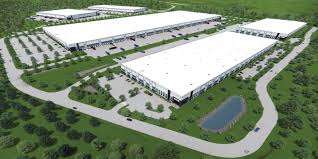

Residents of Roxbury Township are mobilizing in growing numbers after learning their community has been identified as a potential site for a new federal immigration detention facility, part of a sweeping national expansion that is rapidly reshaping how and where detainees are held across the country.
The proposal would convert an existing industrial warehouse in Morris County into a large-scale detention and processing center operated under the authority of the Department of Homeland Security and Immigration and Customs Enforcement. While no construction has yet begun, the mere prospect has ignited public meetings, neighborhood organizing, and a surge of concern from families who say the plan could permanently alter the character of the township.
The Roxbury proposal is one piece of a much larger federal initiative launched following a multibillion-dollar funding package approved by Congress last year. The initiative commits tens of billions of dollars toward expanding detention capacity nationwide, with the stated objective of nearly doubling the number of people who can be held in federal custody at any given time. Central to the strategy is the transformation of oversized commercial warehouses into what officials have internally described as high-efficiency detention hubs.
Under the national framework, these “mega centers” are designed to house thousands of detainees each, with smaller feeder facilities serving as intake and processing points. Several states have already been named as hosts for these large-scale complexes, and additional sites are being evaluated in communities near major transportation corridors. Military installations are also being incorporated into the network, with temporary and semi-permanent structures now operating or under review at bases around the country, including New Jersey’s Joint Base McGuire-Dix-Lakehurst.
In New Jersey, the expansion has already taken a visible step forward with the reopening of Delaney Hall in Newark, a detention center capable of holding roughly 1,000 individuals. The Roxbury warehouse proposal would represent another significant addition to the state’s detention footprint, moving the system deeper into suburban communities that have little history with federal detention operations.
Local leaders and residents have expressed concerns about the long-term impact on public safety, infrastructure, and municipal resources. Many worry about increased traffic, emergency response demands, and the strain placed on local services. Others have raised broader humanitarian issues, questioning whether large industrial warehouses are appropriate environments for long-term human confinement, particularly for families and individuals with medical needs.
Civil rights organizations have also begun monitoring the situation closely, citing national criticism of warehouse-style detention as opaque, remote, and difficult for independent oversight. Advocates argue that the push for what some federal planners have called “logistics-style efficiency” risks prioritizing speed and volume over due process, transparency, and humane treatment.
As Roxbury residents organize, their township has become a focal point in New Jersey’s growing role within this evolving federal system. Municipal officials are seeking clarity from federal agencies while weighing zoning, environmental, and public safety implications. Community groups are pressing for public hearings and formal impact studies before any commitments are made.
The unfolding debate places Roxbury at the center of a national conversation about the future of immigration enforcement, federal detention strategy, and the expanding reach of legislation shaping these policies. What happens in Morris County may soon echo far beyond township borders, influencing how New Jersey communities respond as federal detention infrastructure continues to grow.