



New Jersey is experiencing a cool and mostly cloudy President’s Day on Monday, February 16, 2026, as residents wake to improving conditions following an overnight winter system that brought light snowfall, slushy roadways, and coastal flooding concerns across parts of the state. While temperatures remain below seasonal comfort levels today, forecasters say a significant warming trend is on the way — though it will arrive alongside unsettled weather patterns, multiple rounds of rain, and another potential shift back to colder conditions by the weekend.
The evolving forecast reflects a complex winter weather pattern that continues to shape New Jersey’s February climate, blending marginal snowfall events, fluctuating temperatures, and shifting precipitation types across different regions of the state.
Current Conditions: Mostly Cloudy Skies and Cool Temperatures
Throughout New Jersey, mostly cloudy skies are expected to dominate President’s Day, though occasional breaks of sunshine may develop in some locations during the afternoon hours.
Daytime high temperatures will range from the upper 30s to the low 40s across much of the state, marking a modest rebound from overnight conditions but remaining below typical comfort levels. Light northeast winds between 10 and 15 miles per hour will contribute to the chill, keeping the air feeling colder in exposed areas.
By tonight, temperatures are forecast to fall into the upper 20s to low 30s, creating conditions that could refreeze remaining moisture on untreated surfaces.
The combination of cloud cover, light wind, and lingering cold reflects a transitional atmosphere following the overnight system that passed through the region.
Overnight Storm Brings Light Snow to Central New Jersey
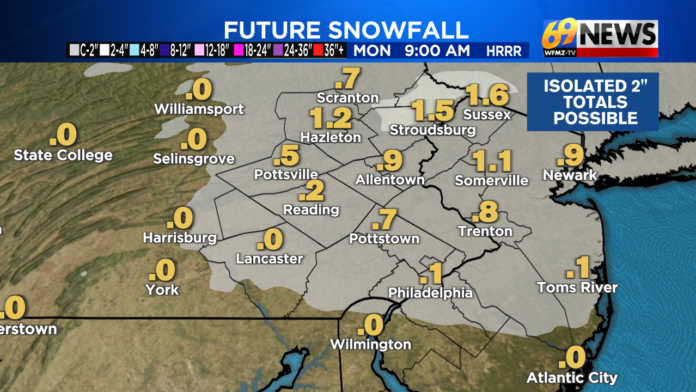
The current conditions follow an overnight winter weather event that produced light snowfall across central portions of the state. Snowfall totals varied by location, with Frenchtown reporting approximately 2.4 inches and Jackson receiving around 2.2 inches, among the highest accumulations recorded.
While the snowfall was relatively modest, the event created early morning travel concerns, particularly on secondary roads where slushy conditions persisted into the morning commute.
Road crews worked overnight to clear primary highways and major thoroughfares, improving driving conditions by midday. However, officials advised drivers to remain cautious on untreated surfaces where lingering slush and patches of ice could still be present.
The overnight system highlights how even minor winter weather events can produce localized impacts across New Jersey’s diverse geography.
Coastal Flood Advisory Impacts Shore Communities
In addition to snowfall, coastal regions faced elevated water levels earlier today. A Coastal Flood Advisory was issued for Ocean, Atlantic, and Burlington counties, reflecting concerns about tidal flooding and shoreline impacts.
Although conditions have since improved, the advisory underscores the complex interplay between winter storms, coastal dynamics, and regional weather systems that frequently affect New Jersey’s shoreline communities during the winter months.
Emergency management officials monitored conditions closely throughout the morning and urged residents in vulnerable coastal areas to remain alert for changing conditions.
Understanding the Overnight System: A Marginal Winter Weather Event
Meteorologists characterized the overnight system as a weak surface low that transitioned into a weak coastal low, producing a broad rainstorm across the region while delivering wet snow along its northern edge.
Unlike major winter storms that develop under deeply frozen atmospheric conditions, this system formed within a marginal temperature environment near the freezing mark. Surface temperatures hovered close to or slightly above freezing in many areas, limiting widespread snow accumulation.
Snowfall from this type of system tends to be heavier and wetter, producing lower snow-to-liquid ratios — typically between 8:1 and 10:1 — compared with higher ratios seen during colder winter storms.
The marginal temperature profile also contributed to uneven accumulation. Snow adhered more easily to natural surfaces such as grass and soil, while roadways saw less buildup due to warmer ground temperatures and ongoing treatment efforts.
Why Snow Did Not Accumulate Evenly
Meteorologists emphasized that not all snowfall translates into measurable ground accumulation, particularly during marginal winter events.
In this case, several atmospheric factors shaped the outcome:
- Temperatures near or slightly above freezing reduced snow sticking efficiency
- Compaction of wet snow limited buildup on paved surfaces
- Mixed precipitation reduced overall accumulation
- Timing of overnight precipitation helped offset daytime warmth
As a result, while several inches of snow may have fallen in some locations, only a portion accumulated on surfaces.
The system also reflected a split-flow weather pattern in the atmosphere, where interacting weather streams prevented full storm development but still allowed enough cold air to produce wet snow across parts of the state.
Regional Differences: Snow in the North, Rain in the South
The event produced varied impacts depending on location. Northern and central New Jersey experienced the most wintry conditions, particularly between Interstate 80 and Interstate 195, with Interstate 78 near the center of the heaviest wet snow band.
Areas south of Interstate 195 saw primarily rain, with only limited changeover to snow in some locations. Southern New Jersey communities closer to the Mason-Dixon line largely experienced rainfall rather than snow.
Northern portions of Burlington and Ocean counties remained among the most uncertain areas, where precipitation types fluctuated depending on shifting temperatures.
This regional variation reflects New Jersey’s unique geographic position along the boundary between colder northern air masses and milder southern influences.
Road Safety and Travel Conditions
By Monday morning, road conditions had improved significantly on major highways, though transportation officials cautioned that minor slush could remain on secondary and untreated roads.
Drivers were advised to remain alert for:
- Refreezing surfaces during evening hours
- Slush on residential streets
- Reduced traction in shaded areas
- Rapid temperature drops after sunset
The overnight system serves as a reminder that even relatively minor winter events can produce travel hazards when temperatures fluctuate around freezing.
The Week Ahead: Rapid Warm-Up and Unsettled Weather Pattern
Following today’s cool conditions, New Jersey is expected to experience a noticeable warming trend beginning Tuesday.
Temperatures are forecast to climb significantly, reaching the upper 40s to low 50s statewide. The warming trend will continue into midweek, with highs pushing well into the 50s across many areas.
However, the warmer air will bring increased atmospheric instability and multiple rounds of rain.
Forecasters expect:
- Tuesday: Significant warming with improving temperatures
- Wednesday and Friday: Multiple rounds of rainfall across the state
- Late week: Continued mild conditions with periods of unsettled weather
The pattern reflects a shift away from persistent cold toward a more dynamic weather regime.
Weekend Outlook: Return of Chilly Air and Possible Wintry Mix
The warmer trend may be short-lived. Forecast models indicate colder air could return by the weekend, bringing another potential shift toward wintry precipitation.
Early projections suggest a chance for rain or snow showers on Sunday as temperatures fall back toward seasonal norms.
Meteorologists caution that the weekend outlook remains subject to change but note that February’s volatile weather pattern continues to produce rapid swings between mild and cold conditions.
New Jersey’s Evolving Winter Weather Pattern
This President’s Day forecast illustrates the increasingly variable nature of winter weather across New Jersey, where marginal temperature environments, mixed precipitation, and rapid shifts in atmospheric conditions have become common features of the season.
Rather than prolonged deep-freeze events, recent weather patterns have produced:
- Frequent temperature swings
- Mixed precipitation events
- Short-lived snow accumulation
- Rapid transitions between winter and spring-like conditions
Forecasters say such variability requires continued monitoring as atmospheric patterns evolve through the remainder of the winter season.
What Residents Should Expect Moving Forward
New Jersey residents can expect a dynamic weather week ahead marked by warming temperatures, periods of rain, and potential late-week cooling.
While today’s conditions remain cool and cloudy, the broader forecast reflects a transitional period that may bring both early hints of spring-like warmth and continued winter volatility.
For now, improving travel conditions and moderating temperatures offer relief after the overnight storm, even as the state prepares for another round of changing weather in the days ahead.