


Six-week realignment of the century-old Portal Bridge launches one of the most complex rail construction operations in the state’s modern history, reshaping service and setting the stage for a long-awaited infrastructure breakthrough
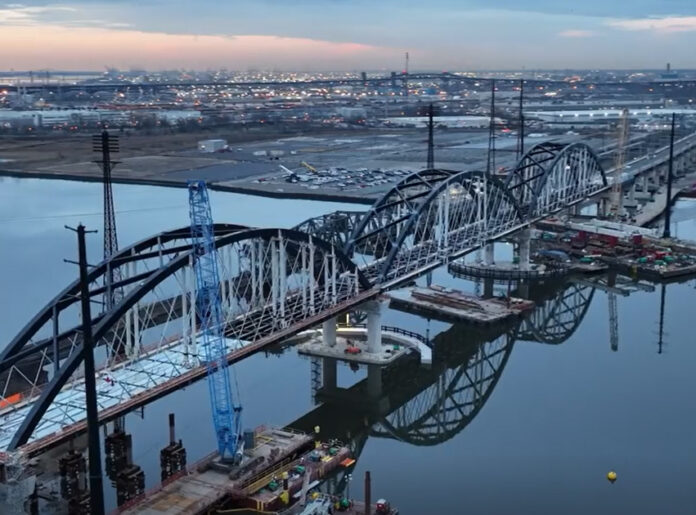
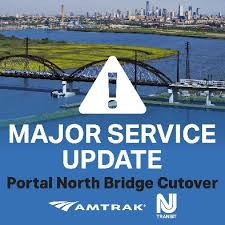
New Jersey entered a decisive new phase in its largest and most technically demanding rail upgrade this week as crews began the long-planned “cutover” process that will physically transition rail operations away from the 114-year-old Portal Bridge and prepare the corridor for full use of the new Portal North Bridge.
The operation marks a rare and highly intricate moment in major rail construction: aligning two generations of infrastructure—one built in the early twentieth century and one engineered for twenty-first-century rail demands—without severing one of the busiest passenger corridors in the nation.
Over the next six weeks, specialized construction and track forces will methodically disconnect and reconfigure rail alignments, power systems, signaling equipment, and structural interfaces that have defined travel across the Hackensack River for more than a century. The work is expected to continue through March and will bring widespread schedule changes, rerouting, and service cancellations for NJ Transit and Amtrak riders throughout northern New Jersey and into New York.
The cutover is not a ceremonial milestone. It is a live, operational transformation that directly affects how trains move through one of the most congested segments of the Northeast rail network.
For decades, the aging Portal Bridge has stood as a primary source of cascading delays. The steel swing bridge must open to accommodate maritime traffic, forcing passenger trains to halt, stack, and recover—often triggering ripple effects that spread far beyond the Meadowlands and into the broader Northeast Corridor. Mechanical failures, weather-related disruptions, and structural limitations have repeatedly amplified those delays, creating reliability challenges that commuters know all too well.
The new Portal North Bridge has been engineered to permanently eliminate that bottleneck. Built higher and fixed in place, the modern span allows vessels to pass beneath without interrupting rail traffic, fundamentally changing the operational reality of this critical crossing.
What makes the current cutover especially complex is that the transition must be executed while portions of the corridor remain active. Crews are performing precision work that includes track realignment, turnout installation, signal integration, overhead catenary adjustments, and extensive testing—all within a narrow construction window designed to minimize long-term service disruption.
Project managers describe the effort as a phased operational migration rather than a simple switch.
Trains cannot simply be rerouted overnight. Each segment must be physically tied into the new alignment, electrically energized, digitally integrated into the signaling network, and verified through repeated test runs before any revenue service is permitted to operate over the new structure.
During this transition, NJ Transit and Amtrak have been forced to temporarily reduce service levels and reassign equipment and crews. Riders should expect shifting schedules, canceled trains, and modified routing patterns throughout the six-week construction window, particularly during off-peak periods and overnight operations when the most disruptive work is scheduled.
Transportation officials stress that the inconvenience, while significant, is unavoidable for a project of this scale.
The Portal North Bridge is not an isolated improvement. It is a cornerstone of New Jersey’s long-term rail modernization strategy and a critical element of the broader Gateway Program, which aims to strengthen the entire rail link between New Jersey and New York. Without this bridge, future capacity upgrades—including new Hudson River tunnel infrastructure—cannot reach their full operational potential.
In practical terms, the new bridge will allow more trains to move reliably through the corridor each day, reduce chronic congestion during peak commuting hours, and stabilize schedules across multiple interconnected lines serving Bergen, Passaic, Essex, and Hudson counties.
Beyond reliability, the project carries major economic implications for the state.
The rail corridor supported by the Portal crossing underpins daily access to one of the largest employment centers in the world. Every delayed or canceled train affects not only individual commuters but also employers, regional productivity, and the broader competitiveness of New Jersey’s labor market.
From a construction perspective, the cutover also represents a rare demonstration of advanced rail delivery techniques being deployed at scale within the state. The work integrates high-precision surveying, digital modeling, prefabricated track components, and coordinated field execution—reflecting the evolving standards now shaping large-scale transportation construction projects across the country. Readers interested in how these large public works initiatives are transforming New Jersey’s infrastructure landscape can explore more of Sunset Daily’s in-depth coverage of regional [construction] projects and corridor upgrades.
While the new bridge structure itself is already in place, the operational transition remains the most sensitive and technically demanding phase of the project. A single misalignment, software conflict, or power inconsistency can delay commissioning and force crews to revisit completed work.
That risk is why the six-week window has been carefully staged to include multiple testing cycles, backup work plans, and overlapping engineering teams monitoring performance in real time.
Once the cutover is complete and the new Portal North Bridge is fully integrated into regular service, the change will be immediately visible to riders—even if the engineering behind it remains largely unseen.
Trains will no longer be forced to wait for bridge openings. Schedules will become more predictable. Dispatching flexibility will improve. And the corridor will gain a level of operational resilience that has been unattainable for more than a century.
For New Jersey, the moment carries symbolic weight as well.
The Portal Bridge, opened in 1910, has served through two world wars, multiple generations of rail equipment, and the transformation of the region from an industrial powerhouse to a modern service-driven economy. Its replacement is not simply a matter of steel and concrete. It signals a generational shift in how the state invests in its transportation backbone.
As crews continue the painstaking work of aligning old infrastructure with new, the coming weeks will test the patience of riders—but they will also deliver one of the most consequential upgrades to New Jersey’s rail network in modern history.
By early spring, the state will be positioned to move beyond one of its most stubborn transportation bottlenecks—and closer to a rail system capable of supporting the region’s growth for decades to come.