


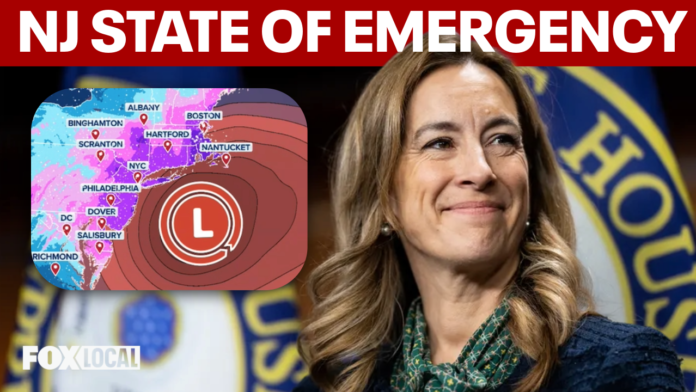

New Jersey is facing one of the most significant winter weather emergencies of the season as state officials, journalists, and policymakers respond to a rapidly developing blizzard threat affecting all 21 counties. In a special edition of the Reporters Roundtable, NJ Spotlight News convenes a panel of leading local journalists to examine the state’s emergency response, political implications, and the broader impact of a historic storm system moving across the Garden State.
The February 22, 2026 New Jersey News Roundup arrives at a critical moment, as a statewide emergency declaration, sweeping travel restrictions, and severe weather warnings dominate headlines. Beyond the snowfall projections and road closures, the conversation reflects the evolving intersection of public safety, infrastructure readiness, and political leadership under pressure.
This long-form feature examines the developing crisis, the policy decisions shaping the state’s response, and the broader implications for residents, businesses, and New Jersey’s political landscape.
State of Emergency Declared Across All 21 Counties
A State of Emergency officially went into effect at noon on February 22, 2026, covering every county in New Jersey as officials prepare for what meteorologists warn could be a high-impact winter storm event. The declaration activates emergency management protocols statewide, enabling agencies to coordinate resources, mobilize personnel, and implement protective measures designed to mitigate risks to public safety.
The emergency order reflects growing concerns about dangerous travel conditions, power outages, and disruptions to essential services. Emergency management teams across municipalities have initiated response strategies, including pre-treatment of roadways, preparation of warming centers, and deployment of public safety personnel.
State officials emphasize that the declaration is not simply procedural — it signals a coordinated, statewide response intended to minimize the storm’s impact and ensure continuity of critical operations. For residents, the message is clear: conditions are expected to deteriorate rapidly, and compliance with emergency guidance remains essential.
Blizzard Warnings Issued for 17 Counties
Severe winter weather alerts have been issued for 17 counties, with forecasters predicting between 12 and 24 inches of snowfall accompanied by strong winds capable of producing whiteout conditions. The combination of heavy snow accumulation and sustained gusts presents the risk of blizzard-level impacts, including reduced visibility, hazardous roadways, and widespread disruptions.
Meteorological models suggest that snowfall rates could intensify during peak periods, creating rapidly changing conditions that may overwhelm local infrastructure and emergency response systems. High winds are expected to exacerbate snow drift formation, potentially blocking roadways and complicating cleanup efforts.
The storm’s projected intensity places it among the most significant winter weather events of the season, with impacts likely to extend beyond transportation into energy reliability, municipal services, and regional commerce.
Travel Restrictions and Road Safety Measures
Governor Mikie Sherrill has urged residents to remain off the roads, emphasizing that limiting travel allows emergency crews and transportation authorities to operate more effectively. The state’s priority remains clearing critical corridors such as the Garden State Parkway and the New Jersey Turnpike, both of which serve as essential arteries for emergency response and regional mobility.
Transportation agencies have activated storm response plans that include continuous snow removal operations, deployment of salt and de-icing materials, and monitoring of traffic conditions in real time. Officials warn that even short-distance travel could become dangerous as visibility declines and road conditions worsen.
Public safety messaging underscores a preventative approach: reducing traffic volume helps protect motorists while enabling emergency personnel to maintain access to high-priority areas.
Commercial Vehicle Ban on Major Highways
In anticipation of deteriorating conditions, state authorities have implemented a ban on commercial vehicles across major highways. The measure is designed to reduce congestion, prevent accidents involving large vehicles, and ensure that emergency response teams can navigate roadways without obstruction.
Heavy commercial traffic presents particular risks during severe winter storms due to reduced maneuverability and extended stopping distances. By limiting large vehicle operations during peak storm activity, officials aim to minimize roadway hazards and maintain operational efficiency for emergency services.
The ban reflects a broader strategy of proactive risk management, prioritizing safety and mobility during one of the season’s most challenging weather events.
Political Leadership and Crisis Management Under the Spotlight
The emergency response unfolds within a broader political context that has drawn significant attention from journalists participating in the Reporters Roundtable. The panel discussion examines how state leadership navigates crisis communication, policy implementation, and public trust during large-scale emergencies.
Governor Sherrill’s directives, including travel advisories and emergency measures, are central to ongoing discussions about executive decision-making and governmental readiness. Observers note that severe weather events often serve as critical tests of infrastructure resilience, emergency preparedness, and administrative coordination.
The Roundtable’s analysis highlights how public perception of leadership during emergencies can shape political narratives, influence policy priorities, and impact future governance decisions.
Infrastructure Preparedness and Community Impact
Beyond immediate safety concerns, the storm raises broader questions about infrastructure resilience across New Jersey. Heavy snowfall and strong winds pose challenges for power distribution networks, public transportation systems, and municipal services.
Local governments are preparing for potential service disruptions, including school closures, transit delays, and temporary interruptions to public operations. Utility providers remain on standby to address possible outages, while municipalities coordinate with state agencies to ensure rapid response capabilities.
Communities across the state are also mobilizing at the local level, with emergency management offices distributing guidance and resources to help residents prepare for extended storm conditions.
The Role of Local Journalism in Statewide Coverage
The special Reporters Roundtable underscores the vital role of local journalism in informing the public during fast-moving events. By bringing together experienced reporters and analysts, the program provides context beyond immediate headlines, examining policy decisions, emergency responses, and their long-term implications.
Coverage from outlets including Hoboken Girl and other regional publications contributes to a comprehensive picture of how communities across New Jersey are experiencing and responding to the storm.
In an environment shaped by rapid developments and evolving forecasts, local journalism remains a critical resource for accurate information and accountability.
What Residents Should Expect in the Coming Days
As the storm system intensifies, residents across New Jersey should prepare for significant snowfall, strong winds, and potential disruptions to daily life. Officials continue to monitor weather developments closely, with additional advisories and updates expected as conditions evolve.
Emergency management agencies stress the importance of preparedness, encouraging residents to follow official guidance, avoid unnecessary travel, and remain informed through trusted news sources.
The coming days will test the state’s infrastructure, emergency systems, and community resilience, while also shaping the political and policy discussions that follow.
A Defining Moment for New Jersey’s Winter Response
The February 22, 2026 New Jersey News Roundup reflects more than a severe weather event — it represents a defining moment in how the state prepares for, responds to, and communicates during emergencies. Through coordinated government action, community engagement, and comprehensive journalistic coverage, New Jersey confronts a storm that carries both immediate risks and lasting implications.
As the situation continues to unfold, the NJ Spotlight News Reporters Roundtable provides a vital platform for analysis, accountability, and insight into the decisions shaping the Garden State during one of its most challenging winter events of the year.



