



New Jersey is enjoying a brief reprieve from winter’s chill today, Thursday, January 8, 2026, as sunshine and unseasonably mild air create comfortable conditions across much of the state. After a cool start in the 30s this morning, light winds and clear skies are helping temperatures rise into the low 50s, offering a rare winter warmup before a significant weather change arrives this weekend.
The state remains largely dry today, though clouds are expected to increase overnight as the atmosphere prepares for the arrival of a new system. Residents are encouraged to enjoy the calm, sunny conditions while they last, as a marked shift is already moving into the region.
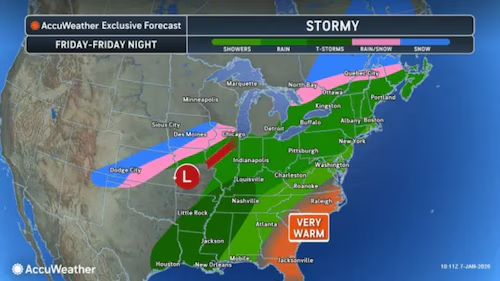
Tomorrow, Friday, January 9, mild air will continue to dominate with highs potentially approaching 60°F in some areas. However, the weather pattern will begin to change, with rain showers likely moving in during the afternoon or evening commute. By Saturday, January 10, steady rainfall is expected to cover much of the state, with totals ranging from half an inch to more than an inch and a half. Sunday will bring clearing skies in the morning but blustery winds, gusting up to 35 mph, will signal the arrival of colder Canadian air and set the stage for a sharp temperature drop at the start of next week.
Regional impacts will vary. In Philadelphia and South Jersey, fans attending the Eagles-49ers playoff game should expect dry conditions but very cold, windy weather, with wind chills making it feel closer to the 30s. In North Jersey, higher elevation areas may see patchy drizzle or light fog Friday morning before the main rain system moves through, potentially causing slick roads during the morning commute.
This weekend’s weather pattern marks a transition from an unusually mild period to a more active winter setup, with precipitation and wind preceding a return to below-average temperatures. Long-range atmospheric conditions suggest that the colder air flowing in behind Sunday’s system could set up additional storm potential for mid-January, making it an important period for residents and weather watchers alike.
For more in-depth coverage on New Jersey’s evolving weather patterns, forecasts, and climate trends, visit our Weather Report section for detailed updates and analysis of the region’s upcoming winter conditions.
New Jersey residents are advised to prepare for the weekend’s wet and windy weather while enjoying today’s brief, sunny break, as the state transitions back into the heart of winter with colder temperatures and active storm potential on the horizon.
Atmospheric Signals Point to a Return of Winter: New Jersey Enters Its Next Storm-Ready Phase. New Jersey is in the midst of a brief winter intermission, a pause that has temporarily replaced frosty mornings and icy sidewalks with unseasonably mild air and lingering overnight fog. This short-lived warm period, often referred to as a January thaw, is offering a clear sign that moisture-rich air is moving into the region and interacting with cooler surface conditions. While the warmth has been welcomed by many, it also serves as a meteorological marker that the larger winter pattern is reorganizing itself.
Foggy mornings are expected to continue as mild, humid air remains in place, with temperatures climbing well above seasonal norms. In some communities, afternoon highs are approaching levels more typical of early spring. This warm stretch is expected to peak before rain moves through the state, helping replenish groundwater and reservoirs before colder air returns.
By early next week, the broader atmospheric structure over North America is forecast to shift noticeably. The current warm pattern is being driven by changes in the upper-level flow across the Pacific and western United States that allow milder air to flood eastward. These features, however, are transient. As they fade, colder air from Canada will begin to reassert itself across the eastern United States, bringing New Jersey back into a winter-dominant regime.
Meteorologists who study long-range atmospheric behavior are paying close attention to the evolving jet stream configuration. Large-scale ridges and troughs in the upper atmosphere are projected to reorganize in a way that favors sustained colder conditions across the Mid-Atlantic and Northeast. These structural changes in the atmosphere are critical because they establish the environment that supports winter storm development, even before any specific storm system is identifiable.
Of particular interest is a mid-January window when the overall pattern appears capable of producing organized low-pressure systems along the eastern seaboard. During this period, the atmosphere may feature a deep trough over the eastern United States, a configuration that frequently acts as a storm generator. When cold air is firmly entrenched and moisture is drawn northward, these setups can become the backbone of significant winter weather events.
What makes this period especially noteworthy is the potential alignment of several large-scale climate oscillations that historically favor colder and more active winter conditions. These include atmospheric patterns that can slow storm systems, allow Arctic air to penetrate farther south, and maintain a persistent cold air supply across New Jersey. When these elements converge, the region often experiences prolonged cold spells and an increased likelihood of snow-producing systems.
While this is not a forecast of a specific storm, the developing pattern places New Jersey back into a climatological zone that is supportive of snowstorm formation. The state has already seen snowfall levels that remain above average for this point in the season, and long-range indicators suggest that the remainder of winter could maintain that trajectory if the current pattern holds.
In practical terms, residents can expect the current mild and damp conditions to give way to colder air as the upcoming week progresses. The return of winter will bring back a more active storm environment, one that meteorologists will be closely monitoring for potential snow opportunities. For those who track long-term atmospheric behavior rather than day-to-day predictions, mid-January represents the next meaningful phase in the state’s winter evolution.
Readers looking to stay informed on New Jersey’s changing atmospheric conditions, climate trends, and developing seasonal patterns can follow ongoing updates in Sunset Daily’s Weather Report coverage, where statewide weather analysis and regional climate developments are continuously monitored.
As New Jersey transitions from this brief thaw back into winter’s core, the atmosphere is quietly setting the stage for what could become a defining chapter of the season.



