


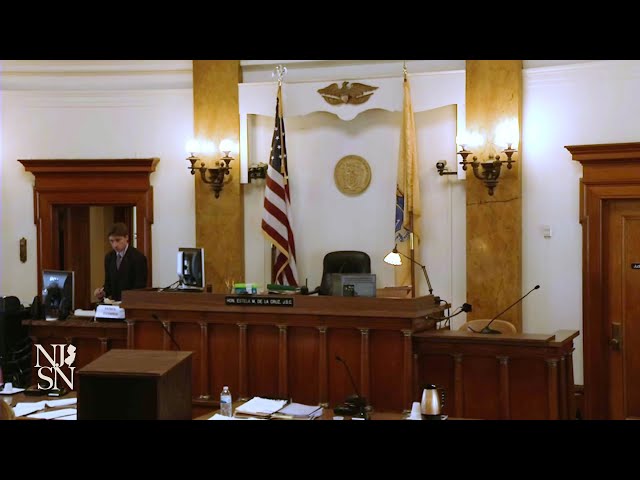

New Jersey took a decisive step toward restoring stability and efficiency to its court system this week as the State Senate confirmed 16 new judges in a single session, dramatically reducing the number of open seats on the bench and signaling renewed momentum in the state’s judicial pipeline.
With the latest confirmations, judicial vacancies across New Jersey now stand at just 11, the lowest level recorded since Governor Phil Murphy’s first year in office. For a court system that has spent much of the past several years grappling with staffing shortages, case backlogs, and administrative strain, the development marks a significant inflection point.
Court administrators and legal professionals have long warned that prolonged vacancies were contributing to extended wait times, delayed hearings, and mounting caseloads for sitting judges. In some vicinages, residents faced months-long delays for civil proceedings, family court matters, and criminal cases alike. The Senate’s latest action effectively reverses that trend, reinforcing the operational capacity of trial courts throughout the state.
The confirmations come amid broader legislative efforts within New Jersey’s policy environment, where lawmakers have increasingly framed judicial staffing as a public service priority rather than a procedural formality. The appointments span multiple counties and divisions, replenishing benches that had been operating below optimal levels and allowing court leadership to rebalance dockets more evenly.
For litigants, attorneys, and municipal governments, the impact is expected to be immediate and measurable. More judges on the bench means accelerated case movement, improved scheduling predictability, and reduced strain on overextended judicial personnel. Family court proceedings, landlord-tenant cases, municipal appeals, and criminal calendars are among the areas most likely to benefit from the infusion of new judicial officers.
The confirmations also underscore a period of renewed cooperation between the executive and legislative branches regarding judicial nominations. In recent years, delays in confirmations had become a point of concern for bar associations and civic groups, who cautioned that a persistently understaffed judiciary could undermine public confidence in the legal system. This week’s action signals a recalibration of priorities that places court functionality back at the center of the policy conversation.
As New Jersey continues to navigate evolving legal, economic, and social challenges, a fully staffed judiciary plays a critical role in maintaining institutional stability. The court system serves as both an arbiter of justice and a foundational pillar for business continuity, community protection, and civil accountability.
Developments of this magnitude are being closely watched within the state’s broader public affairs landscape, including ongoing discussions in New Jersey’s political sphere. Coverage and analysis of similar statewide policy shifts can be found in Sunset Daily’s politics reporting, which continues to track how legislative decisions are shaping the Garden State’s future.
With vacancies now approaching a modern-era low, New Jersey’s judiciary appears positioned to enter the coming year with renewed capacity, greater administrative resilience, and a stronger ability to meet the legal needs of its residents.