



If you live in New Jersey, the prediction probably feels less like a forecast and more like confirmation. The Garden State is once again being identified as one of the housing markets most likely to heat up in 2026, particularly along the outskirts of New York City. Northern New Jersey is being grouped alongside Long Island, the Hudson Valley, and Fairfield County, Connecticut — the familiar ring of regions that absorb demand when Manhattan tightens.
But this cycle is different.
This isn’t just about price arbitrage. It’s about structural migration patterns, return-to-office mandates, quality-of-life recalibration, and a steady reshaping of the regional housing ecosystem. And for those paying attention — homeowners, buyers, developers, and policymakers — 2026 may mark one of the most competitive years New Jersey has seen in recent memory.
The Return-to-Office Effect Is Real
For a brief period, the “work from anywhere” model changed everything. Buyers pushed further west, further south, further into lower-density areas because commuting didn’t matter.
Now it does again.
More companies across finance, tech, media, and healthcare are requiring employees to return to the office at least part-time. That recalibration immediately elevates the value of commuter-friendly towns with direct rail access, ferry service, or manageable drive times into Manhattan.
Enter Northern New Jersey.
Towns with Midtown Direct train lines, PATH access, or strategic highway positioning are poised for renewed buyer pressure. This includes markets in:
• Bergen County
• Hudson County
• Essex County
• Union County
• Morris County
Buyers want space and stability — but they also need realistic commuting logistics. New Jersey uniquely balances both.
New Jersey as the Practical Alternative to New York City
New Jersey consistently appears on “hot market” lists not because it’s trendy, but because it’s structurally advantageous.
We sit directly adjacent to one of the largest economic engines in the world. We offer:
• Larger homes at comparatively lower price per square foot
• Suburban neighborhoods with urban access
• High-performing public and private school systems
• Proximity to beaches, mountains, and metropolitan centers
Even though New Jersey is the most densely populated state in the nation, it still offers a sense of breathing room that many buyers no longer feel inside New York City.
Beyond logistics, lifestyle factors are accelerating outmigration from NYC. Residents cite rising costs, political fatigue, public safety concerns, school debates, and what some commentators are calling the “Mamdani factor” — shorthand for frustration over city governance and policy direction.
Regardless of political framing, the pattern is clear: people are voting with their feet.
And many are landing in New Jersey.
What This Means for Homeowners and Buyers
If you already own property in Northern New Jersey, the forecast likely signals upward pressure on home values, particularly in commuter-friendly municipalities.
Inventory remains constrained. New listings are not keeping pace with buyer demand. If migration intensifies in 2026, multiple-offer scenarios may become even more common in desirable towns.
For buyers, especially first-time entrants, competition is expected to increase. Strategic timing, mortgage readiness, and decisive negotiation will matter more than ever.
For developers and investors, land acquisition in transit-oriented locations may represent one of the strongest positioning strategies heading into 2026.
New Jersey’s Dual Narrative: Luxury Demand and Affordable Housing Expansion
While the high-demand commuter suburbs capture headlines, a parallel and equally important development is unfolding in Hudson County.
Construction is now underway on Bayonne’s first fully affordable housing complex in 40 years.
The project, known as the Bayonne Senior and Supportive Services affordable housing development, recently broke ground at 7 Oak Street under the leadership of the Bayonne Housing Authority. The six-story building will rise on a formerly vacant lot that once housed a power-generating station.
This marks a generational milestone for Bayonne.
The development will create 40 affordable units, split evenly between senior housing and supportive housing for individuals with disabilities. The project is financed through the federal Low-Income Housing Tax Credit program, with administration through the New Jersey Housing and Mortgage Finance Agency.
The Bayonne Housing Authority is partnering with the Bergen County United Way on the initiative, and completion is projected for early 2027.
This project reflects a broader dynamic in New Jersey real estate: growth must be balanced.
While suburban demand rises, municipalities must also address housing accessibility, aging populations, and supportive housing needs.
Bayonne’s Long-Awaited Affordable Development
Bayonne, often referred to as the Peninsula City, has seen significant transformation over the past two decades, particularly along its waterfront corridors. Yet fully affordable housing developments have lagged.
The groundbreaking at 7 Oak Street represents the first new supportive and senior-focused affordable housing construction in decades.
The six-story building will include:
• 40 affordable units
• 20 units designated for seniors
• 20 units designated for supportive housing
• 30 interior garage parking spaces
The parcel, formerly owned by PSE&G, had sat vacant for years before acquisition by the Bayonne Housing Authority.
Chair Vincent Lombardo noted that the project fulfills a long-standing objective to serve vulnerable populations within the community, particularly seniors and individuals with disabilities.
As suburban markets heat up, developments like this illustrate the state’s ongoing effort to maintain housing diversity and community stability.
Transit-Oriented Living Remains King
Whether discussing commuter-driven demand in Bergen County or affordable expansion in Bayonne, one theme connects everything: proximity to transportation.
In Northern New Jersey, access to:
• NJ Transit rail lines
• PATH stations
• Ferry terminals
• Major highways
directly influences pricing power and buyer urgency.
Bayonne’s strategic location near light rail access and its evolving infrastructure footprint position it well for both market-rate growth and community-based development.
The Strategic Advantage of Geography
New Jersey’s enduring advantage is geography.
We are close enough to New York City to benefit from its economic gravity, yet far enough to offer lifestyle alternatives. This dynamic has repeated itself through multiple real estate cycles — from the early 2000s boom to the post-2008 recovery to the pandemic surge.
Each time, New Jersey has functioned as the release valve when demand spills outward.
But what makes 2026 unique is the combination of:
• Return-to-office mandates
• Lifestyle-driven migration
• Limited housing inventory
• Infrastructure improvements
• Renewed suburban preference
The convergence of these factors suggests sustained, not temporary, heat.
Northern New Jersey’s Outlook for 2026
If the forecasts prove accurate, expect heightened activity in:
• Towns with direct Manhattan rail access
• Municipalities with strong school ratings
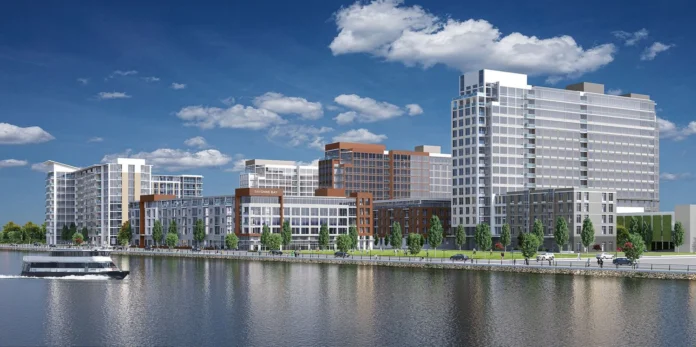
• Waterfront communities in Hudson County
• Emerging secondary commuter markets in Morris and Union counties
For sellers, preparation will be key. For buyers, readiness will be essential. For municipalities, infrastructure planning will become even more critical.
New Jersey’s real estate market does not heat up because it is fashionable. It heats up because it works.
It works for commuters.
It works for families.
It works for retirees.
It works for people seeking space without isolation.
As 2026 approaches, the Garden State once again finds itself at the intersection of demand, practicality, and geographic inevitability.
From the commuter suburbs of Northern New Jersey to the groundbreaking at 7 Oak Street in Bayonne, one reality is becoming increasingly clear:
New Jersey is not just absorbing overflow.
It is redefining the regional housing landscape.