



New Jersey’s construction and infrastructure sector entered a volatile new phase Friday as work on the long-awaited Gateway rail tunnel was ordered to pause, triggering immediate economic fallout while preservation officials in Jersey City simultaneously weighed a time-sensitive plan to rescue one of the city’s oldest surviving church façades.
The sudden halt of construction activity on the $16 billion Gateway tunnel project, which is intended to modernize and expand rail capacity beneath the Hudson River, comes amid a federal funding freeze that has forced project partners to suspend work as of February 6. Industry leaders say the shutdown is expected to result in the near-term loss of roughly 1,000 jobs and raises new concerns about the long-term reliability of the Northeast Corridor, one of the most heavily traveled rail routes in the country.
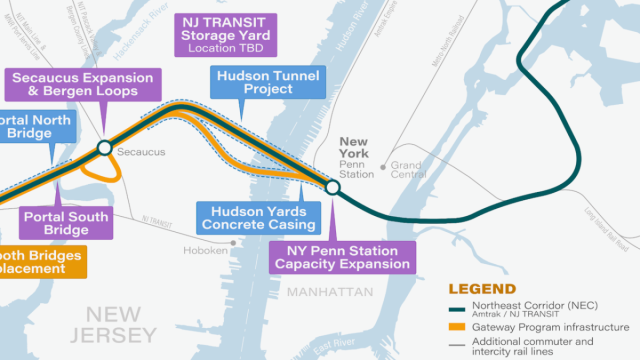
The tunnel is considered a cornerstone of regional transportation resilience, particularly for New Jersey commuters who depend on daily service into Manhattan. A prolonged pause now threatens to disrupt coordinated timelines across multiple agencies and could inflate project costs if crews, equipment, and contracts must be remobilized at a later date.
The stoppage arrives at a moment when the state’s broader pipeline of major infrastructure and redevelopment activity remains historically strong. According to industry forecasts, New Jersey is still projected to see record construction spending in the 2026–2027 cycle, with an estimated $58.4 billion expected statewide. Utilities are projected to account for approximately $17.7 billion of that total, while investments tied to NJ Transit are forecast to exceed $5 billion.
For a sector that has become one of the state’s most reliable economic drivers, the contrast is striking: unprecedented long-term opportunity paired with short-term instability for some of the largest public works initiatives.
Coverage of major New Jersey infrastructure and development projects can be found through Sunset Daily’s ongoing reporting on regional construction.
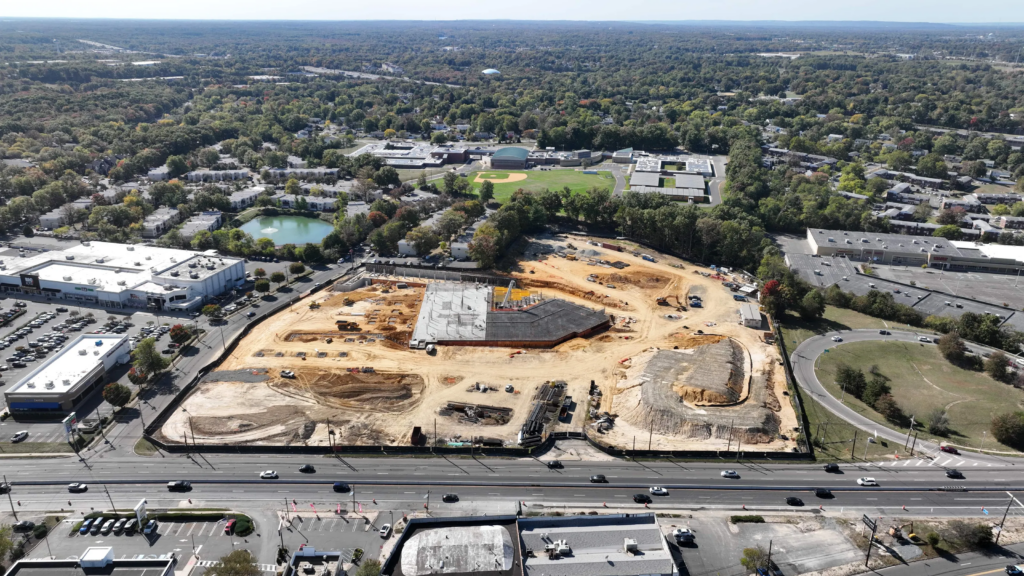
Beyond megaprojects, road and bridge rehabilitation continues across Central and North Jersey. One of the most visible long-term efforts remains the extensive reconstruction and modernization work along Route 18 in East Brunswick. That multi-year corridor improvement project, designed to upgrade aging pavement, drainage systems, and traffic flow, is currently scheduled for completion in the fall of 2026 and is viewed by transportation planners as a critical link for both local commuters and regional freight traffic.
While statewide infrastructure planning wrestles with funding uncertainty, a parallel drama is unfolding at the neighborhood level in Jersey City, where officials are being urged to move quickly on a redevelopment proposal that could determine the survival of a 140-year-old religious landmark.
North Baptist Church, located in the Harsimus Cove section of downtown Jersey City, was constructed in 1886 and has remained vacant since a devastating fire in the 1970s. Decades of exposure and neglect have left much of the original structure gone, with the historic façade and decorative elements serving as the building’s most significant remaining features.
A new redevelopment proposal now before the city’s Historic Preservation Commission seeks to stabilize the structure and adapt the site for residential use. The architect leading the effort has warned commissioners that extended delays could place the remaining portions of the building at serious risk.
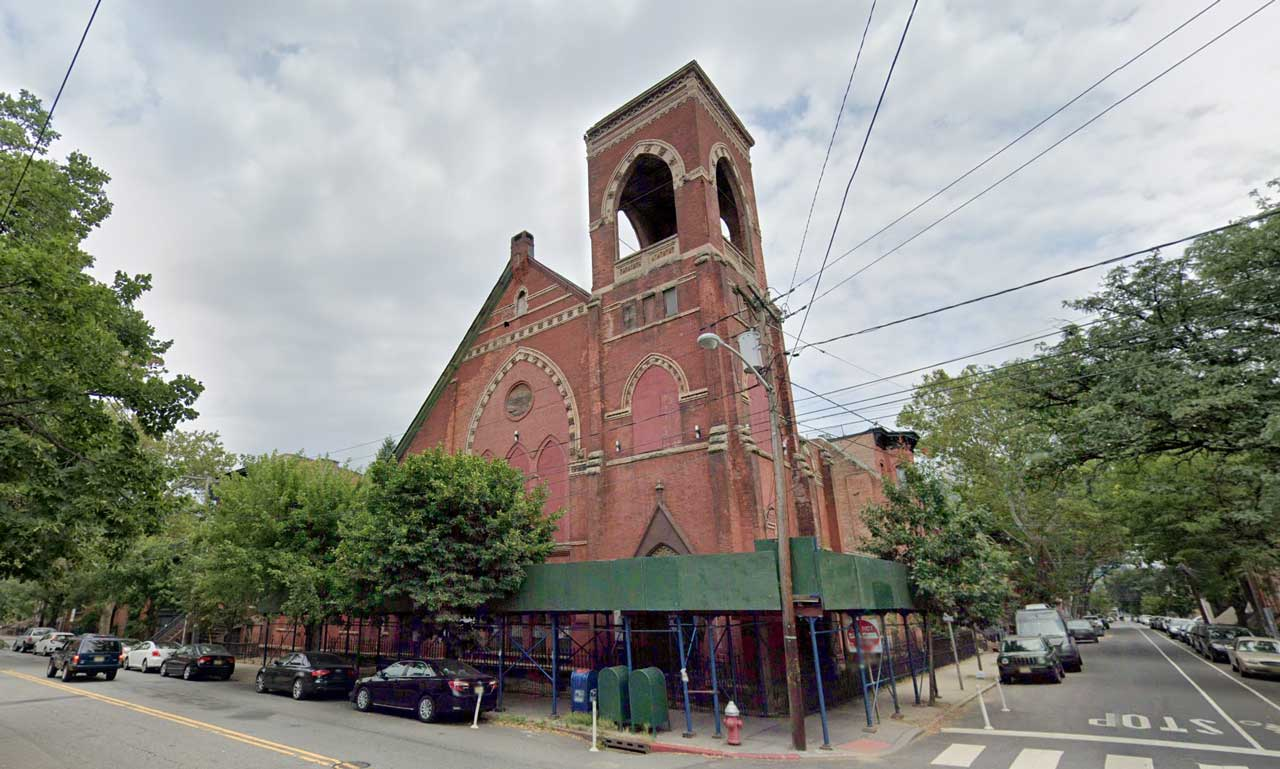
Project architect Manny Pereiras told commissioners that the building’s condition has deteriorated to the point where structural failure is no longer a remote possibility.
“Every day that goes on, we’re risking the collapse of this building,” Pereiras said during a recent hearing, describing the situation as increasingly precarious.
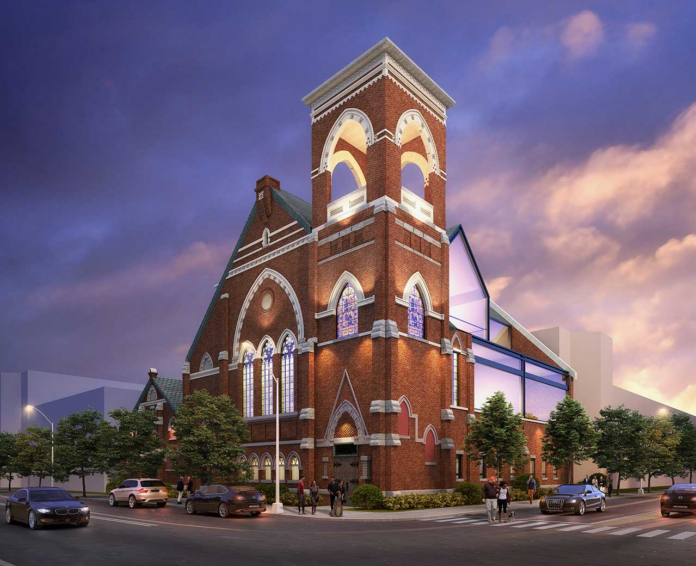
The design team is presenting updated renderings that incorporate additional masonry and restoration features intended to blend new construction with what remains of the original building. A centerpiece of the plan is the recreation of the church’s distinctive rose window, which was shattered in 1937 and later sealed with brick.
While the return of the rose window and the preservation of surviving terracotta ornamentation drew broad support from commissioners, debate emerged over the treatment of the Fourth Street façade. That portion of the structure would be largely rebuilt, prompting some members of the commission to question whether the new design should replicate the original architectural style more precisely.
Commissioner Tony Sandkamp raised concerns about introducing what he described as a modern interpretation of a historically significant elevation, noting that homeowners across the city are often required to restore missing architectural elements to match original designs.
Pereiras countered that the proposal is rooted in adaptive reuse rather than strict historical reconstruction. The building, he emphasized, will no longer function as a church, and the design is intended to acknowledge the past while accommodating a new purpose.
“We’re not trying to imitate the historic style,” he said. “We’re giving a nod to the history while marrying what was there with what we’re proposing today.”
Under the plan, the building—owned by JCH Development—would be converted into 13 residential units, including duplex apartments. One of the most distinctive design features incorporates the existing bell tower into the primary bedroom of one of the residences, preserving a dramatic architectural element within the new living space.
Commissioner Brian Blazak expressed support for the overall approach, noting that the survival of the structure itself is remarkable given its long period of abandonment.
“I’ve been walking past this building for about 15 years,” Blazak said. “I never imagined someone would attempt to rebuild the south-facing façade. It’s incredible that it’s still standing at all.”
The North Baptist Church proposal arrives amid a broader wave of historic church restoration and adaptive reuse projects across Jersey City. Recent approvals involving St. Mark’s and the Reformed Church of Van Vorst have encouraged preservation advocates, while the long-delayed redevelopment of St. John’s Baptist Church—stalled for decades—has become a cautionary tale for officials wary of allowing lengthy review processes to jeopardize fragile historic structures.
That concern was voiced directly during the commission’s discussion.
One member warned that prolonged debate could turn the North Baptist Church effort into “another St. John’s,” a reference to a project that languished through years of uncertainty before finally gaining traction.
Daniel Wrieden, an officer with the city’s Historic Preservation Office, told commissioners he is increasingly worried about the building’s physical stability. He said interior conditions have worsened dramatically in a relatively short period.
“I was surprised by the level of degradation that’s taken place in less than 18 months,” Wrieden said. “The building is in very poor shape.”
At the same time, Wrieden cautioned that the application remains incomplete and cannot be approved until additional design and construction details are submitted, including specifications for lighting and other architectural elements.
On a broader level, he said the proposal’s reliance on contemporary construction techniques may be the most practical option for preserving what remains of the historic fabric.
“I do think modern construction is the right direction here,” Wrieden said. “There is refinement to be done, but we need more detailed information before this can move forward.”
The fate of North Baptist Church now rests on whether city officials can balance preservation standards with the urgent structural realities facing the site—an increasingly common challenge across older urban neighborhoods where aging buildings require swift intervention to remain viable.
Together, the Gateway tunnel shutdown and the uncertain future of North Baptist Church illustrate the widening gap between New Jersey’s ambitious infrastructure and redevelopment vision and the political, financial, and regulatory hurdles that can derail it. As the state prepares for what could be its largest construction spending cycle on record, projects both massive and modest are being tested by funding constraints, permitting timelines, and the relentless passage of time.



