



New Jersey’s policy landscape is entering a period of heightened complexity and consequence, as a convergence of economic strain, political intensity, environmental scrutiny, and legal battles reshapes the direction of the state in real time. From warnings of a destabilizing cycle within public employee health plans to an unprecedentedly crowded congressional primary field, and from offshore environmental regulation debates to renewed challenges surrounding immigration detention facilities, the issues dominating the current moment reflect a state navigating both immediate pressures and long-term structural questions.
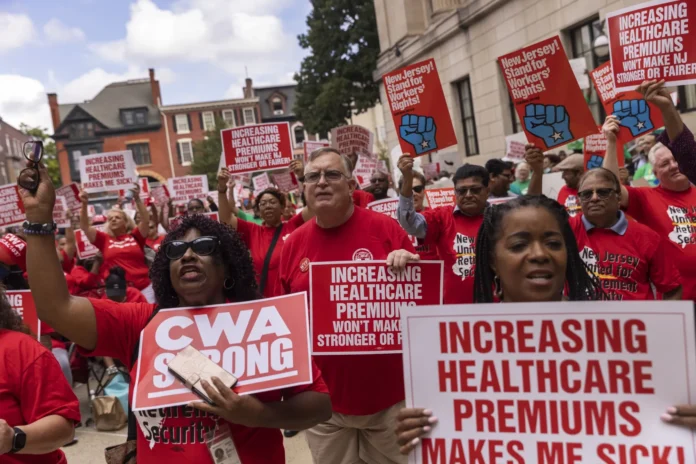
At the center of the economic conversation is growing concern over the sustainability of public school employee health benefits, with analysts and officials warning of what has been described as a potential “death spiral.” This term, increasingly used in policy discussions, refers to a cycle in which rising premiums drive participants out of the system, leaving behind a smaller, higher-cost pool that further accelerates premium increases. For New Jersey’s education system, the implications are significant. School districts already operating under tight fiscal constraints are facing escalating healthcare costs that threaten to crowd out funding for classroom instruction, staffing, and essential student services.
The challenge is not isolated to any single district but reflects a systemic issue that has been building over time. As healthcare expenses continue to rise nationwide, New Jersey’s public sector is experiencing amplified effects due to the scale of its workforce and the structure of its benefits programs. Policymakers are now confronted with difficult decisions about how to stabilize these plans without undermining the benefits that educators and staff rely on. The outcome of these discussions will have lasting consequences for both the financial health of school systems and the broader education landscape across the state.
Simultaneously, the political arena in New Jersey is becoming increasingly crowded and competitive, with the 2026 congressional primary field drawing an extraordinary number of candidates. With dozens of individuals vying for a limited number of seats, the primary is shaping up to be one of the most contested in recent memory. This level of participation reflects both the high stakes of federal representation and the growing interest among candidates seeking to influence national policy from a New Jersey platform.
The sheer size of the candidate pool introduces new dynamics into the electoral process. Voter engagement, campaign strategy, and messaging are all likely to be affected as candidates work to distinguish themselves in a crowded field. For voters, the abundance of choices presents both an opportunity and a challenge, requiring careful evaluation of platforms, experience, and priorities in order to navigate an increasingly complex ballot.
Beyond economics and politics, environmental concerns are also taking center stage, particularly in relation to offshore development and whale protection efforts. State officials are actively addressing regulatory frameworks designed to safeguard marine life while balancing the demands of energy development and economic growth. The debate highlights the delicate balance between environmental stewardship and infrastructure expansion, a theme that has become increasingly prominent as New Jersey advances its renewable energy goals.
Whale protection has emerged as a focal point within this broader conversation, drawing attention from environmental advocates, industry stakeholders, and policymakers alike. The issue underscores the interconnected nature of ecological preservation and economic planning, as decisions made in one domain inevitably influence outcomes in the other. As regulatory discussions continue, the state’s approach will serve as a benchmark for how coastal regions navigate similar challenges in the years ahead.
At the same time, legal battles surrounding proposed Immigration and Customs Enforcement detention facilities are adding another layer of complexity to the state’s policy environment. These challenges reflect ongoing tensions between federal immigration enforcement priorities and New Jersey’s approach to community relations and local governance. The outcome of these cases will have significant implications for how immigration policies are implemented within the state, as well as for the broader relationship between state and federal authorities.
The intersection of these issues—healthcare sustainability, political competition, environmental regulation, and immigration policy—illustrates the multifaceted nature of governance in New Jersey today. Each area carries its own set of challenges, yet they are deeply interconnected, influencing one another in ways that shape the overall trajectory of the state.
Coverage and analysis within NJ Spotlight News continue to provide a comprehensive view of these developments, offering insight into how policy decisions are unfolding and what they mean for residents across New Jersey. As these stories evolve, they reveal a state grappling with both immediate demands and long-term strategic considerations, striving to balance competing priorities while maintaining stability and progress.
For residents, the implications of these developments are far-reaching. Rising healthcare costs may affect local school budgets and property taxes, while the outcomes of congressional primaries will influence representation at the national level. Environmental regulations will shape the state’s coastal future, and immigration policies will impact communities and local economies. Together, these issues form a complex tapestry that defines the current moment in New Jersey’s history.
What emerges from this convergence is a picture of a state in transition, where decisions made today will have lasting effects on its economic resilience, political landscape, environmental health, and social fabric. New Jersey’s ability to navigate these challenges will depend on the effectiveness of its leadership, the engagement of its citizens, and the willingness of stakeholders to collaborate in pursuit of sustainable solutions.
As the state moves forward, the focus will remain on addressing these issues with a combination of urgency and foresight. The challenges are significant, but so too are the opportunities for innovation, reform, and progress. In this environment, New Jersey continues to demonstrate its capacity to adapt and evolve, positioning itself as a key player in shaping the future of policy and governance in the United States.