



New Jersey enters a pivotal stretch this week as one administration prepares to formally close its chapter and another readies to take the reins, setting the stage for a political transition that will define the direction of state government well into the next decade.
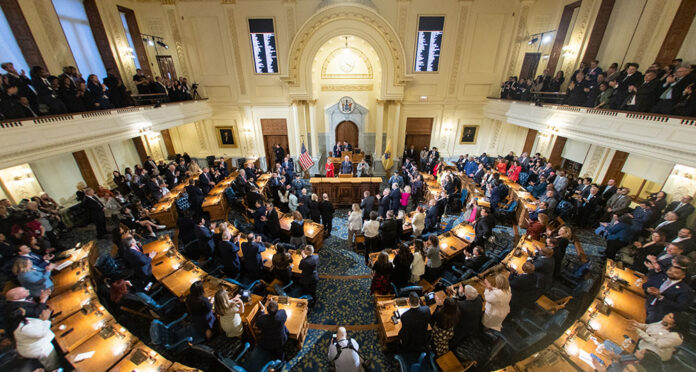
On Tuesday afternoon, Governor Phil Murphy will step into the Assembly Chamber for what will be the final State of the State address of his tenure. The speech is expected to serve as both a retrospective on eight years of sweeping policy change and a forward-looking message aimed at preparing residents, lawmakers, and business leaders for the next phase of governance. Murphy’s administration has reshaped everything from minimum wage standards and paid family leave to energy policy and public health infrastructure, leaving behind a record that supporters call transformational and critics label ambitious but costly.
The address also arrives at a time of intense legislative activity. Lawmakers are moving through an unusually heavy slate of bills as Murphy’s term draws to a close, pushing measures tied to education reform, healthcare affordability, climate initiatives, and consumer protections. For many in Trenton, this week’s speech will act as a political marker, offering the outgoing governor an opportunity to frame his legacy while urging lawmakers to complete unfinished business.
Just one week later, attention will shift from Trenton to Newark, where Governor-elect Mikie Sherrill will be sworn in at the New Jersey Performing Arts Center. The decision to hold the ceremony outside the traditional State House reflects more than a change in scenery. It signals an effort to broaden the geographic and cultural footprint of the governor’s office, positioning the new administration as closely aligned with urban centers, economic revitalization, and a more outward-facing vision for state leadership.
Sherrill’s inauguration will not simply be ceremonial. It will mark the official launch of an administration inheriting a state grappling with rising living costs, energy reliability concerns, infrastructure demands, and heightened national political tensions that increasingly shape local decision-making. Her early agenda is expected to prioritize affordability, government transparency, and regulatory reform, while also confronting longer-term challenges surrounding power generation, economic development, and public safety.
These back-to-back events underscore a rare moment of overlap between political eras. Murphy’s final address and Sherrill’s inauguration together represent a passing of the torch that few states experience so clearly defined in time and purpose. For residents, businesses, and civic leaders, the coming days offer both closure and anticipation, as the policies of the past eight years give way to a new governing philosophy and a reshaped set of priorities.
Coverage of these developments is unfolding within the broader landscape of New Jersey political reporting and public discourse, where the implications of leadership change are being closely examined across the state’s evolving political scene. As Trenton prepares for its final farewell to one governor and Newark readies to welcome the next, New Jersey stands on the threshold of a consequential transition that will ripple through policy debates, budget decisions, and community life across the Garden State.