


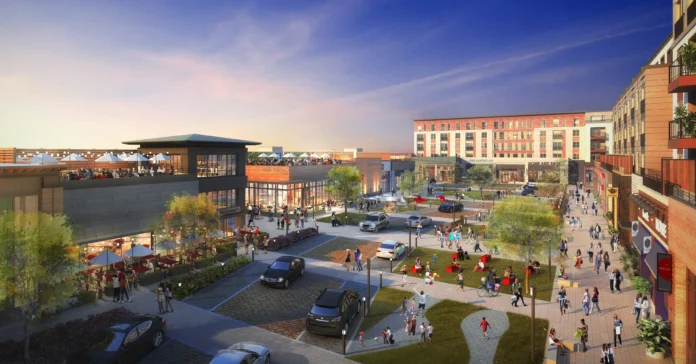

Morris County is no longer just evolving—it is recalibrating at scale, and the newly released 2025 Development Activity Report makes that reality unmistakably clear. Presented by the Morris County Office of Planning and Preservation during a public session of the Board of County Commissioners in Morristown, the report delivers a data-rich, forward-facing snapshot of how one of New Jersey’s most economically influential regions is reshaping its housing stock, commercial footprint, and long-term land use strategy. What emerges is not a story of incremental growth, but one of structural transformation driven by shifting demographics, changing workplace dynamics, and an increasingly urgent demand for housing across multiple price points.
At the center of the report is a dramatic surge in multi-family and mixed-use development, signaling a decisive pivot away from traditional suburban expansion toward denser, transit-oriented, and integrated community models. In 2025, the Morris County Planning Board reviewed 26 applications for multi-family and mixed-use projects totaling 2,028 proposed residential units—more than double the 923 units proposed just one year earlier. This sharp escalation is not evenly distributed; rather, it is concentrated in a handful of large-scale developments that collectively account for the majority of new housing volume. Four projects alone generated more than 60 percent of all proposed units, underscoring a development environment increasingly defined by high-impact, high-density proposals rather than smaller, fragmented builds.
This trend is not occurring in isolation. It is directly aligned with broader statewide and national patterns in real estate, where demand for flexible living environments, proximity to transportation infrastructure, and access to mixed-use amenities continues to intensify. Municipalities with direct connectivity to major highways and commuter rail lines are absorbing the bulk of this growth, reinforcing the long-standing relationship between mobility and real estate value. Hanover Township, for example, emerged as a focal point in 2025, leading the county with 405 proposed housing units and illustrating how strategic location continues to dictate development momentum.
At the same time, the report reinforces a persistent and increasingly complex challenge: housing affordability. Despite the surge in new construction, cost pressures remain firmly entrenched across both ownership and rental markets. The median sales price for new single-family attached homes approached $774,000, while detached homes surpassed the $1 million threshold, reaching a median of over $1.01 million. On the rental side, the median monthly cost for a two-bedroom apartment climbed to $2,216, with nearly half of renters allocating more than 30 percent of their income to housing expenses. These figures underscore a critical imbalance between supply expansion and price accessibility, raising important questions about how future development strategies can more effectively address affordability without constraining growth.
The composition of new housing also reflects a nuanced response to demographic shifts. Approximately 14 percent of proposed units in 2025 were designated for age-restricted or assisted living communities, indicating a growing emphasis on accommodating an aging population while maintaining independence and access to services. This segment of development is becoming an essential component of the broader housing ecosystem, particularly in counties like Morris where long-term residents are seeking to remain within their communities while transitioning into different stages of life.
Beyond residential construction, the report highlights a substantial acceleration in non-residential development activity, driven largely by the logistics and industrial sectors. Submissions for new commercial and industrial projects reached approximately 1.8 million square feet in 2025, a significant increase from just over 726,000 square feet in 2024. A single project—the redevelopment of the Riverdale Quarry—accounts for nearly 1.2 million square feet of proposed warehouse space, illustrating the outsized influence of major redevelopment initiatives on annual totals. This surge reflects the continued expansion of distribution networks and last-mile logistics infrastructure, as well as the strategic repositioning of underutilized land assets to meet evolving economic demands.
Equally important is the ongoing transformation of obsolete office campuses and aging commercial properties into dynamic mixed-use environments. As hybrid and remote work models continue to redefine how space is utilized, large-scale office complexes that once anchored suburban business corridors are being reimagined as multi-dimensional developments that integrate residential units, retail offerings, flexible office space, and light industrial components. This adaptive reuse strategy is not only revitalizing underperforming properties but also contributing to a more resilient and diversified local economy.
While density and redevelopment are on the rise, the report confirms that traditional suburban subdivision activity continues its long-term decline. Only 23 new single-family residential lots were created through major subdivisions in 2025, extending a downward trajectory that predates the temporary uptick seen during the pandemic-era housing surge of 2021 and 2022. This sustained contraction reflects both market realities and planning priorities, as municipalities increasingly favor redevelopment and infill projects over greenfield expansion.
In total, the Morris County Planning Board reviewed 235 building-related applications in 2025, a slight decrease from the previous year’s 244 submissions. However, the modest dip in application volume is offset by a significant increase in project scale and complexity. Parsippany-Troy Hills once again led all municipalities with 26 submissions, followed by Randolph Township with 18 and Hanover Township with 17, reinforcing their roles as key development hubs within the county.
Over a longer horizon, the cumulative impact of these trends becomes even more pronounced. Between 2016 and 2025, nearly 17,500 multi-family housing units have been reviewed across Morris County, with the highest concentrations consistently emerging in areas with strong transportation access. This sustained pipeline of development signals a fundamental redefinition of the county’s residential landscape, moving away from low-density suburban patterns toward a more interconnected, mixed-use framework designed to support modern lifestyles.
What distinguishes the 2025 Development Activity Report is not simply the volume of data it presents, but the clarity with which it captures a county in transition. Morris County is actively navigating the intersection of growth, affordability, infrastructure, and economic adaptation, and the decisions being made today will shape its trajectory for decades to come. The increasing dominance of large-scale mixed-use projects, the intensification of industrial redevelopment, and the persistent challenge of housing costs all point to a region that is both thriving and confronting the complexities that accompany that success.
For readers tracking the evolution of New Jersey’s real estate landscape, this report is essential context. It provides a grounded, data-driven understanding of where development is accelerating, where pressures are mounting, and where opportunities are emerging. Those looking to explore broader coverage and ongoing analysis of regional housing and development trends can access additional reporting through the Sunset Daily News real estate section, where continued updates on projects, market dynamics, and policy shifts are shaping the future of communities across the state.
Morris County’s latest report does more than document a year of activity—it defines a pivotal moment in the region’s ongoing transformation, offering a clear view into how one of New Jersey’s most important counties is building its next chapter.