


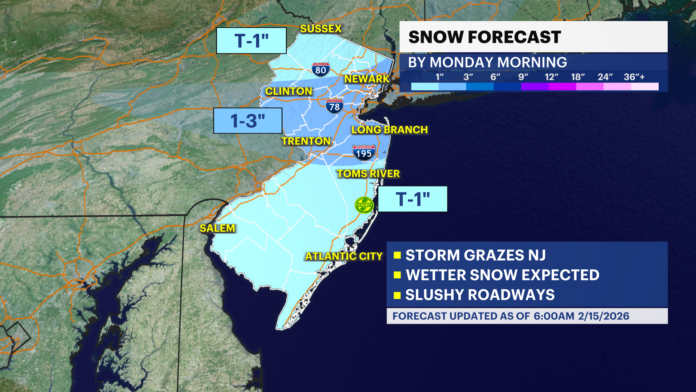

New Jersey residents are preparing for another round of winter weather as forecasters issue a light snowfall alert for Sunday night into early Monday morning, with northern parts of the state expected to receive between one and three inches of snow. While not projected to be a major winter storm, the system is expected to create mildly disruptive conditions, including slick roadways, slushy surfaces, and overnight travel concerns across several regions.
The approaching system highlights the complex and rapidly shifting weather pattern currently shaping conditions across the Garden State, where fluctuating temperatures, lingering snowpack, and changing precipitation types continue to create unpredictable winter scenarios. Readers can follow ongoing statewide forecasts, seasonal trends, and regional updates through the Weather Report section for continued coverage of New Jersey’s evolving winter conditions.
This latest weather event reflects a transitional period in the state’s seasonal climate, where warmer daytime temperatures are colliding with lingering cold air and winter precipitation patterns.
Forecast Overview: What New Jersey Can Expect
The approaching weather system is expected to move quickly through the region, beginning with rain in parts of southern New Jersey Sunday afternoon before transitioning to snow Sunday night as colder air settles across the state.
The most significant wintry conditions are forecast between approximately 7 p.m. Sunday and 2 a.m. Monday morning, when overnight temperatures and atmospheric changes will support snow accumulation.
Forecasters describe the event as a marginal winter weather scenario, meaning conditions will be close to the freezing point and highly sensitive to slight temperature changes. This type of system often produces mixed precipitation, variable snow totals, and differing impacts depending on location and surface conditions.
Expected snowfall totals currently include:
Northern New Jersey: Approximately 1 to 3 inches
Central New Jersey: Lighter accumulations depending on temperature changes
Southern New Jersey: Mostly rain with limited or minimal snow accumulation
The system is expected to taper off quickly, with precipitation ending shortly after midnight or by early Monday morning.
A Marginal Temperature Environment Driving Uncertainty
One of the defining features of this weather event is the unusually mild temperature environment leading into the storm. Daytime temperatures Sunday are expected to climb well into the 40s statewide, with parts of southern and southeastern New Jersey potentially approaching 50 degrees.
This warmth will initially support rainfall rather than snowfall when precipitation begins. As colder northern air moves into the system later in the evening, temperatures will drop enough to allow rain to change to snow across portions of the state.
The shifting rain-to-snow line is expected to form near the Interstate 95 corridor before gradually moving southward as colder air spreads through the region.
This type of temperature fluctuation often produces inconsistent accumulation patterns, with snow sticking more easily to grassy and natural surfaces while remaining limited on roadways.
Meteorologists note that existing snowpack from the January 25 winter storm is helping maintain slightly cooler surface temperatures overnight, which could support limited snow accumulation despite otherwise mild conditions.
A Quick-Moving System With Limited Impact
Unlike larger winter storms that stall over the region, this system is expected to move rapidly through New Jersey. The short duration limits the potential for heavy accumulation while still creating temporary travel hazards.
Because snowfall will occur primarily overnight, when the sun is down and surface temperatures are lower, some accumulation is possible despite the marginal environment. However, temperatures are expected to remain near freezing rather than well below it, reducing the likelihood of significant buildup.
Forecasters emphasize that while snowfall rates could briefly intensify, overall impacts should remain manageable for most communities.
Wet, Heavy Snow Expected
Another defining characteristic of this event is the expected snow composition. Snow-to-liquid ratios are projected between 8:1 and 10:1, meaning the snowfall will be wetter and heavier than the lighter, powdery snow seen in colder storms.
This type of snow is often described as dense or “cement-like,” creating slushy conditions and heavier accumulations on trees, vehicles, and surfaces.
Typical impacts of wet snowfall include:
Slushy and slippery road conditions
Reduced visibility during heavier bursts
Snow accumulation primarily on grass and untreated surfaces
Potentially uneven measurements depending on location
Because road surfaces retain daytime warmth, snowfall may accumulate more significantly on lawns, sidewalks, and elevated surfaces than on highways or heavily traveled streets.
Regional Differences Across the State
Weather conditions will vary widely depending on location. Northern New Jersey is expected to see the most consistent snowfall totals, while southern and coastal areas may experience more rain and limited accumulation.
Southern New Jersey and southeastern coastal areas will likely experience the greatest reduction in snow totals due to warmer surface temperatures and longer periods of rainfall.
Central regions may experience mixed precipitation, transitioning from rain to snow as colder air arrives.
The exact areas receiving the highest snowfall totals remain uncertain and may shift as the system develops.
Safety Considerations for Residents
Although the storm is not expected to produce severe conditions, officials encourage residents to exercise caution during overnight hours and early Monday morning travel.
Potential hazards include slick roadways, slush-covered surfaces, reduced visibility, and localized travel delays. Drivers are encouraged to allow extra travel time, maintain safe distances, and monitor changing road conditions.
Pedestrians should also remain aware of slippery sidewalks and untreated walkways, particularly during late evening and early morning hours.
Looking Ahead: Warmer Weather on the Horizon
Following this brief winter event, forecasters anticipate a shift toward milder conditions across New Jersey next week. The warmer pattern is expected to melt much of the new snowfall along with remaining snowpack from earlier winter storms.
This transition suggests a continued pattern of fluctuating temperatures rather than sustained deep winter conditions, reflecting a broader seasonal shift toward late-winter variability.
A Winter Pattern Defined by Rapid Changes
The upcoming snowfall highlights the increasingly dynamic nature of New Jersey’s winter weather this season, characterized by rapidly shifting temperatures, mixed precipitation events, and shorter-duration storms.
As the state moves through February, residents can expect continued variability, with mild days, colder nights, and occasional wintry interruptions shaping daily conditions.
With winter still in progress but warmer trends emerging, the current pattern underscores the importance of staying informed, monitoring forecasts, and preparing for rapidly changing weather conditions across the Garden State.



