


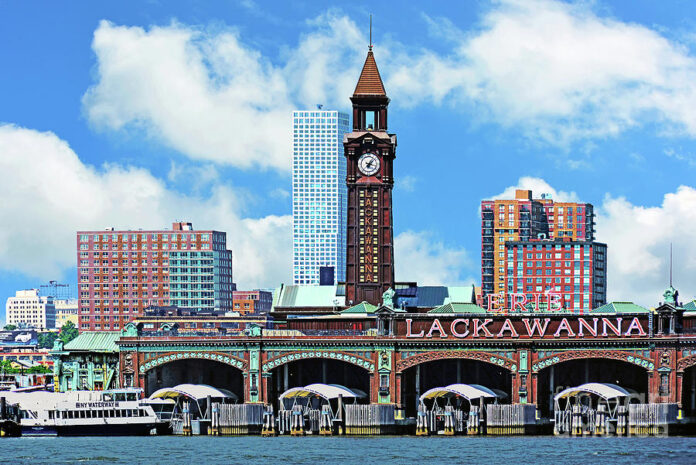

Montclair has taken a decisive and highly consequential step toward reshaping one of its most historically significant yet long-dormant properties, formally approving a 30-year financial agreement that clears the path for a sweeping redevelopment of the former Lackawanna Terminal. The township council’s 6-1 vote signals more than a routine approval of a payment-in-lieu-of-taxes structure; it marks the culmination of decades of stalled visions, contested proposals, and evolving priorities surrounding a site that has sat largely underutilized for generations despite its central location and architectural legacy.
The agreement with BDP Holdings establishes the framework for a mixed-use transformation that aims to inject new life into Montclair’s downtown corridor through a carefully scaled combination of residential, commercial, and retail development. At its core, the project proposes approximately 300 residential units, including a defined affordable housing component, alongside a substantial grocery store footprint and tens of thousands of square feet of office and commercial space. The design calls for multiple mid-rise buildings rising five to six stories, integrated with structured parking and incorporating modern green building technologies that reflect current sustainability expectations in New Jersey’s redevelopment landscape.
This decision follows extensive deliberation by township leadership, reflecting both the complexity of the financial structure and the intensity of public engagement surrounding the project. Over the course of multiple council meetings, residents, stakeholders, and local advocates voiced sharply contrasting perspectives on the merits of granting long-term tax incentives in a municipality widely regarded as one of the most desirable—and expensive—real estate markets in the state. With median home values reaching well into seven figures, critics argued that developers should not require financial concessions to build in such a high-demand environment. Concerns were also raised about historical precedents, where previous projects benefitting from similar agreements were later sold, limiting long-term fiscal upside for the township.
At the same time, supporters of the redevelopment emphasized the strategic importance of finally activating a site that has remained economically dormant despite its potential. The argument in favor of the agreement is grounded in the belief that new ratables, increased housing supply, and the introduction of a full-service grocery anchor will generate sustained economic and community benefits. For many, the presence of a major supermarket within walking distance represents a transformative amenity that aligns with Montclair’s evolving identity as a dense, transit-oriented, and lifestyle-driven community.
The approved plan outlines a two-phase construction timeline that will unfold over several years. The initial phase includes the development of four buildings that will establish the core residential and retail components, while the second phase introduces an additional structure and expanded office space layered above one of the earlier buildings. Municipal projections suggest the redevelopment could generate hundreds of construction jobs over the course of nearly a decade, followed by a significant number of permanent positions tied to retail, office, and service operations once the project reaches full occupancy.
Yet even with formal approval secured, the project remains in a critical pre-development stage. Notably, a full site plan application has not yet been submitted to the township’s planning board, and the timeline for that submission has already been extended multiple times. This next phase will be pivotal, as it will provide the first detailed look at architectural design, traffic impacts, environmental considerations, and the integration of the project into the surrounding neighborhood fabric. It is at this stage where both supporters and opponents are expected to re-engage with renewed intensity, as the conceptual vision transitions into tangible specifications.
The historical context surrounding the Lackawanna Terminal underscores why this moment carries such weight. Originally opened in 1930, the station served as a key transit hub before ceasing operations decades ago. Subsequent attempts to reimagine the property have reflected shifting economic conditions and planning philosophies—from early proposals that prioritized residential density to later retail-driven concepts anchored by large-format grocery tenants. While earlier redevelopment efforts achieved partial success, including the introduction of a supermarket-driven shopping center, those gains ultimately proved unsustainable as anchor tenants departed and the site gradually lost relevance within Montclair’s commercial ecosystem.
The current plan, therefore, represents both a continuation of past ambitions and a recalibration toward a more diversified, mixed-use model that aligns with contemporary urban planning principles. By blending housing, retail, and office uses within a single integrated development, the project seeks to create a more resilient economic environment capable of adapting to changing market conditions over time.
From a fiscal standpoint, the 30-year PILOT agreement introduces a structured alternative to traditional property taxation, allowing the township to negotiate predictable revenue streams while providing developers with financial certainty during the project’s lifecycle. This mechanism has become increasingly common across New Jersey, particularly in large-scale redevelopment zones where upfront costs and long timelines can complicate conventional financing models. However, as demonstrated throughout Montclair’s public discourse, the use of such agreements remains a point of contention, particularly in communities with strong tax bases and engaged constituencies.
The political dynamics surrounding the vote further reflect the complexity of balancing long-term planning objectives with immediate community concerns. While the majority of council members ultimately aligned in support of the agreement, the dissenting vote underscores that questions around equity, fiscal impact, and community benefit remain unresolved for some stakeholders. Issues such as direct contributions to the school district, long-term affordability, and the preservation of Montclair’s character continue to shape the broader conversation around growth and development within the township.
As the project advances toward the planning board review process, attention will increasingly shift toward execution—how the vision translates into built form, how infrastructure and traffic are managed, and how effectively the development integrates into Montclair’s established urban fabric. The eventual submission of a detailed site plan will serve as the definitive blueprint that determines whether the redevelopment fulfills its promise as a catalyst for revitalization or becomes another chapter in the site’s long and complex history.
For ongoing coverage of major real estate developments shaping New Jersey’s future, explore the latest reporting in the Real Estate section of Sunset Daily News, where projects like this are analyzed in depth as they move from concept to construction and ultimately redefine the communities they inhabit.



